
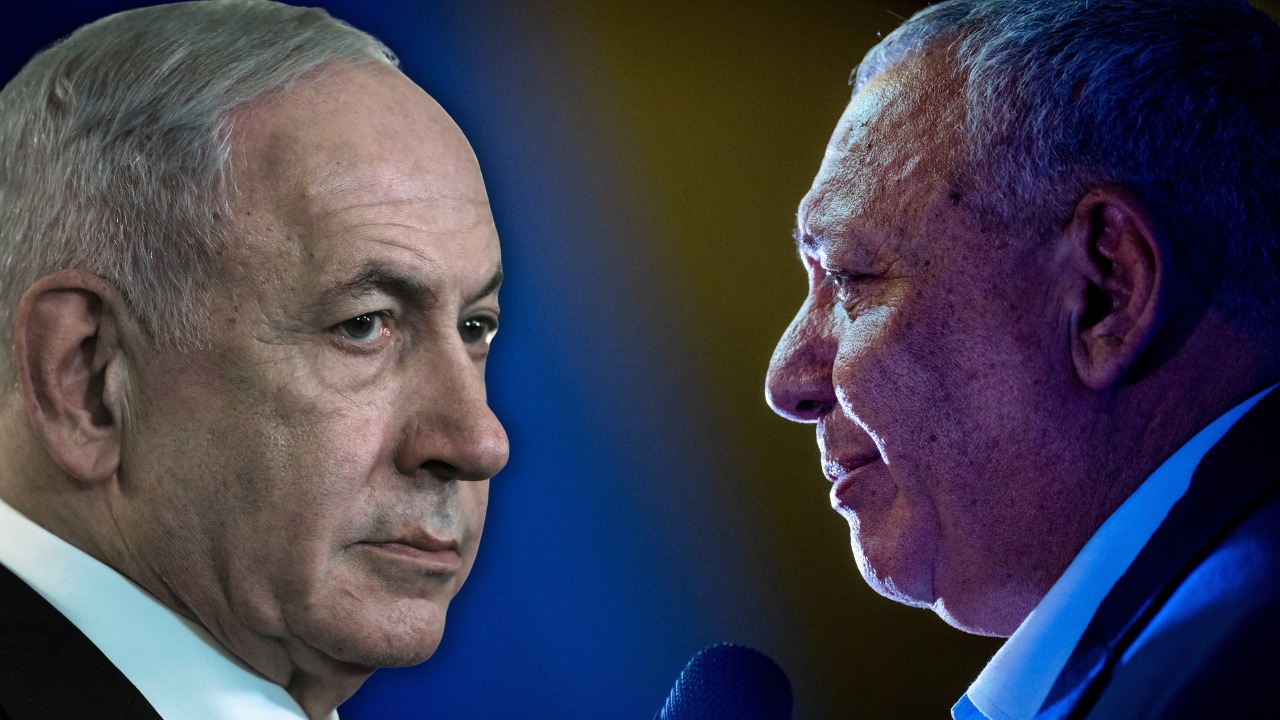
Benjamin Netanyahu faces his first election since the October 7 attacks on Tuesday, against a backdrop of a deeply divided Israeli society.
Polls on Friday put the governing far-right coalition almost level with the main opposition bloc around the hawkish former military chief Gadi Eisenkot, with half a million first time voters due to cast their ballot.
The election marks the first chance for voters to deliver a verdict on the worst security failure in generations as well as the wars that followed, with almost all Jewish-led parties now opposed to the ‘two-state solution’ that has long defined diplomacy with the Palestinians.
Netanyahu, 77, boasted of his endorsement from Donald Trump on the eve of the election, suggesting that the US president was willing to “finally remove the Iranian threat” but only so long as Netanyahu himself remains in power.
But the White House said that the United States would not be attacking Iran “at any time prior to the midterm elections” in November.
Poll trackers point to Knesset deadlock
With voting less than 24 hours away, consensus across major Israeli broadcasters points toward another parliamentary impasse, with neither Netanyahu’s right-religious coalition nor the opposition bloc holding a clear path to a 61-seat majority.
Across final weekend polls from Channel 12, KAN 11, and Maariv, Netanyahu's loyalist bloc — comprising Likud, Otzma Yehudit, Shas, United Torah Judaism, and the Religious Zionist alliance — averages in at roughly 49 to 50 seats.
The primary opposition bloc, led by Gadi Eiskenkot stands between 54 and 56 seats, leaving the remainder split among Arab parties and unaligned factions who refuse to sit with either side.
The ultimate balance of power will hinge on whether fringe lists — including the joint Reservists-Economic ticket and Ofer Winter's Amcha Yisrael list — can clear the 3.25 percent electoral threshold needed to enter the Knesset.
Netanyahu touts Trump's blessing ahead of election
Benjamin Netanyahu boasted of his endorsement from Donald Trump on the eve of Israel's election, suggesting the two leaders could restart their war against Iran if he wins.
Netanyahu said on Sunday that Trump was willing to take action "that would finally, finally, remove the Iranian threat", but only as long as Netanyahu himself remains in power.
"And I have already instructed the Mossad and the IDF (military) to bring down this regime, to bring down this regime because that is the only way to put an end to this threat," Netanyahu said, referring to Israel's main intelligence service and military.
But asked for comment on Netanyahu's remarks, White House Deputy Press Secretary Anna Kelly said: “The United States will not be attacking Iran at any time prior to the midterm elections.”

Israeli elections poll tracker: Three scenarios that could play out
Exclusive: A poll of 4,000 Israelis shows that it is unlikely that Netanyahu’s bloc will hold on to power when the country votes

Israelis on frontlines of October 7 say politics has shifted 'two clicks to the right'
Israel’s in frontier kibbutz Be’eri said on the eve of the election that politics have shifted “two clicks to the right” since the October 7 attacks three years ago.
One-in-ten residents in the community were among the 1,200 people killed in Hamas' surprise attack. Dozens were among the 251 taken hostage to Gaza. It was Israel's deadliest single day.
A collective community established in 1946, now with around 1,000 residents, Be'eri exemplifies the socialist values that dominated Israel's politics in its early decades.
Nearly all its votes went to the centre-left in the previous 2022 election, when only around 4% voted for parties in Netanyahu's nationalist-religious coalition.
But ahead of Tuesday’s vote, Gal Cohen said the attack has made residents question longstanding views that there could be peace with the Palestinians in this generation.
"Everyone in Be'eri has made two clicks to the right. But I still think that most of us will stay with the opposition, the parties that want to replace this government," he said.
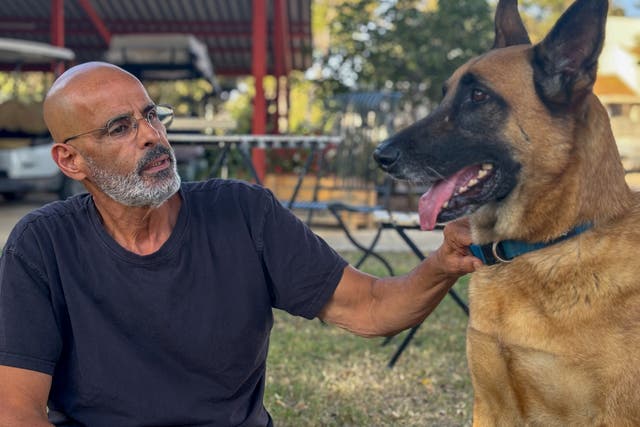
Preview: Gadi Eisenkot launches a challenge to Netanyahu's reign... but is yet to find a clear path to power
Former military chief Eisenkot has presented himself as one of the possible outlets for change.
Eisenkot, who lost a son in Gaza, has projected an image as a political outsider and security hawk whose humble background and family sacrifices stand in vivid contrast to Netanyahu's decades in high office and lingering corruption cases.
Both Eisenkot and Netanyahu, along with the leaders of nearly all other Jewish-led parties, oppose the establishment of a future independent Palestinian state alongside Israel.
They both say that Israel must retain ultimate security control over all territory between the Jordan River and Mediterranean Sea. And they agree that Israeli troops must not withdraw from Gaza until Hamas is disarmed.
Eisenkot has framed the continued rule of Hamas in Gaza as a failure of state, vowing that within 18 months of taking office he would ensure the administration had been replaced, either through a US-brokered plan or through military force.
But to unseat Netanyahu, he is likely to rely on the support of the Democrats, including the rump of the once dominant centre-left Labour Party that has has withered as the country has shifted to the right.

Preview: Survivalist Netanyahu faces another test after 19 years in office
Netanyahu heads into this election with 19 accumulated years in office since he was first chosen as prime minister in 1996.
The office has no term limits and a prime minister can serve an unlimited number of four-year terms so long as they maintain the confidence of a majority in the Knesset, or parliament.
Since his last election in 2022, ‘Bibi’ has led Israel through its response to the October 7 Hamas attacks, the subsequent war in Gaza and hostage crisis, a ground invasion of Lebanon, strikes on Syria, attacks from and against Iran, and, most recently, into the ongoing conflict with Tehran alongside the United States.
Domestically, he is still embroiled in a long-running corruption case, after being indicted in 2019 on charges of bribery, fraud and breach of trust in three cases, accused of receiving expensive gifts in exchange for political favours. The 77-year-old has called the case a witch hunt and proceedings stalled during the war in Gaza.
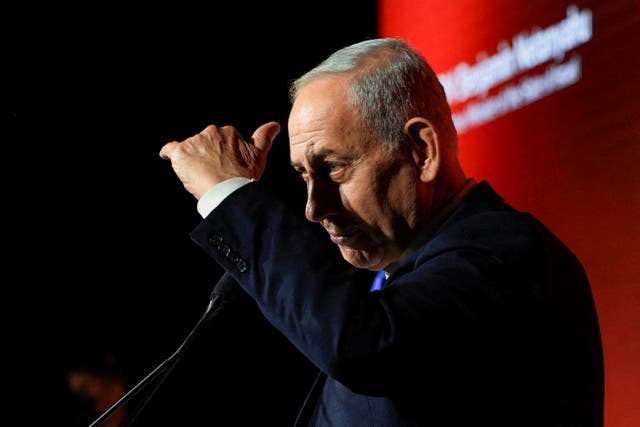
Netanyahu is also under an arrest warrant issued by the International Criminal Court (ICC) for suspected crimes against humanity and war crimes, and faces criticism from abroad for presiding over a rapid expansion of settlements in the West Bank.
Many Israelis now say it is time for a change in the seat of government. A poll of 4,000 Israeli voters this month predicted that Netanyahu’s Likud party would secure only 19 seats, down from 32 currently, while the opposition, led by Yashar’s Gadi Eisenkot, could secure the most with 20.
The key players in Israel’s first election since October 7
Israelis are set to vote on October 27 in the first national elections since the deadly October 7 attacks, and the devastating Gaza war that followed.
The Independent looks at the key figures in the looming election:

Good evening and welcome to our coverage of the Israeli election
Benjamin Netanyahu’s far-right government faces an existential election on Tuesday as voters deliver their verdict three years since the country’s greatest security failure in generations.
The opposition is clustered around centrist former IDF chief Gadi Eisenkot. But he and an array of other parties ranging from the rump of the centre-left to the right, also have no clear path to unseat the survivalist Netanyahu.
Follow along for our coverage of the Israeli legislative elections
Poll: October 7 remains central factor in Israeli voting decisions
The handling of October 7 remains a decisive factor for the majority of Israeli voters heading into Tuesday’s general election, according to an Israel Democracy Institute (IDI) poll.
The results find that roughly 62 percent of respondents consider October 7 central to their ballot decision, with foreign affairs and national defence ranking as top priorities among Jewish voters.
Despite the enduring impact of the attacks, the political landscape remains deeply polarised, with the divide between supporters and opponents of Prime Minister Benjamin Netanyahu’s government largely unchanged.
The survey also recorded widespread erosion in national morale, with public optimism declining across democratic governance (down to 36%), national security (34%), the economy (27%), and social cohesion (19%).