A legendary ocean liner that once carried world leaders, Hollywood icons, and thousands of immigrants across the Atlantic is preparing for a final journey to the floor of the Gulf of Mexico, where it will become the world’s largest artificial reef.
Authorities in Florida’s Okaloosa County plan to sink the SS United States early in 2026, targeting a location roughly 22 nautical miles (41 kilometers) southwest of Destin and 32 nautical miles (59 kilometers) southeast of Pensacola. The exact deployment timeline remains subject to change depending on sea conditions.
"This is an exciting move forward to create a one-of-a-kind resource for the environment and for our tourism industry," county officials wrote in a news release.
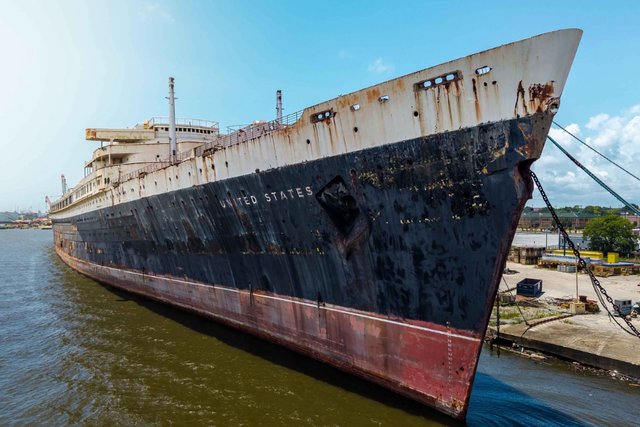
Measuring nearly 1,000 feet (305 meters) in length—more than 100 feet (30 meters) longer than the RMS Titanic—the vessel stands as a mid-century engineering milestone and was also designed to double as a military troopship.
The ocean liner shattered the transatlantic speed record during its maiden voyage in 1952, averaging over 41 mph (66 kph) at 36 knots. It completed the crossing in three days, 10 hours, and 40 minutes, cutting 10 hours off the record held by the RMS Queen Mary.
To this day, the SS United States retains the transatlantic speed record for a passenger ship.
The ocean liner spent nearly three decades docked along the Delaware River in Philadelphia while preservationists sought options to restore it.
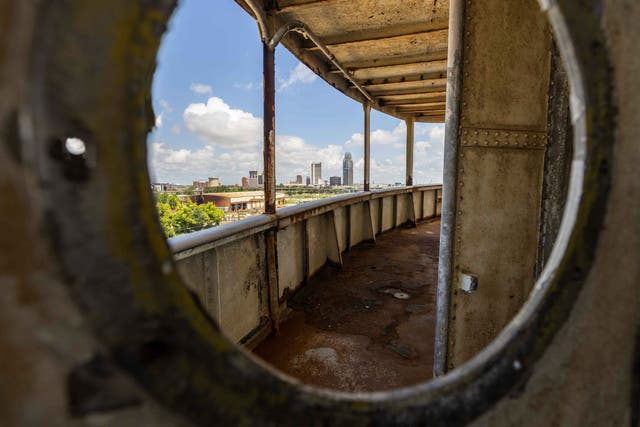
However, ambitious restoration projects were repeatedly abandoned due to steep costs. A prolonged legal conflict over dockage fees and rent between the nonprofit managing the vessel and its landlord eventually resulted in a court order requiring the ship to vacate its pier.
Following a 12-day journey under tow in March, the vessel arrived at the Port of Mobile in Alabama, where workers have spent months stripping away wiring, glass, plastic, and hazardous chemicals to prepare the structure for the water.
Although a preservation group called the New York Coalition filed a lawsuit in Pensacola federal court aiming to block the sinking on historical grounds, local leaders maintain that turning the vessel into a reef is the only viable alternative to sending it to a scrap yard.
"The SS United States has inspired millions the world over as a symbol of American pride and excellence," said Susan Gibbs, president of the SS United States Conservancy, the nonprofit working to preserve the vessel.
"Should the ship be converted into an artificial reef, she will become a unique historic attraction above and below the waterline."
The project is part of a $10.1 million commitment by Okaloosa County to acquire, transport, clean, and submerge the vessel, including $1 million earmarked for an onshore museum showcasing the ship's history.
A regional funding partnership helped secure the final deployment location: Pensacola tourism officials contributed $1.5 million, while Coastal Conservation Association Florida added $500,000—marking the largest single donation in the organization's 40-year history.
"This collaboration will foster amazing adventures for generations of visitors and create a tourism economy that will benefit the state and the entire Northwest Florida region," Okaloosa County Board Chairman Paul Mixon said in a statement.
Once submerged, the SS United States will join more than 500 artificial reefs in Okaloosa County, including a dozen smaller shipwrecks.
Resting at a seabed depth of approximately 180 feet (55 meters), the vessel's upper decks will sit roughly 60 feet (18 meters) below the surface, making the reef accessible to both novice and experienced scuba divers. The site is also 12 nautical miles (22 kilometers) from the USS Oriskany, an aircraft carrier sunk as a dive site in 2006.
"To have an opportunity to have the SS United States right here by our shore is a heritage and a legacy that is generational," said Okaloosa County Commissioner Mel Ponder. "I’m very excited for not only what it does for the diving community, but also the fishing community, but the community at large."
Local businesses, including scuba outlets, charter fishing fleets, and hotels, expect the marine destination to generate millions of dollars annually in tourism revenue while providing critical new marine habitats.
"The transformation of the SS United States into the world’s largest artificial reef creates a rare opportunity to elevate our entire region on the global stage," said Darien Schaefer, president and CEO of Visit Pensacola.
"It is truly a once-in-a-lifetime opportunity to contribute to the creation of the world’s largest artificial reef," CCA Florida Executive Director Brian Gorski said in a statement.