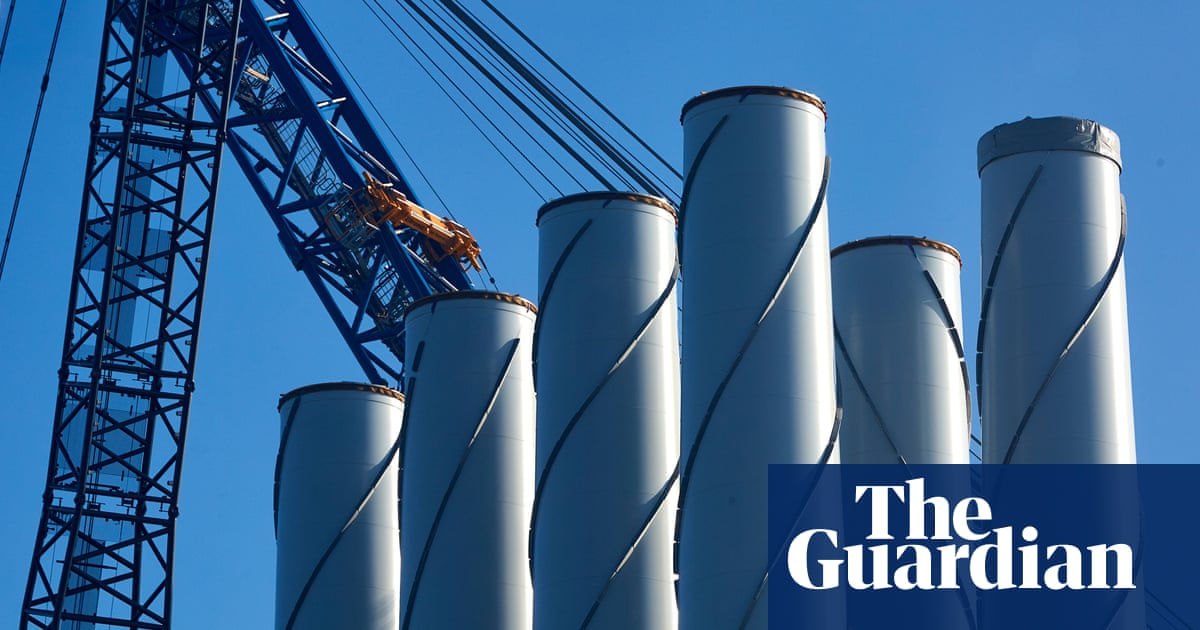
Andy Burnham’s pledge to reindustrialise Britain is doomed to fail unless it is driven decisively from his new No 10 North outpost in Manchester, a group of more than 90 backbench Labour MPs have said.
The PM has suggested that rebuilding the UK’s industrial capacity will be central to meeting his pledge to bring “good growth in every postcode”.
John Healey, who will deliver his first budget as chancellor on Wednesday, used his speech at Labour’s conference last month to promise a “new age of industrialisation”.
However, in a briefing paper seen by the Guardian, the backbenchers warn that decades of deindustrialisation and deregulation mean the government no longer has the detailed understanding of industry needed to make such a plan work.
“The state has lost capacity and has acquired a worrying set of behaviours which will inhibit reindustrialisation. The state has become less knowledgable about the state of the economy and our businesses, unable to comprehensively plan and slow to make decisions,” the paper says.
The MPs are calling on Burnham to pass a new Reindustrialisation Act, to set clear targets for creating jobs by rebuilding the country’s manufacturing capacity, and to ensure ministers are held to account against them. “If we do not plan for reindustrialisation, we cannot achieve it,” the group argues.
The briefing paper urges the PM to give the job of overseeing reindustrialisation to the first secretary of state, Louise Haigh, and base it at No 10 North, the Manchester outpost he established in July, which has already taken on some responsibility for growth policy.
And the paper argues that the National Wealth Fund – the arm’s length body that invests in promising businesses – should be transformed into a Reindustrialisation Development Corporation, whose primary job is to provide capital for rebuilding UK industry.
Andy MacNae, the MP for Rossendale and Darwen, who chairs the group, said: “I’ve got absolutely no doubt about Andy or John’s commitment to this, but there is a kind of inertia in government, within the civil service, within economic orthodoxy, that still says that growth policy is about cities – it’s about the places that are already doing well.”
Instead, he said, reindustrialisation must be about “delivering jobs to the places that need them most.” He added: “It’s about making things again, and it’s about making the things that give us national resilience in a turbulent world.”
He cited the government’s recent decision to nationalise British Steel, adding that reindustrialisation involved policies across government, from procurement to education.
after newsletter promotion
Steve Yemm, the MP for the former mining constituency of Mansfield, said: “Countries around the world are reindustrialising, yet too many in Whitehall still treat industrial policy as dangerous nostalgia. We need the prime minister’s full backing to challenge those outdated assumptions.”
A third member of the group, Lorraine Beavers, the MP for Blackpool North and Fleetwood, said she was enthusiastic about the promise of reindustrialisation for constituencies like hers, but said: “If I have learned anything since becoming an MP two years ago, it’s that Whitehall doesn’t fix a problem unless it is told to.”
In its industrial strategy, published while Keir Starmer was prime minister, Labour identified eight sectors ripe for growth, including advanced manufacturing, clean energy and defence.
In his conference speech, to which Healey had invited a young apprentice who had worked on building a new Mersey ferry, the chancellor said Labour would “get Britain growing. With hope for our young people. With good work, good jobs and a new age of industrialisation.”