Why we should save our phones for filming that which is truly ours to film - Christa Ackroyd
I cannot get the sight of a poor young man being mauled to death by a tiger at a Yorkshire zoo out of my mind or of the moments leading up to it when he appeared to instruct a wild animal not to come closer while seated on the ground.
What is more I shouldn’t have to. I shouldn’t have seen it in the first place, and neither should you if you have.
If you have you will understand that what we were witnessing was horrific. It must have been truly dreadful for those who were there too.
I lay no blame on the wild animal, the zoo’s security or the young man himself. I am not even going to name him because I believe his name has already been spoken of too many times.
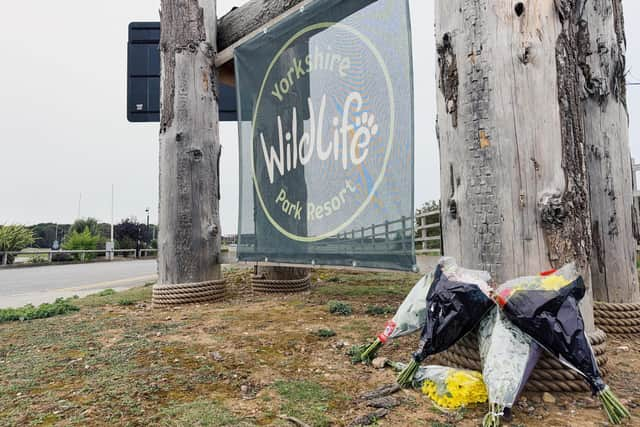
Multiple investigations are under way and I will not pre-empt any of them, because that is not my role.
It is not my job and I prefer to know the facts before making comment. Unfortunately that is not the way of the world.
Firstly, I wish to offer my sincere condolences to the young man’s family. If I and others were horrified at what was out there in the public domain just imagine the impact it has had on them.
If you haven’t seen it you are lucky. Stills of the dreadful scene which unfolded abounded.
There were videos of the events leading up to the moment the tiger began to maul the poor boy and worse still some depicted the actual final moments too.
Why? Why would anyone share anything so utterly shocking simply because they can?
And in some instances within hours of the tragedy at the Yorkshire Wildlife Park when presumably his family and friends were being told what had happened to their boy.
And that is the issue. He is their boy. As for President Trump making light of it even sharing AI images of him fighting a tiger and running away unharmed I do not include him as the arbiter of taste and decency.
I say shame on you. But then there is a man who doesn’t know the meaning of the word.
At the heart of this awful tragic story is a story of loss, the loss of a young life. Described by those he lived near in Doncaster as a lovely young person he was diagnosed with a significant mental health disorder.
At the opening of the inquest it was made clear he had serious issues. I don’t want to go into that here as his family and those who knew him try to remember him in a positive way.
But how can they not be tormented, not only by the way he died, but the fact that it was out there for all to see?
I don’t expect much any more from the President of the US but I do expect more from those who not only witnessed the horrific scene but got out their phones, filmed it and then decided it was suitable to share.
Since when did we consider the broadcasting of such material as not only in the public interest but for entertainment and debate?
Sadly it is becoming the norm and I for one will accept no part in it.
Those who shared it and then shared it again and who have access to my socials were instantly unfriended and blocked as were those who instantly leapt to the defence of the animal as if a young man’s death could be brushed over and was secondary.
Some questioned whether the content they shared was computer generated. It wasn’t. It was real life or rather real death. But they shared it anyway.
Please, please let us think of the impact of that which we are filming on those who will watch it and allow only compassion to dictate that which we decide to put out there.
When I started in journalism, and let’s face it everyone seems to think they are reporters these days, there was one golden rule. We were there to report the facts, not speculate, and certainly not cause distress.
It is why after major events, including the fire at Bradford City and the awful Hillsborough disaster, footage was gone through and anything which would add to the families’ grief was removed from that placed in the library so it could never be used again in the case of the fire and never broadcast at all in case of those who were crushed to death at Hillsborough.
We saw what happened and decided not to share and that was the right and moral thing to do.
Yes, I have seen dead bodies. It was my job to ensure others did not. For the dignity of those who had lost their lives and the protection of those who loved them.
Now every mobile phone has a camera and what’s more broadcasting companies are positively encouraging their use with more and more of what is known in the trade as viewer-created content.
In this case they acted responsibly, while, although potentially identifying the young man, they stopped before he sustained his fatal injuries. It was still awful to watch.
Sadly on other less regulated platforms others did not. It is not the only example.
This week in paying tribute to their son who died apparently of a drugs overdose Cindy Crawford and her husband were subjected to the broadcast of videos taken of him in a secure unit.
Imagine adding pain onto pain. That is not what we are here for and neither are you.
We, as broadcast journalists, can do nothing if the cameras are turning at a live unfolding story. But we can behave responsibility with the footage we capture, be it broadcaster or bystander.
Or yes even newspapers who now have the online facility to share video content.
Members of the public must do the same and certainly not for clickbait. A new group of people calling themselves ‘auditors’ often fall foul of the rules of common decency.
What started in America unsurprisingly has spread to our country too.
These content creators often film using the right to do so in a public place as an excuse to hide behind the fact that they will often deliberately exacerbate a situation for more ‘exciting’ content and then claim it is in the public good while making money, often good money in channels such as YouTube.
They prod and poke, they inflame a difficult situation and then claim they have a right to do so while filming.
So we as caring individuals can do one of two things.
We can ignore and report or we can add to the distress this may cause by throwing fuel on the fire.
The family of this young man have asked the mental health services to examine what I presume is support he received until his death. There are questions to be answered, but not here and not now.
Many many families decide to share tragic events in the hope that others can be helped.
The least we can do is let them decide when that time is right and not join in with comments, condemnations, or even questions until that happens.
And above all save our mobile phones for filming that which is truly ours to film.
Our families, our choice, our holidays, our friends and not turn them on people we neither have approval from or have no right, according to some, to say no.