Fraser Farms, Denby Dale: Pioneering agriculture hub to focus on the lessons of agroecology
Two first generation farmers behind a 450-acre regenerative agriculture project have been selected for an initiative which will see their farm developed as a hub for agroecological learning for food and farm workers in the North.
Hannah and Alex Fraser, of Denby Dale, will focus on on-farm infrastructure and local supply networks for seed and grain, with a specific interest in the infrastructure needed to make more diverse and agroecological farming systems commercially viable.
The couple met at medical school, where they developed a keen interest in public health and aware of how both dietary choices and the quality of food available affected wellbeing before launching The Fraser Farms in 2018.
They grow species-rich herbal leys which provide the nutrients, such as nitrogen, needed for the subsequent cereal crops.
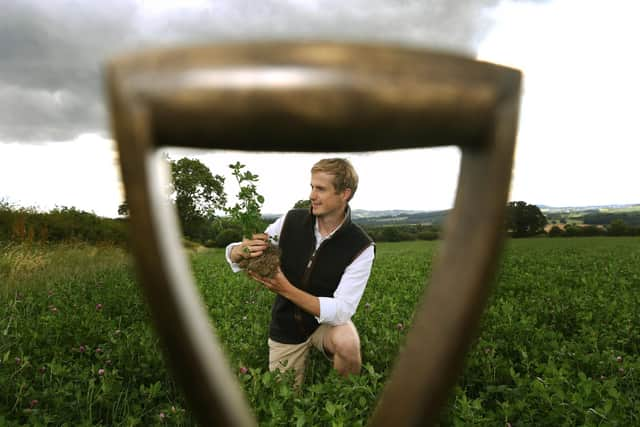
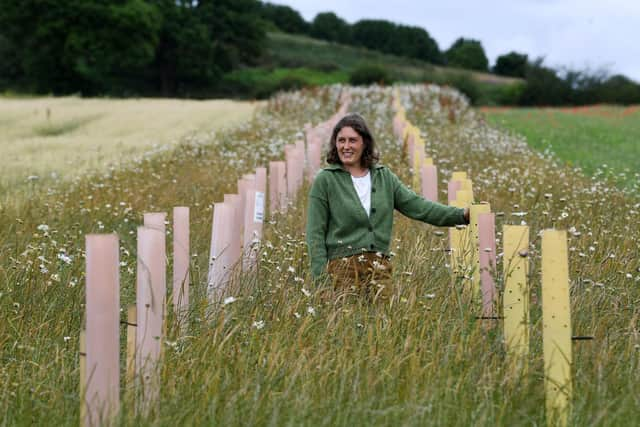
The couple have introduced agroforestry, planting more than 3,000 trees and wildflowers in strips among the arable crops. They have reported seeing wildlife flourish in the wildflower under-storey, with mice, field voles and barn owls a regular sighting.
The Fraser Farms will represent an organic arable farm mainly producing milling wheats and oats, as one of three thematically and geographically diverse farms that have been selected for the Northern Food and Farming programme.
The others include a Cumbrian farm known for its cheese, representing a lowland livestock farm and a Merseyside enterprise representing an organic agroforestry farm producing fruit and vegetables.
Dr Fraser said: ‘We see the role of the hub as an opportunity to use our own farm as a practical space for experimentation, learning and collaboration – sharing both what works and the challenges we encounter along the way.
“By working with the Northern Food and Farming, we hope to engage key actors in the food system to tackle barriers collectively. We hope that we can provide access to this grain cleaning infrastructure to local farmers facing similar challenges.’’
The hubs are intended to explore best practices in regeneration, landscape restoration and food production, serving as active centres for education, peer-to-peer training, and market building for agricultural products.
The hub farmers will be supported by the network to host events that will bring together diverse members of the Northern food and farming community in a collective effort to speed up the transition to a resilient food and farming system.
Lottie Alves, of the Nature Friendly Farmer Network and a member of the Northern Food and Farming working group, said: ‘‘We’re excited to be working with these three forward-thinking farm teams each representing a different farm sector, but with plenty of common interests, such as agroforestry systems at each site - this means not only can we learn from each of the farms, they’ll be comparing notes and learning from each other too.”
Each host will work with the Northern Food and Farming network to co-design a project that progresses one of the strategic action areas identified as a result of strategic visioning with 120 stakeholders in 2023.
Ellen Pearce, the Network Coordinator, said the programme’s focus remained on breaking down structural inequalities that have historically left Northern practitioners underserved. Northern Food and Farming is a collaboration of organisations which work across the North and includes a wide range of partners with varied interests and expertise – this network of networks provides a strong foundation for a coordinated, efficient and urgent approach to change.’’