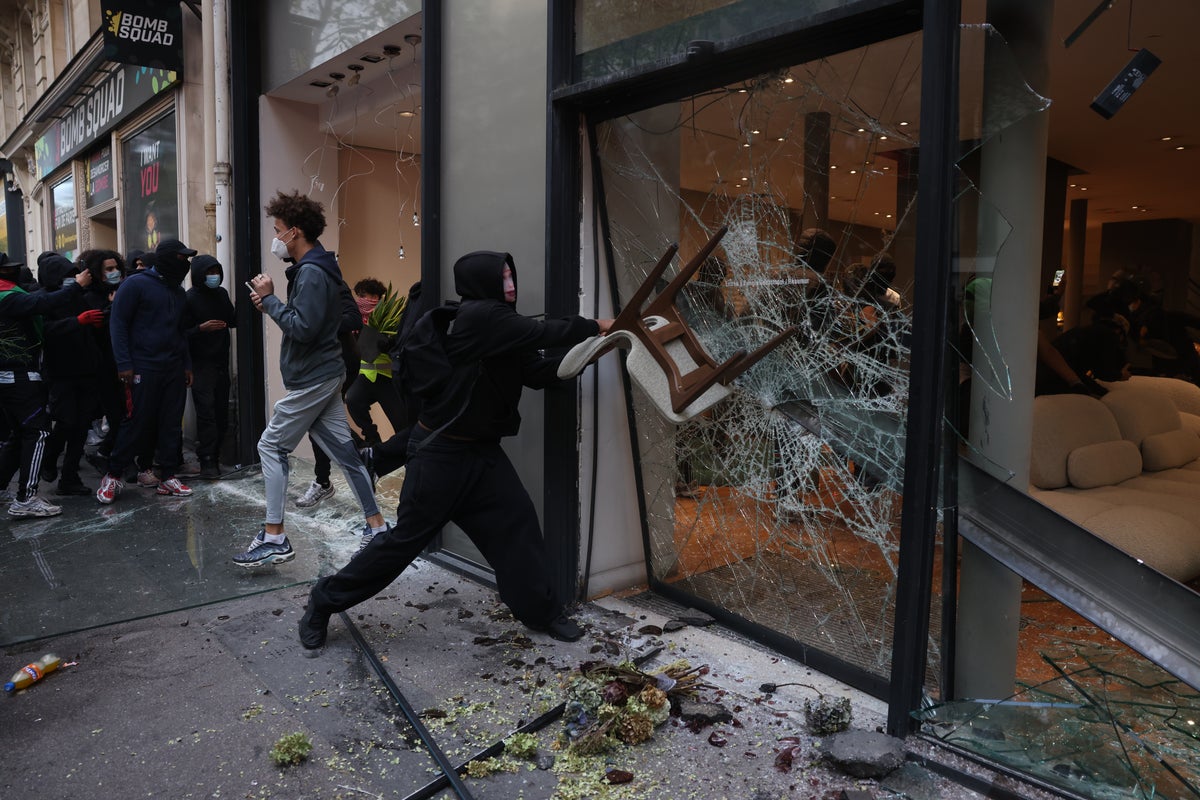
As many as 70,000 police and gendarmes will be mobilised throughout France to keep order on Saturday, French interior minister announced on Friday.
"Look at social media: There have been calls from the far-left to target public buildings,” Laurent Nuñez told reporters.
“We are not talking about a nice protest. We are ready tomorrow to be extremely firm and not tolerate anything,” he added.
French president Emmanuel Macron is meanwhile expected to meet with high school unions in an 11th hour attempt to quell unrest anticipated over the weekend.
The outgoing head of state is to meet with students and their associations at the presidential palace at 3pm to discuss the concerns and demands underlying the recent tumult.
Protests erupted last month in response to the perceived state of decline in schools, with students aggrieved by teacher shortages, overcrowded classrooms and crumbling infrastructure.
They have since ballooned into sweeping nationwide rallies, which last weekend descended into rioting, vandalism, arson and looting.
Mr Macron vowed on Thursday to ban all demonstrations not organised by unions, while Paris was to extend its nighttime curfew until Monday, but major events were still planned for the weekend.
Macron expected to meet with high school unions today
French president Emmanuel Macron is expected to meet with high school unions on Friday in an 11th hour attempt to quell unrest anticipated over the weekend.
The outgoing head of state is to meet with high school students and their associations at the presidential palace at 3pm to discuss the concerns and demands underlying the recent tumult.
Protests erupted last month in response to the perceived state of decline in schools, with students aggrieved by teacher shortages, overcrowded classrooms and crumbling infrastructure.
They have since ballooned into sweeping nationwide rallies, which last weekend descended into rioting, vandalism, arson and looting.
Watch: Long-standing fury of France's youth explodes with rage felt across borders, Bel Trew explains
What to know about the weapons and tactics blamed for injuring French protesters
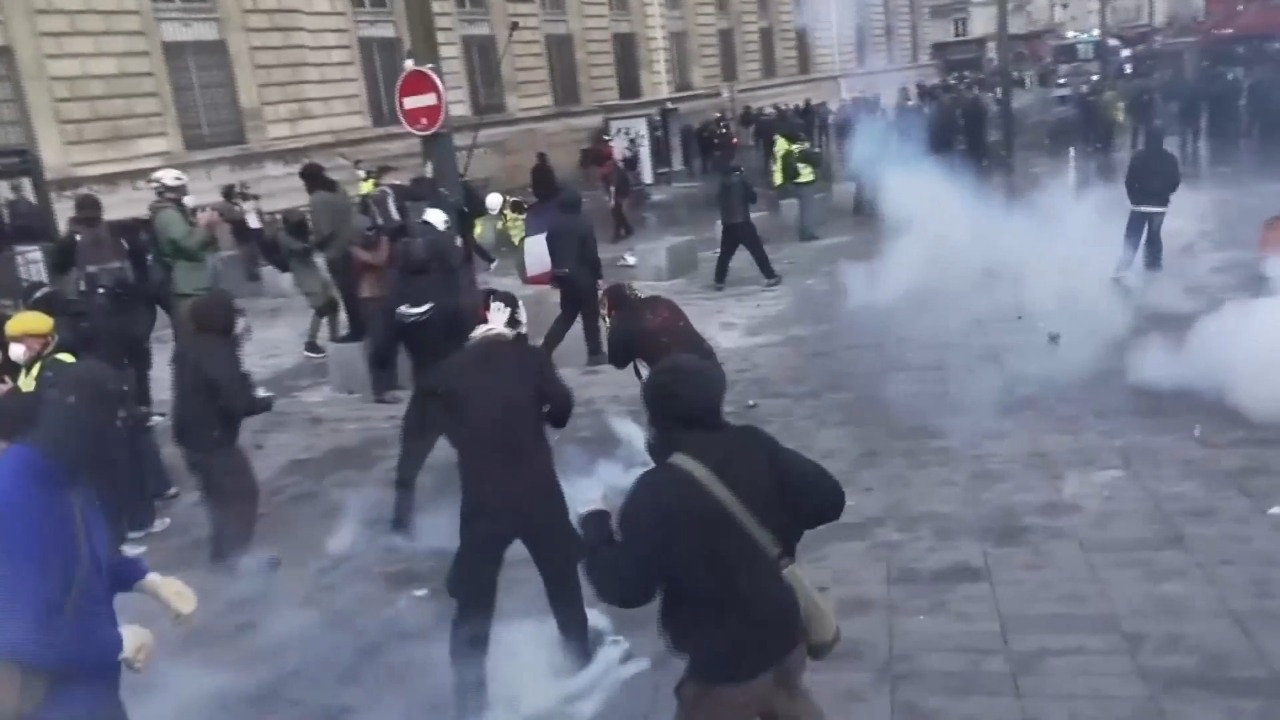
Police across France are under pressure to maintain security during further protests expected in some cities, while facing scrutiny over their riot-control tactics used during previous unrest that left some teenagers seriously injured.
Officers have appeared outnumbered and overwhelmed during last weekend's protests against rising living costs and poor conditions in schools. Authorities have announced police reinforcements ahead of further protests expected on Saturday, amid fears of renewed violence.
A 17-year-old girl lost an eye while participating in a protest in Mulhouse last Saturday, while a 17-year-old boy lost a hand in Saint-Etienne. Other teenagers have suffered disabling injuries during weeks of high school blockades and street demonstrations.
Here’s a look at French police tactics and riot-control weapons:
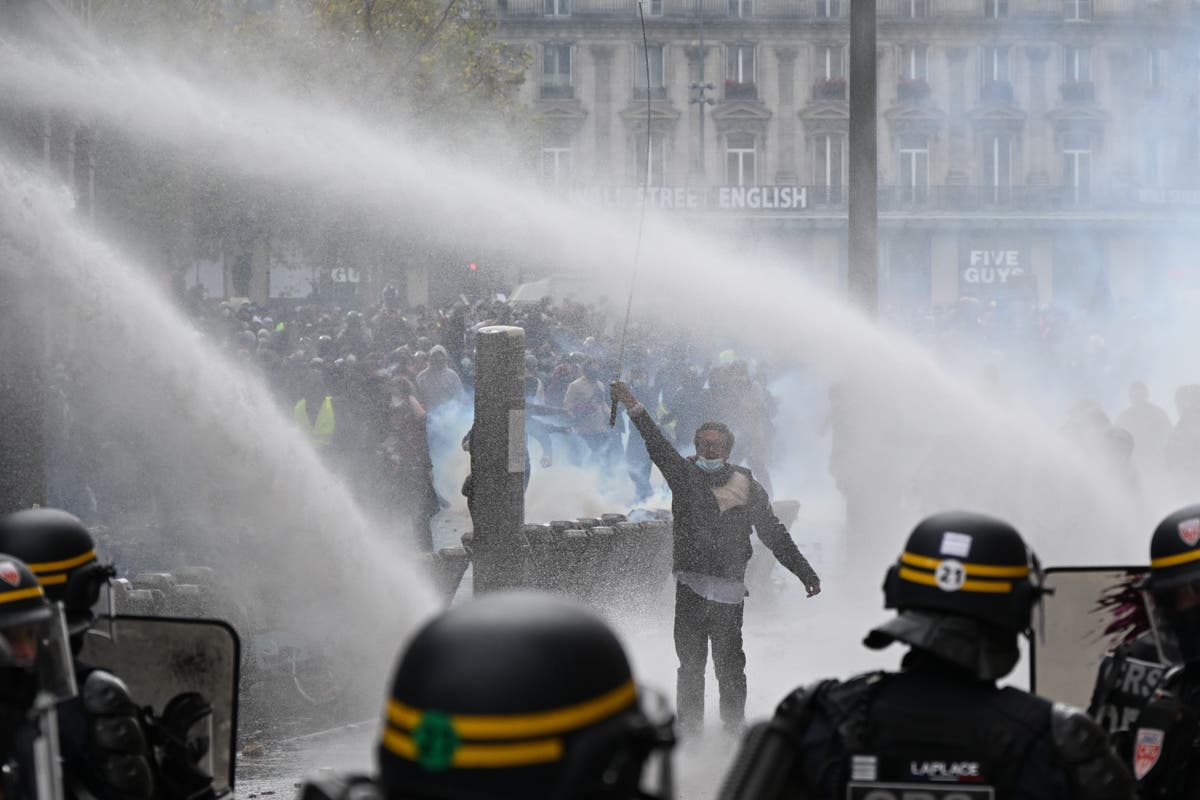
One killed, four injured in drive-by shooting near Paris
One person has died and at least four others have been injured in a drive-by shooting in the Yvelines district west of Paris, a police source said on Friday.
A suspect has been arrested, French broadcaster BFM reported.
Representatives for the prosecutor and the anti-terrorism court did not immediately respond to a request for comment.
Union says ban on 'illegitimate' protests will do little to restore calm
French president Emmanuel Macron said on Thursday that "illegitimate" protests would be banned in coming days. Demonstrations organised by groups such as trade unions would be allowed to proceed but could be diverted along alternative routes, he said.
But Marylise Leon, the general secretary of the CFDT, one of the nation's largest trade unions, said the measure would do little to restore calm, adding that it would be better for the government to make concrete proposals to address people's anger.
"It's counterproductive because there is a lot of anger, a lot of anger and a demand to be considered and to be listened to," she told French broadcaster TF1. "It's not for the president to decide who can legitimately request to protest."

Interior minister expected in Orléans this afternoon
Interior minister Laurent Nuñez is expected to travel to Orléans this afternoon, according to the department's prefecture.
French business activity contracts in October amid political and financial pressures
French business activity unexpectedly contracted in October, marking a quick reversal from September's growth, a survey by S&P Global showed on Friday.
This reflected the sharpest decline in demand for French goods and services since May, which surveyed businesses tied to heightened political uncertainty and economic pressures.
French government borrowing costs have jumped in recent weeks on investor concerns about the country's ability to repair its finances, while waves of street protests have raised the political temperature ahead of a presidential election in the spring.
The S&P Global French flash services PMI for October fell to 48.4 points from 51.2 in September. A figure below 50 shows a contraction in activity, while above 50 shows expansion.

Explained: What does French protest slogan ‘Bismillah, c’est les ténèbres’ mean?
Scrawled on cardboard signs and hoisted high above huge crowds of protesters, a four word phrase has become both a symbol among France’s disaffected youth and a running joke.
The slogan of ‘bismillah, c’est les ténèbres’ - mixing Arabic and French to say ‘In the name of god, it’s the darkness’ - appears to have originated in a Snapchat message.
The post, adorned with Algerian flags, came from a user called Mamadou, who requested to be added to a student group with the message: “Hi, in the name of God, it’s the darkness. When’s the blockade, wallah, bro?”
However, some of France’s student protesters suspect the post was actually sent by an undercover police officer trying to infiltrate their private groups, as authorities struggle to get on top of some of the biggest demonstrations in recent memory.
The Independent looks at what the phrase means and where it comes from:

Protests set to go ahead despite bans
All protests planned for Saturday in Marseille and Lyon, France's second- and third-largest cities, have now been banned, local authorities said.
But fresh demonstrations are already taking shape before what officials fear could be another volatile weekend.
France's main student union, UNEF, has called for rallies on Saturday, while the Yellow Vest movement, the anti-establishment force that emerged in 2018, has filed plans for a march through central Paris.

Meanwhile, businesses in central Paris have begun boarding up their shop windows in case of violence. Luxury goods group Hermes said it had stepped up security measures at its French stores.
Elsewhere, authorities in the northern city of Orleans were bracing for potential unrest as the far-right National Rally was due to hold an annual meeting and unions and left-wing groups planned demonstrations.
A student protest called for Thursday in Paris was initially banned but eventually allowed to go ahead, though metro stations in central Paris were nonetheless shuttered by transit authorities in anticipation of unauthorised gatherings.