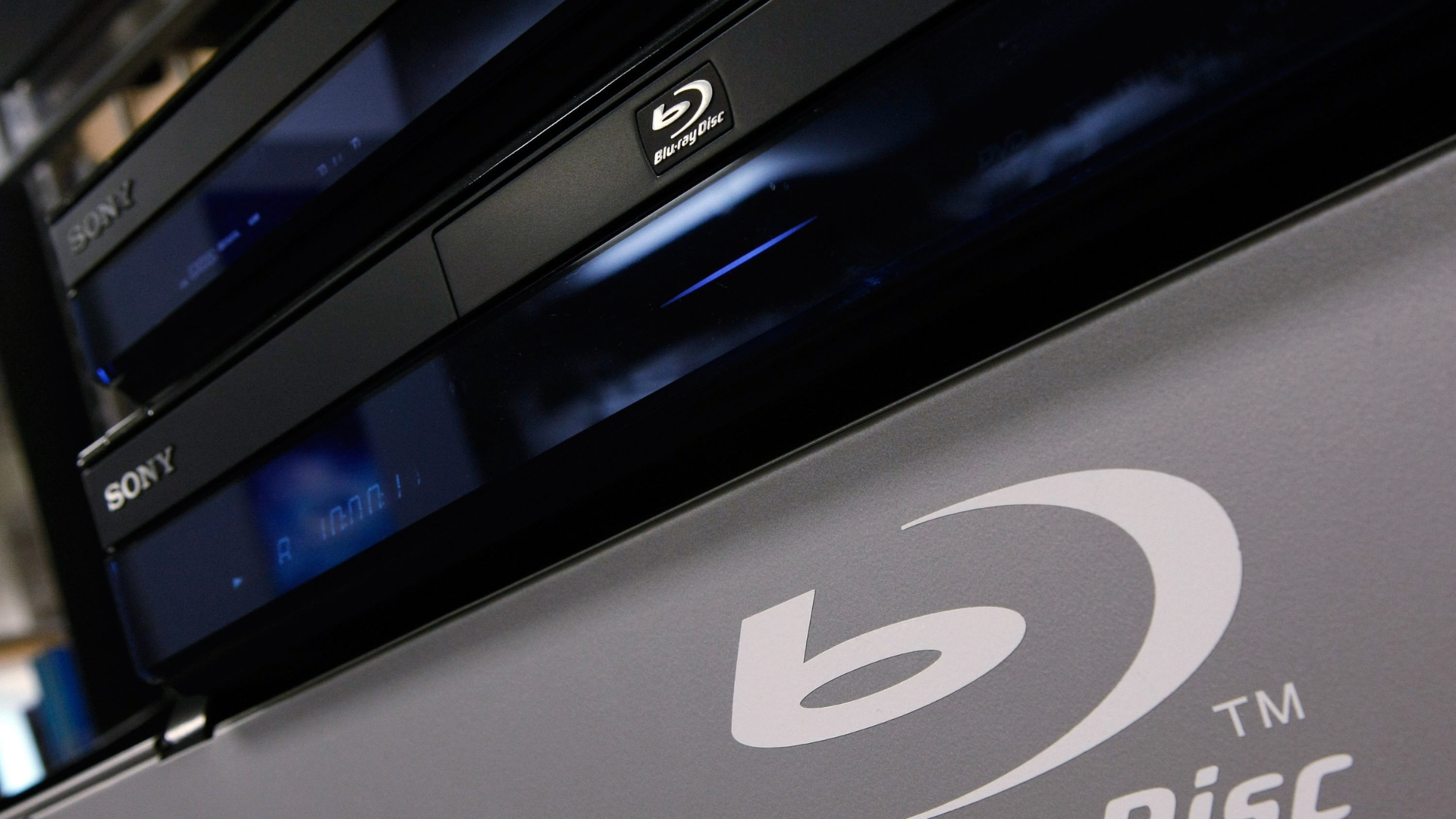
Blu-ray is fading after 20 years in the market, with Sony Japan finally discontinuing its last dedicated Blu-ray player. According to FlatpanelsHD, Sony Japan has finally marked the UBP-X700/K player as “Discontinued,” meaning customers in the country can no longer purchase a new standalone Blu-ray player from the company. This should not come as a surprise, as Sony stopped shipping the players in February of this year, suggesting that Sony only relied on existing inventory for its remaining Blu-ray player sales.
The PlayStation 5 is the only remaining Sony device that can play Blu-ray discs, but the company has also announced that it will end physical game disc production by January 2028. Because of this, some people fear that the upcoming PlayStation 6 will no longer have an optical drive. This move follows in the footsteps of LG, which ended Blu-ray player production in 2024. Japanese electronics companies Elecom and Buffalo have also ended production of Blu-ray drives for PCs this year, although Buffalo Americas says that it is “fully committed to supplying optical drives to the American market, and our DVD/Blu-ray drive products are anticipated to remain available for the near future.”
This move away from physical media and focus on streaming is worrying, especially to those who are concerned that we are moving towards a world where people no longer own anything. Because of this, sales of “retro media,” including CDs and vinyl, went up by 59% and 18% respectively. While you could still purchase a Blu-ray player from other manufacturers like Panasonic, Sony is one of the bigger companies that built and supported the standard, and its move to end the production and sale of Blu-ray players will leave this niche market even smaller. The audiophile market is facing the same dilemma, as some Hi-Fi player manufacturers ended production of selected products because optical drive makers have stopped making the components needed to read SACDs.
Ultra HD Blu-ray is facing the same upheaval that VHS and DVDs went through with the introduction of new formats. But while the older technologies were replaced by higher-quality formats, Blu-ray is being replaced not by more pixels, but by the convenience of streaming. However, it also comes with the caveat that people would no longer own physical media; a trend that worries data archivists.
Follow * Tom's Hardware on Google News**, or* * add us as a preferred source**, to get our latest news, analysis, & reviews in your feeds.*
Get Tom's Hardware's best news and in-depth reviews, straight to your inbox.

Jowi Morales is a tech enthusiast with years of experience working in the industry. He’s been writing with several tech publications since 2021, where he’s been interested in tech hardware and consumer electronics.
-
This move away from physical media and focus on streaming is worrying, especially to those who are concerned that we are moving towards a world where people no longer own anything.
While I agree with this concern, I think it should be pointed out that this was the norm for video stuff prior to the 80s. You do not get home media releases, you wanted to watch something you'll have to catch it on TV or rereleases on cinemas, we are merely reverting to that. What gave us home video rights as an intersection of technology and business case, the internet was not good or mainstream enough to provide video for a long time making physical media the best to distribute video and while you never owned the video content itself, you do own the physical media that contains it so in practice you so.
It's a fundamental limitation of copyright law, companies aren't any obligation to sell you stuff if they don't want to. If all they want to do is rent it to you, they can.
Even if they pass laws that force companies to give you real ownership of digital stuff you buy, they can easily get around it by just renting it and then charging the same as they always did because they own the copyright.
What needs to change is a fundamental rewriting of copyright law to be much more pro consumer while reducing the rights of creators including the time of protection. The 90 year + life of author thing is ridiculous. Right now creator s have way too much power and control over their work and that needs to change. As well companies and creators also need to be forced to sell access rights to consumers at a reasonable price.
But politically this will never happen because creators, both large corporations and the indie writers, are too greedy to give up what they have. Politicians aren't going to side with consumers on this because of the economic activity generated by the industry as well as the strong opposition by the creatives. Reply
-
I think this will end up being seen as a mistake by Sony and they end up walking this one back. It might not be immediate, but they'll likely start up production again at some point sooner than later.Reply
-
I've used my PS5 to play a few blu-rays. Got a PS5 Pro when they went on sale for $600, last year (can you even believe it?). Then, made sure to order the optical drive add-on at the beginning of this year, since I didn't trust them to remain available. Also got the vertical stand for the Pro, which they don't include by default (grrr...)Reply
-
Kicapan07 said:What needs to change is a fundamental rewriting of copyright law to be much more pro consumerLOL, that'll never happen.
Kicapan07 said:while reducing the rights of creators including the time of protection. The 90 year + life of author thing is ridiculous.Yeah, I agree that's ridiculous. A lot of people couldn't believe it when theydidn't keep extending it!
Kicapan07 said:Right now creator s have way too much power and control over their work and that needs to change. As well companies and creators also need to be forced to sell access rights to consumers at a reasonable price.The main thing I wanted to see was antitrust-type laws that forced separation between content producers and content delivery companies (i.e. streamers). However, we're way too far down the road of the two being integrated ever to go back. I sort of hate the idea that the only way you're ever going to see a Netflix movie is if you get a Netflix subscription*. Content from some of the services (e.g. HBO Max) can be rented through Amazon, but will probably never be included as free content in the Prime Video base package.
*A workaround to watching* some* titles that Neflix showed in theaters is to get them on blu-ray. However, that will probably happen less and less.
Kicapan07 said:But politically this will never happen because creators, both large corporations and the indie writers, are too greedy to give up what they have. Politicians aren't going to side with consumers on this because of the economic activity generated by the industry as well as the strong opposition by the creatives.In the long run, I think it would be a net-positive to decouple creators from distributors. Both economically and for consumers. It just would be far too disruptive to break up the big media companies, at this point. Reply
-
This is really hard to swallow knowing the quality difference in video and audio between online streaming and what is available from an HD or UHD Blu-ray disc.
People spend allot of money on modern home AV solutions and most consumers have no idea what they are giving up quality wise when it comes to streaming services.
Not to mention the premium streaming plans that need to be payed for to even get better audio and video streams, that still do not come close to the disc versions.
I hate to think this world is destined for just good enough or average when there is so much more to enjoy if one has the means or passion. Reply
-
SkyBill40 said:I think this will end up being seen as a mistake by Sony and they end up walking this one back. It might not be immediate, but they'll likely start up production again at some point sooner than later.I don't know. I think they're probably getting hit from both sides: rising component costs making the product less profitable, while falling demand and encroachment by Chinese competitors(?) reduces the volume. While they should conceivably get relief on component prices at some point, the shrinking volume seems unlikely to reverse.
That said, I'm really not worried about disc players evercompletely disappearing from store shelves. There's justway too much optical media floating around in the world for demand ever to drop too low to support that market. Reply
-
cbrannan said:This is really hard to swallow knowing the quality difference in video and audio between online streaming and what is available from an HD or UHD Blu-ray disc.
People spend allot of money on modern home AV solutions and most consumers have no idea what they are giving up quality wise when it comes to streaming services.
Not to mention the premium streaming plans that need to be payed for to even get better audio and video streams, that still do not come close to the disc versions.You have to get a UHD disc, if you want HDR10 and Rec 2020 color space. Those are annoyingly kinda expensive. I rarely see them drop below $25, these days, and there hasn't been the amount of sales volume that would support a vibrant used market for them.
And the UHD spec is not being updated to support even newer formats. They managed to add baseline Dolby Vision to it, but the door is closed on everything else. No AV1 or h.266, either. Reply
-
bit_user said:You have to get a UHD disc, if you want HDR10 and Rec 2020 color space. Those are annoyingly kinda expensive. I rarely see them drop below $25, these days, and there hasn't been the amount of sales volume that would support a vibrant used market for them.
And the UHD spec is not being updated to support even newer formats. They managed to add baseline Dolby Vision to it, but the door is closed on everything else.The performance associated with reduced bit rate quality, with codec composition and interpolation used by streaming services, along with FAPs, and latency with Internet connections well outweighs needing the latest amd greatest HDR10 with REC2020 or REC2100.
The quality difference is there even with mainstream HD/REC709, and HDR10/DCI-P3 physical video formats and color spaces available on displays, not even getting into the readily available audio standards.
This is all much more in my experience than the average consumer knows, till they enter an electronics store and see/hear a HD or UHD disc being played and ask the sales people why does this look or sound so much better than what I get on my streaming player at home hooked up to my brand new 4k tv..
Just my 2C. Reply
-
bit_user said:I don't know. I think they're probably getting hit from both sides: rising component costs making the product less profitable, while falling demand and encroachment by Chinese competitors(?) reduces the volume. While they should conceivably get relief on component prices at some point, the shrinking volume seems unlikely to reverse.
That said, I'm really not worried about disc players evercompletely disappearing from store shelves. There's justway too much optical media floating around in the world for demand ever to drop too low to support that market.Understandable concerns, for sure.
My hope is that my existing Sony 4k unit doesn't suffer some kind of failure and I find myself in what would then become a difficult predicament to replace it. I suppose I could buy an optical drive and set up a small HTPC rig to play them instead seeing I've got some spare parts lying around which would certainly handle that task. Alas, we're going to be in a state of "wait and see" and that can go either direction.
Still, a highly dubious time for enjoyers of physical media no matter how one chooses to view it. Reply
-
There's no technical reason preventing a new optical format. They could take the previously manufactured Archival Disc, 300 GB or 500 GB (1 TB was never made), put H.266 video on there (UHD Blu-ray uses H.265 up to 100 GB), and you'd have even higher quality 4K or 8K, and more runtime.
But while some bemoan the slow death of optical discs, consumers helped to kill it by switching to streaming. Too bad about this timeline. Reply