Wednesday's top story:AfD leaders downplay potential damage from massive email hack
Internal emails from far-right Alternative for Germany leaders, including Alice Weidel, Tino Chrupalla and Alexander Gauland, were published online this week after the party suffered a cyberattack in which a massive amount of data was obtained.
On Tuesday a party spokesman confirmed the cyberattack to German media outlets, but otherwise the party has remained tight-lipped about how much sensitive data was made available and how damaging it could be.
READ ALSO: Alternative for Germany confirms hack after 421,000 emails leaked online
According to a report by Tagesspiegel, internally the party has reacted without much alarm. They've suggested that the data is outdated, since it was mostly tied to old email addresses.
A data expert, however, told Tagesspiegel that some of the emails, which are publicly available on a website archive, are from the past year.
Even a cursory glance at the emails available suggests evidence that the leaked data could create serious problems for the party. Content includes severely racist and antisemitic language, and also top-level leadership discussing points around fraud and violations of German law.
Because of the size of the files, almost 300 gigabytes in total, it's expected to take weeks for investigators to parse through it all and determine what can be proven to be authentic.

Tobacco tax hike hits immediately due to Finance Ministry mistake
The law to raise tobacco taxes was published on Tuesday, with tax rates set to first increase from the start of 2027. But an error in the text written by the Finance Ministry would have the tax hiked immediately – at least on paper.
One sentence of the law, as was published in the Federal Law Gazette caused a stir.
As it's written it says, "This law comes into force the day after its promulgation" – or the day after the law is entered into force, in other words.
The Federal Ministry of Finance has confirmed the error, after it was reported by Bild newspaper.
A spokesperson for the Ministry explained upon inquiry that a technical error had occurred with the effective date.
Officials say the error is to be corrected, and the General Directorate of Customs, which is responsible for collecting tobacco tax, has already been informed.
According to the law as written tobacco manufacturers should already be paying more taxes, even though the necessary tax stamps are not yet available.
The ministry assured that the new tax rates will not take effect until the beginning of 2027, as planned.
READ ALSO: Germany set to approve major hikes in tobacco tax
The German Tobacco Industry Association (VdR), however, had harsh words. "It's astonishing that such a blatant error could happen in a federal ministry...That's amateur. It leaves me speechless," said Maximilian van Ackeren of the VdR.
Investors pledge 230 billion euros at German summit
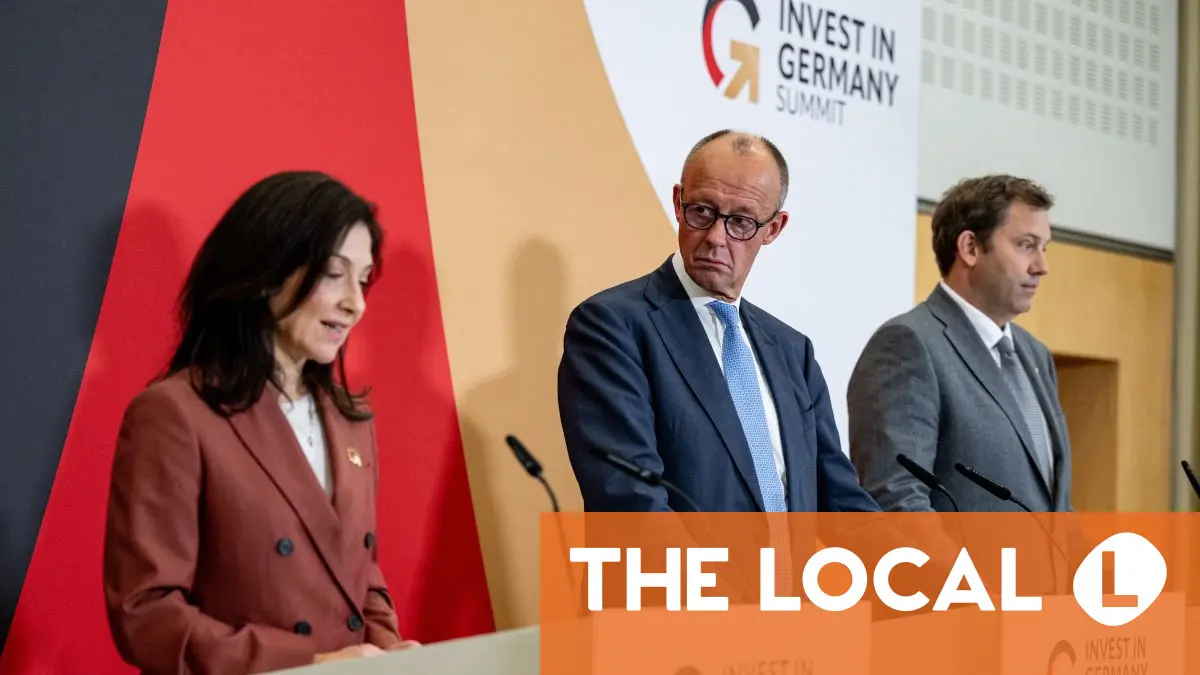
Major companies at an economic summit hosted by the German government have committed to investing around 230 billion euros, Chancellor Friedrich Merz said Tuesday in Berlin.
"Investments are a key factor for the future of our country, for its growth and its competitiveness. They bring with them more jobs, increased production, more services, and a better future for our children and grandchildren," Merz said.
The chancellor noted in particular a German government partnership with US chipmaking giant Nvidia, an Amazon investment worth 16 billion euros, as well as unspecified commitments by the German retail conglomerate Schwarz Group, the US investment firm Blackstone, software giant Microsoft and the French pharmaceuticals giant Sanofi.
Merz's government hosted the two-day Invest in Germany summit as part of a push to draw more foreign money into Europe's largest economy, which has struggled for several years with sluggish growth and diminished global competitiveness for some of its blue-chip firms.
During the gathering, which the government said drew more than 200 corporate leaders to Berlin, Merz touted reforms aimed at streamlining regulatory requirements and cited a massive spending campaign to upgrade the country's infrastructure and military.
READ ALSO: Amazon to invest €16 billion in Germany in 2027, including in AIIntegration commissioner hails Turkish labour agreement legacy
Germany’s Integration Commissioner, Natalie Pawlik, has described the labour recruitment agreement signed with Turkey 65 years ago as a major success, crediting generations of Turkish migrants with helping to shape modern Germany.
Speaking on Tuesday, the SPD politician said the workers who arrived under the agreement, along with their children and grandchildren, had played a crucial role in transforming Germany into a country of immigration.
Pawlik argued that integration has improved significantly over the past six decades. She pointed to better access to language and integration courses, faster recognition of foreign qualifications and the development of a more comprehensive support infrastructure for newcomers.
But she warned that significant challenges remain. Educational attainment in Germany continues to be strongly influenced by social background, and Pawlik called for further reforms to ensure equal opportunities for all children.
She also criticised the persistence of discrimination against people with Turkish surnames, attributing it to lingering social prejudices and an increasingly hostile political climate on migration.
The comments came ahead of the 65th anniversary of the 1961 labour recruitment agreement, which laid the foundations for Germany’s large Turkish community.
READ ALSO: Germany looks back at decades of Turkish immigrationMerz warns against socialising housing in Berlin
With a Left party-led state government in Berlin looking more and more likely, members of the conservative Union parties are increasing their warnings against proposals to socialise a large portion of housing stock in the capital.
Chancellor Friedrich Merz has warned against the plans which are currently supported by the Left Party, the Greens, and the Social Democrats in Berlin.
"The protection of property and trust in a functioning market are both deeply rooted in our economic policy convictions," Merz said at the conclusion of an investment summit in Berlin. "This is the foundation of our market economy, and you don't experiment with that."
Merz emphasised that the federal government would improve the conditions for investments in Germany. He cited less bureaucracy and faster approval processes as examples.
According to their exploratory paper, the Left Party, the Greens and the SPD in Berlin plan to socialise private housing corporations with a portfolio of 10,000 apartments or more in the capital, in exchange for compensation.
Economics Minister Katherina Reiche (CDU) also reiterated her criticism of the plan: "Private investments must be protected. Expropriation is out of the question for us."
READ ALSO: How a left-wing coalition in Berlin would reshape housing and integration