Defense Secretary Pete Hegseth has signed off testing for a military-grade heat ray to potentially be used at the U.S.-Mexico border – a measure other U.S. officials have previously passed on.
The Pentagon gave the Department of Homeland Security permission to test and develop potential tactics for the heat ray to be deployed at the southern border, according to a memo obtained by CNN.
The non-lethal weapon - officially known as the Active Denial System - sends an invisible beam of energy shooting out to a distance of around half a mile. The energy beam causes an intense burning sensation on human skin and is meant to act as a deterrent, the U.S. military said in the memo.
Hegseth signed and approved a seven-month loan for the weapon starting in September. He appeared to try to shield the Pentagon from responsibility, though, stating in the memo the system “shall not be operated by [Department of War] personnel,” according to the report.
Deploying the heat ray at the U.S.-Mexico border would be an unprecedented move. Over the years, there have been internal discussions among U.S. Customs and Border Protection officials about using the system at the southern border for crowd dispersal but it has never been implemented before, sources told CNN.
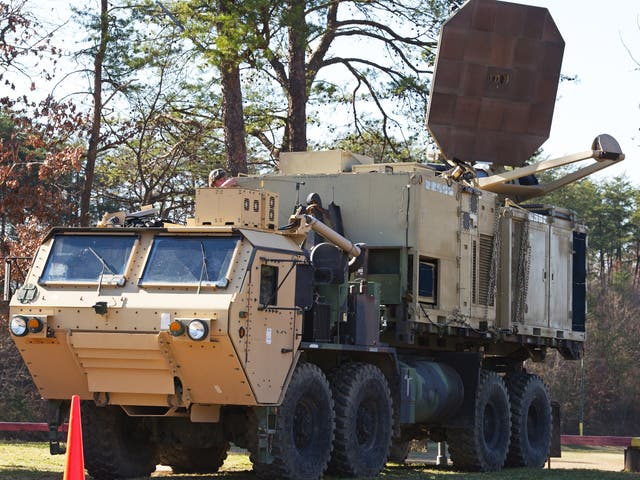
The heat ray’s beam causes a tingling sensation on skin that can last between 10 and 15 minutes and creates an “instinctive and irresistible urge to run from the effect,” according to the memo.
U.S. officials have also considered deploying the heat ray system during moments of domestic unrest, including at the end of President Donald Trump’s first term and following the murder of George Floyd in 2020, former U.S. officials with knowledge of those discussions told CNN.
The system was even brought to Afghanistan by the U.S. military in 2010 but ultimately never used.
The memo did not specify where or how the weapon would be tested, or how officials hoped to potentially implement it at the border.

Border officials have raised concerns over the legality and potential harm that could be caused by using the system.
“Even if they’re chasing people back to the river, you don’t want them to go in and drown,” a former Customs and Border Protection official told CNN. “For the cost, for the training and for the policies you’re going to create, is the juice worth the squeeze?”
A Customs and Border Protection spokesperson told The Independent: “CBP is continually evaluating new technology, especially new technology that can save lives while simultaneously enhancing national security effectiveness.”
A Pentagon spokesperson referred The Independent to the Department of Defense. DOD referred to CBP’s comment.