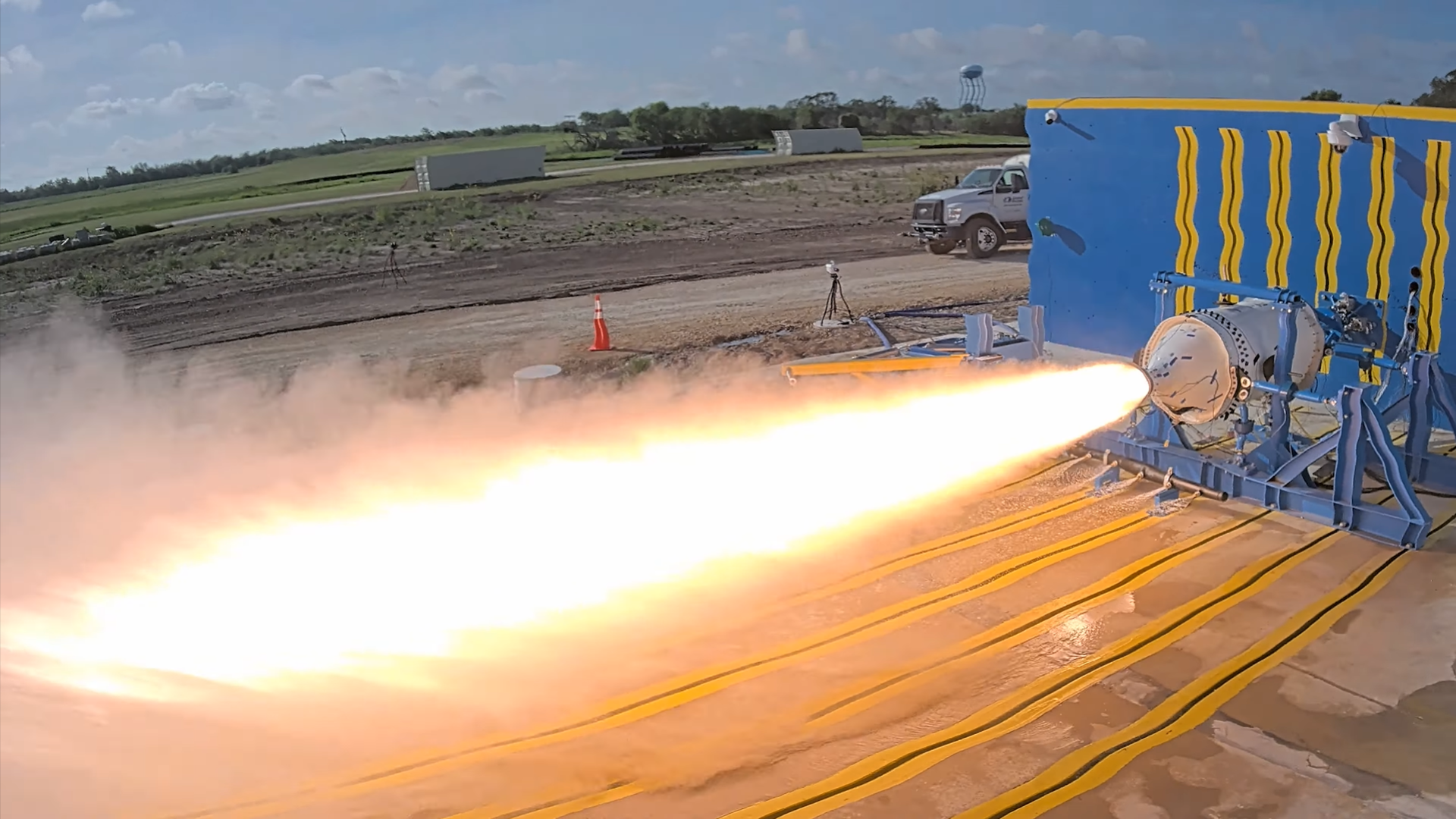
X-Bow Systems, a solid rocket motor (SRM) manufacturer specializing in additive manufacturing (AM), has secured a deal with Leidos to develop and build rocket boosters for the U.S. Army’s Low-Cost Containerized Munition (LCCM) project. According to 3D Printing Industry, the LCCM is one of the Department of War’s programs under the “Arsenal of Freedom” initiative, which aims to rebuild the United States’ defense industrial base.
“Modern conflict is decided by how many rounds you can put downrange, not how exquisite each one is,” X-Bow founder and CEO Jason Hundley said. He also added that collaborating with Leidos would allow it to “turn out combat-ready rocket motors at production scale, fast.” Even though X-Bow Systems is a relatively new company, having been founded in 2016, it has already successfully produced over 2,100 combat-ready rocket motors. This means that it has the experience and expertise to produce the rocket engines in the numbers that the U.S. Army requires.

While conventional manufacturing methods still offer several advantages over 3D printing, the latter is still more effective when dealing with the complex geometries that some SRMs require. It’s also a faster solution when you need to iterate designs multiple times, which is why X-Bow can create and build new designs in a matter of days, instead of the months or years that it takes traditional defense contractors to prototype and test rocket motors.
Other companies have been experimenting and working with 3D-printed SRMs — Chromatic 3D Materials has completed a successful static-fire test of its 3D-printed rocket propellant earlier this year, while Indian startup Othisis successfully demonstrated its cryogenic rocket engine in August. One 3D-printing enthusiast was even able to create a DIY MANPADS for under $100.
3D-printing technology isn’t limited to rocket motors, either. Another startup secured a $30 million contract to prototype 3D-printed jet engines for the USAF for drones and other long-range weapons, while the U.S. Navy has started 3D-printing drones and parts aboard aircraft carriers. Some U.S. Army troops have also started 3D-printing ‘Dragoon Bombs’ and paired them with in-house assembled drones for anti-personnel and anti-light-armor missions at distances of up to 12 miles.
Drones and 3D printing have been around for decades, but the war in Ukraine is the first time that we see these technologies deployed at such a scale on the battlefield. It also demonstrated that their innovative use could help a smaller force to withstand the brunt of a larger military. This is probably why larger militaries like the U.S. and Japan are looking at these technologies for more cost-effective weapons.
Follow * Tom's Hardware on Google News**, or* * add us as a preferred source**, to get our latest news, analysis, & reviews in your feeds.*
Get Tom's Hardware's best news and in-depth reviews, straight to your inbox.

Jowi Morales is a tech enthusiast with years of experience working in the industry. He’s been writing with several tech publications since 2021, where he’s been interested in tech hardware and consumer electronics.
- bolweval said:wonderful...it's always good when you can find a cost effective way to kill people...This but unironically
John musbach said:Good luck, from my experience 3d printed stuff isn't that durableMetal or plastic? Reply John musbach said:Good luck, from my experience 3d printed stuff isn't that durableYou and I printing things on our home 3D printers is completely* different than what is being used here.
Both process and materials. Reply