Friday's top story:Germany and France strike deal to further relax EU auto emissions rules
France and Germany have reached a provisional agreement on the future direction of the European automotive industry, ending a lengthy dispute over emissions rules and industrial policy.
Under the agreement, France and Germany support a further relaxation of proposed EU vehicle emissions requirements. The compromise would make it easier for car manufacturers to meet carbon reduction targets by removing a requirement to offset remaining emissions through measures such as the use of low-carbon steel.
It would also allow vehicles powered by renewable fuels to qualify as “zero-emission” and extend regulatory incentives previously reserved for smaller electric vehicles to all vehicle types.
The agreement also addresses the definition of “made in Europe” for public procurement and industrial support schemes. While the framework will remain focused on EU member states, it will allow certain non-EU countries, including the United Kingdom and Norway, to participate under specific conditions.
The UK government welcomed the move, citing the close integration of British and European automotive supply chains.
READ ALSO: Can Germany save its car industry as job cuts intensify?EU will need to increase Ukraine funding to plug gap, says Merz
Germany's Chancellor Friedrich Merz said Thursday the European Union will have to find more money to finance Ukraine, as Kyiv warns it faces a major budget shortfall next year.
"We must do everything we can to help Ukraine through the winter and also to help next year," Merz said at the start of a two-day summit of EU leaders in Brussels for crunch budget talks.
"We will have to increase the funds again in order to really assist Ukraine on a lasting basis."
Ukraine's President Volodymyr Zelensky was heading to Brussels to join the meeting on Friday in a bid to rally support amid fresh tension with US President Donald Trump.

The war-torn country is facing a dire winter as Moscow has stepped up bombardments, and relations with Washington have soured after Trump struck a deal with Russia to supply diesel fuel.
The mood has darkened as Ukraine has complained that its battlefield access to the US-provided Starlink satellite communications system has been hampered.
Merz's support stands in stark contrast to the views of the far-right AfD, the party currently leading national voter polls, which passed a state motion in Saxony-Anhalt this week calling on the government to end its support for Ukraine.
READ ALSO: Germany's AfD and populist BSW pass motion to end aid for UkraineTraveller found with snakes and lizards at German airport
German customs officials found 90 lizards and venomous snakes hidden in containers and socks in a Mexican traveller's luggage as he arrived at Cologne airport, authorities said Thursday.
The 45-year-old was stopped at the airport last month and given a drug test after behaving in a "nervous" manner, the western city's customs office said.
The results indicated the man, a firefighter who was not named by authorities, had taken cocaine.
Officials searched his suitcase. Instead of finding narcotics, they discovered around 90 snakes and lizards in plastic containers, shampoo and cream bottles, and socks.

"My colleagues at the airport are used to all sorts of travel souvenirs in suitcases, but we've never had 37 venomous snakes and 55 lizards from Mexico before," said customs office spokesman Jens Ahland.
"It's distressing to see what some people do to animals out of sheer greed for profit."
The animals included vipers, rattlesnakes and various species of lizard, including iguanas. Most were alive although about 30 died during and after the journey, the customs office told AFP.
The surviving animals are now being cared for at a snake farm in central Germany.
The man, who said he had brought the animals to Germany as a favour for a friend, was denied entry to the country.
Bundestag approves law enabling smartphone-based digital identity
Germany’s Bundestag has approved legislation paving the way for the introduction of a digital wallet that will allow citizens to verify their identity using a smartphone.
The Digital Identities Act, backed by the governing CDU/CSU and SPD coalition, will support digital identification, age verification, electronic signatures and the management of official documents. Use of the system will remain voluntary.
The digital wallet, known across the European Union as the EUDI Wallet and branded in Germany as “d-you”, is scheduled to launch in January 2027.
READ ALSO: What are the digital IDs you can get in Germany?
Digital Affairs Minister Karsten Wildberger described the initiative as a secure and convenient form of identification for everyday life, arguing that it will simplify interactions with public services and businesses.
A recent Bitkom survey found that 53 percent of Germans intend to use the digital wallet, although awareness remains a significant challenge. Nearly half of respondents had never heard of the project.
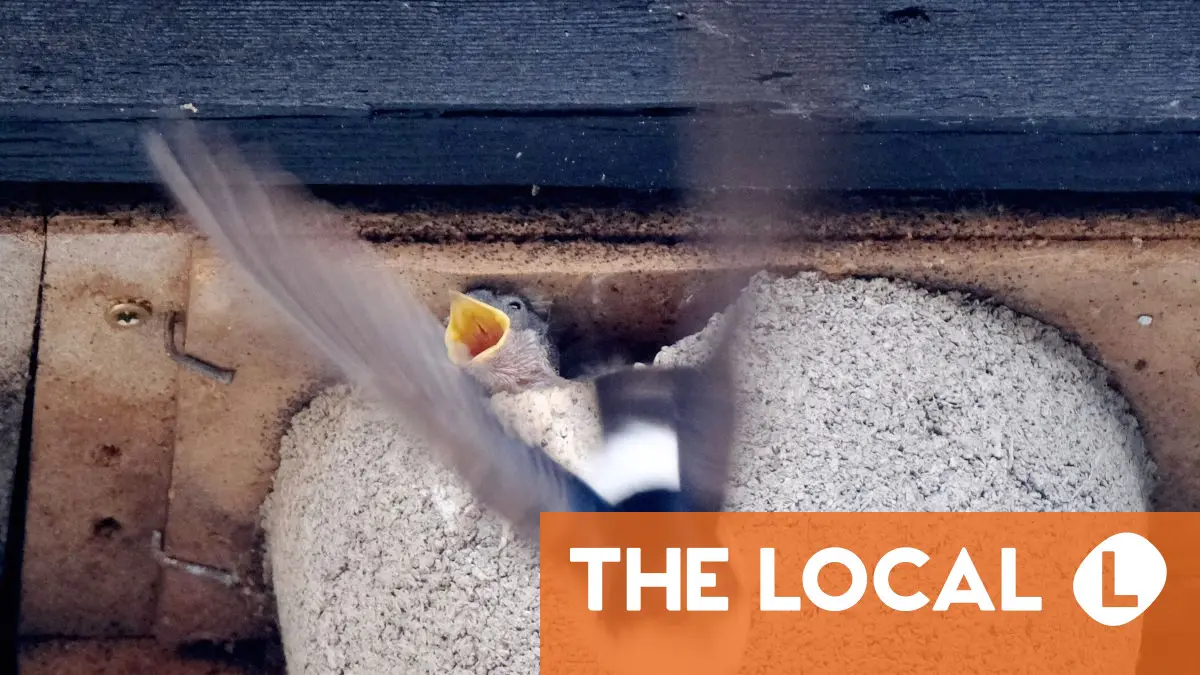
House martin named Germany’s Bird of the Year for 2027
The house martin has been voted Germany’s Bird of the Year for 2027 following a public poll organised by the conservation groups Nabu and the State Association for Bird and Nature Conservation.
House martins are small migratory birds, measuring around 14 centimetres in length, with dark upperparts and distinctive white underparts and rump. They typically breed in colonies, constructing enclosed mud nests beneath roof eaves and building overhangs. Their diet consists mainly of flying insects, which they catch while airborne.
The species secured 45.1 percent of the vote.
Despite still numbering up to 770,000 breeding pairs in Germany, conservationists warn that the species is in decline. According to Nabu, the destruction of nests, deterrent measures on buildings, modern construction methods and increasing land sealing are making nesting more difficult. Falling insect populations are also reducing a vital food source.
READ ALSO: How will the 'super El Niño' affect winter weather in Germany?
Nearly 150,000 people participated in the vote. The house martin is currently spending the winter south of the Sahara and is not expected to return to Germany until early April, when the breeding season begins.
With reporting by AFP and Paul Krantz.