Long-tailed tits: The sociable and noisy birds who work with others to raise their offspring
Sociable and noisy, during colder weather long-tailed tits can be spotted in flocks and work with others to raise their offspring. Andy Brown reports.
Most of us think that pairs of birds work together to raise their young. That isn’t always what happens. Around 20 per cent of young birds are not the genetic offspring of the father who helps to tend for them.
Female birds have a tendency to accept matings with the most attractive bird around and then to rely on the work of a more dependable male to raise their brood.
The long-term male partner works hard on the collective task of raising the next generation without passing on any of his own genes.
To our eyes, that looks very much like a form of cheating, but there are also plenty of examples of birds helping to raise offspring that aren’t their own that appear to be entirely voluntary and selfless. A lot of couples get help from outside the pair bond, and that makes a big difference to whether their nest succeeds.
From the perspective of the couple, recruiting helpers makes huge sense. It is hard work constantly feeding and warming young, and if they can get help from other birds, it makes the job a lot easier.
From the point of view of the helper, it is rather harder to understand why they would put in significant effort to help a couple to raise a clutch when they clearly know that none of the children are theirs. Often the helpers are related to the mother of the bird that is trying to raise the chicks. Not always.
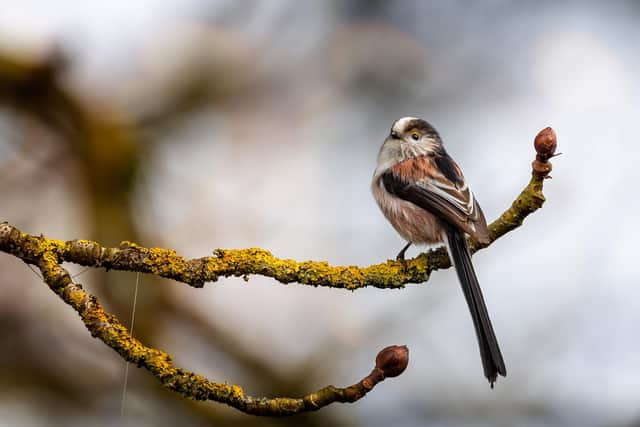
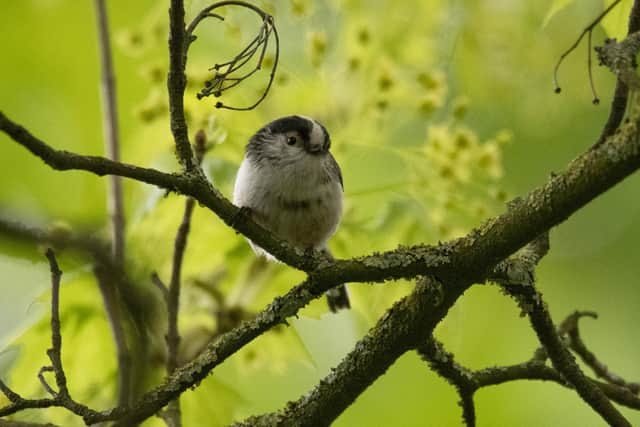
Some very common British birds, like the long-tailed tits, rely heavily on a group of adults to support the prime carers. Some of the helpers are children from previous years who have hung around close to their mother and end up lending a hand with a future nest. Others are just birds that tried to nest themselves and failed, ending up with no outlet for their instinct to raise a chick other than to help the flock.
In terms of selfish individual genetics, there is absolutely no gain for an unrelated bird to work alongside parents to raise someone else’s children. For the species, it is, however, a huge advantage to achieve a degree of social support and selfless behaviour.
Some of the most successful species on our planet have passed on a tendency to work together to raise future generations regardless of individual self-interest.
In bees, ants, cockroaches and humans it is commonplace for individuals to give up their own breeding opportunities to support others, even to the extent of sacrificing individual lives to defend the best interests of the entire community.
Without that tendency, our species would never have survived in the challenging environment of the African savanna. In long-tailed tits, some of the drivers towards collaboration come from the circumstances in which they live. Being very small, these birds need to share body warmth in winter and often huddle together. That tends to make them very social.
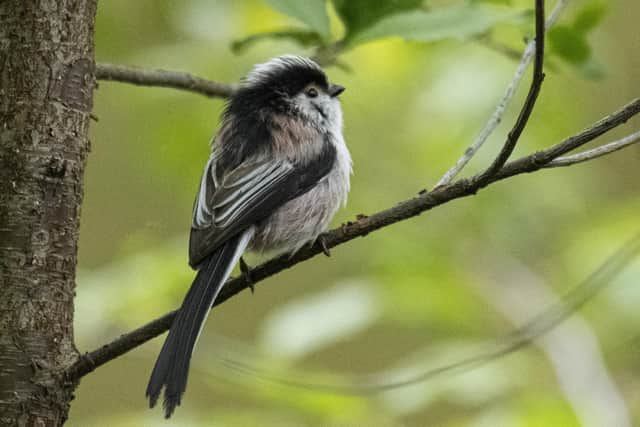
Their entire lifestyle is lived in flocks that provide significant protection. No one bird can keep its eyes skinned for predators at all times and also succeed in feeding for long enough to survive and prosper. Living in a communal flock makes that a lot easier.
When they start to breed, mature birds usually separate off as pairs and attempt to raise their own chicks. For less experienced birds this can often go wrong. The nest fails. A selfish individual might then give up and wait until next year to breed.
Long-tailed tits tend to take a different approach. They actively seek out a breeding pair to help. They provide food for their adopted nest and may even take a turn in sitting and warming the nest.
There might be two or three additional birds helping the core couple to raise the next generation, and those birds aren’t always genetically linked.
For the species, this helps survival. Groups of birds that co-operate like this are much more likely to pass on their genes than groups that don’t co-operate, and so there is a mechanism to reward selfless genes. Flocks that have a tendency to collaborate are better at breeding than those that leave couples to do the job alone.
There is also likely to be a significant gain for a helper bird in future years. Being up close and actively part of the job of rearing the next generation is a learning experience. A failure to breed this year might be improved upon next time round if useful skills have been acquired.
Long-tailed tits are a very successful species that can be found in woodlands across the UK. Living and working together works well for them. As for whether we humans successfully retain our ability to collaborate as well as compete – I leave that to your own judgement.