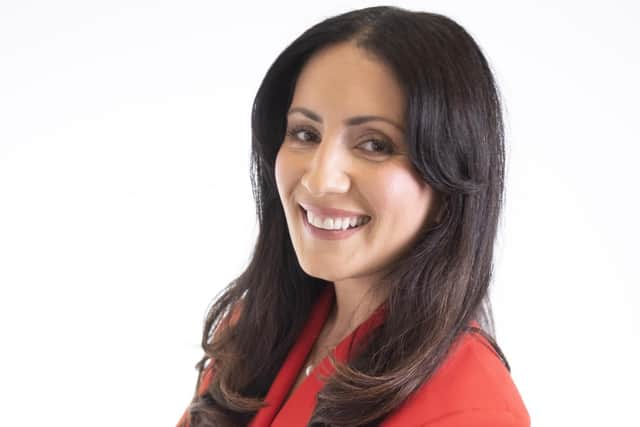
We’ve made menopause visible, now we need to make menopause care better - Dr Lubna Khan-Salim
For decades, women were told that hot flushes, sleepless nights, brain fog, anxiety and changing bodies were simply something they had to put up with. Thankfully, times have changed.
Menopause is now firmly on the health agenda. Women are talking about it openly, workplaces are beginning to recognise its impact, and HRT is no longer the taboo it once was.
But as we mark Menopause Awareness Month, I believe we need to ask ourselves a difficult question: have we actually made menopause care better, or have we simply made menopause more visible? Because there is a new problem emerging.
Women are now faced with an extraordinary amount of information about menopause. Social media is full of advice about hormones, supplements, diets, testing, treatments and ‘hacks’ for feeling better. Some of it is useful. Some of it is misleading. And much of it is presented with such confidence that it can be difficult to distinguish evidence-based medicine from marketing.
We have replaced the menopause information vacuum with menopause information overload.
As a doctor, I regularly see women who have spent hours researching their symptoms online, sometimes spending considerable amounts of money trying different products or treatments, but still don't know what is actually relevant to them.
And this matters because menopause isn't simply about hot flushes or whether someone should take HRT.
Midlife is a critical period for women's long-term health. Changes in hormones can intersect with sleep, mental health, cardiovascular health, bone health, muscle mass, sexual health, pelvic health and metabolic health. These things don't exist in isolation.
Yet our healthcare system can still feel fragmented. A woman may see one person about her hormones, another about pelvic health and another about her mental health, while the wider picture of her health is rarely considered as a whole.
I believe we need to move the conversation on from managing menopause to understanding women's health through midlife and beyond.
That doesn't mean prescribing HRT to everyone. Nor does it mean dismissing it. It means taking the time to understand the individual woman sitting in front of us, using evidence-based medicine, listening to her concerns and looking at her health more holistically. It also means tackling inequality.
A women's health revolution cannot simply benefit those who have the time, confidence and disposable income to navigate an increasingly complicated marketplace of private tests, supplements and treatments. Access to good information and appropriate healthcare should not depend on how well you can navigate Instagram or how much you can afford to spend.
This is one of the reasons I, alongside two other female doctors, am opening Bloom Longevity Labs in Leeds this November.
Bloom was born from our frustration with a healthcare system that can sometimes treat women's health as a collection of separate problems rather than looking at the woman as a whole.
Menopause isn't an ending. It is a significant transition for women and potentially an opportunity to take stock of our health in a way we may not have done before.
We have worked hard to make menopause visible.
Now, we need to make sure women are being given the right information, the right support and genuinely joined-up care to help them thrive through it.
That, for me, is the next chapter of the menopause conversation.
Dr Lubna Khan-Salim is the co-founder of Bloom Longevity Labs.