A new hunt for Amelia Earhart’s plane is underway and researchers have entered a critical phase.
A 17-person team has arrived at the Republic of Kiribati’s Nikumaroro Island after a five-day ocean voyage across the South Pacific. The team will start its investigation of the area Wednesday, Purdue University says.
The group, funded by the university, is investigating a peculiar object that can be seen in satellite imagery and could be the plane.
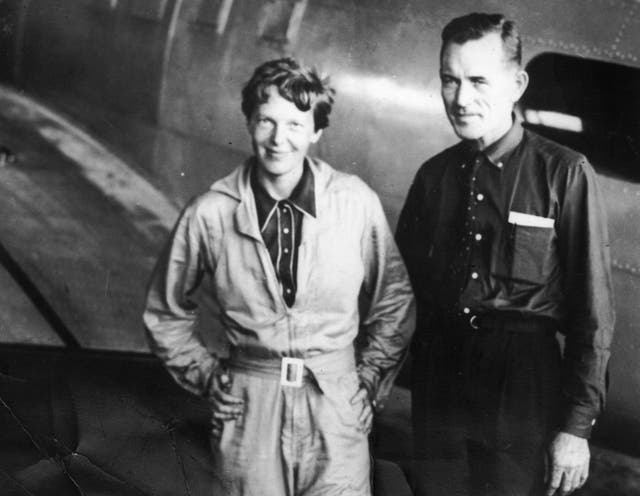
Earhart was a pioneering American explorer and the first woman to make a solo flight across the Atlantic. She went missing with navigator Fred Noonan on July 2, 1937, after her Lockheed 10E Electra twin-engine plane ran low on fuel and vanished over the Pacific.
Earhart, 39, and Noonan, 44, had been attempting to fly around the world. The pair were flying to nearby Howland Island, about 400 miles north of Nikumarono, when their aircraft disappeared.
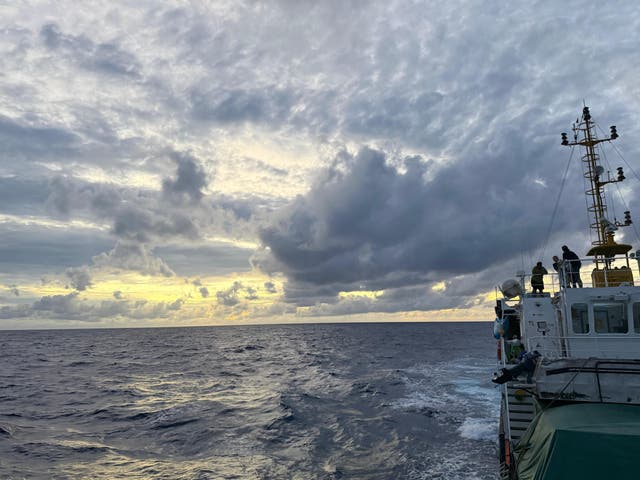
The investigators are transporting equipment and will clear jungle vegetation and set up operations at the coral atoll’s central lagoon. They’ll start their investigation at the island’s southwestern Taraia Peninsula.
They will survey the peninsula’s edge to see if there are any artifacts at the surface and take a boat to lay out transect lines in surrounding water. Transect lines are measuring tape that helps scientists set up a search area and mark where they’ve looked.
To detect any metal in the area, they’ll use an underwater metal detector known as a magnetometer.
The team will also deploy sonar technology to detect the object under the seafloor. Sonar tech emits pulses of sound into the water. If there’s something in the sound wave’s way, it will bounce off the object and return a reading.
Lastly, the team will use two tools called a hydroprobe and induction dredge, which will help determine the object’s depth and direction and remove sediment for visual inspection.
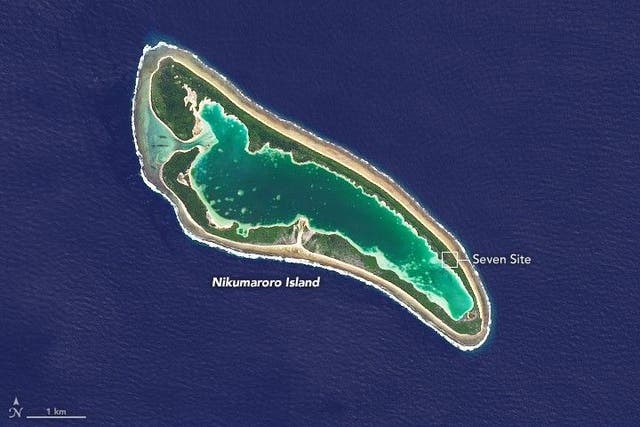
The object is believed to be only 10 feet from the shore of the lagoon and around five feet below the surface. Photos of the object have been captured dating back to the year the plane went missing.
It has been seven years since the last authorized expedition at Nikumaroro and more than 15 years since anyone has been on the Taraia Peninsula.
“It is incredibly rewarding to be this close to completing our inspection of the Taraia Object and potentially solving, at long last, the outstanding mystery of the disappearance of Amelia Earhart and Fred Noonan more than 89 years ago,” expedition leader Rick Pettigrew, executive director of the Archaeological Legacy Institute, said in a Monday statement.