The doubling of council tax on second homes in North Yorkshire is not working - Jayne Dowle
Ask around in Whitby, Scarborough and Filey and you’ll be hard pushed to find anyone who really agrees that the doubling of council tax on second homes has brought the expected benefits.
Those whom the policy, introduced by North Yorkshire Council last year, is purported to help - first-time buyers and families trying to get on the housing ladder but finding affordability and availability beyond them - tend to be pretty nonplussed by this flagship Westminster-led decision.
Introduced by Conservative PM Boris Johnson and enacted into law by his successor, Rishi Sunak, as part of the Levelling Up and Regeneration Act 2023, I always thought it was an odd one for the Tories.
At heart, the government said that the second homes levy would be a means for local councils to generate more cash to be invested in improving their own housing stock and to support schemes to build more affordable homes.
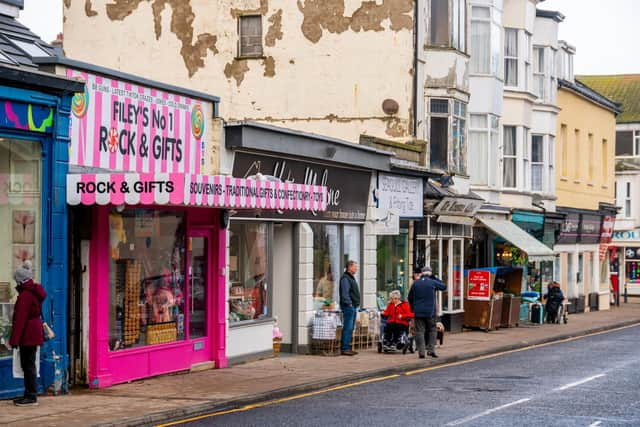
However, this isn’t happening, according to coastal campaign group Shout (Second Homeowners Opposed to Unfair Taxation). Rather, what they refer to as “the law of unintended consequences” is rapidly devastating the very communities the second homes levy was supposed to protect.
"The assumption appears to be that reducing the number of second homes will automatically increase housing availability for local people,” argues Colin Unwin, from Shout, who is leading a 1,000-signature petition demanding that North Yorkshire Council suspend the second homes council tax levy.
Unwin says that a major flaw is that many second homes in coastal areas are simply not the type of properties that first-time buyers or local families would like to live in. And this was certainly borne out by my research a couple of years ago.
In Whitby, for example, a typical second home might be a historic town centre or harbourside cottage in a yard with no parking. By modern standards the living space will be compact, the bedrooms small, the bathroom a basic shower room. Schools are a hike away.
In Filey, a lot of second homes are flats in converted historic buildings. Scarborough is a similar scene. Whilst first-time buyers may opt for flats in cities, it’s a different story in seaside towns. And these properties would never be the first choice of families. Such subtleties were never taken into account.
Likening the policy to a blunt instrument, campaigners told a meeting of the Thirsk and Malton area committee that before it was rolled out, no consultation was undertaken. Importantly, no estate agents were approached before or after to share their professional assessment of how it might affect local house prices - this “major fiscal intervention was applied without understanding the market it would affect”.
Did ministers and civil servants sitting in Westminster simply assume that once local councils had the increased council tax payments in their coffers, they would go ahead and magic up scores of starter homes?
The first step is to find a suitable site and then the other side of the local argument comes in - people who don’t want new homes in the vicinity without new infrastructure such as roads, schools and GP surgeries to support the residents. All of this takes time and negotiation.
Did they also assume that penalised second homeowners would decide that the extra financial burden was too much and offload their properties onto waiting ranks of first-time buyers and local families?
As Shout’s research has found, this has indeed been a consequence, but not a happy one. All those offloaded second homes have flooded the coastal housing market, led to downturns across the board, according to Rightmove figures.
House prices in Whitby have dropped by 14 per cent in the last year to an overall average of £235,171. In Filey it’s a fall of 10 per cent to £207,403, with Scarborough - a larger and more diverse property market than its neighbours - seeing a drop of 1 per cent to £207,038.
It’s certainly not just second-home owners feeling this pinch; permanent residents have watched helplessly as their value of their homes has plummeted.
What’s more, communities are suffering. Campaigners call this “collateral damage”. Second homeowners hoping to meet the premium by letting out their properties are finding it difficult to find enough visitors to make ends meet. This is having a deleterious knock-on effect on local businesses such as shops, cafes, restaurants and pubs, which are also coming under the cosh of increasing running costs.
No doubt North Yorkshire Council will continue to justify its position. But this punitive council tax premium is not really helping anyone it should.