Broadchurch writer Chris Chibnall: 'I worked on Doctor Who and brought the tardis to Sheffield'
Author and screenwriter Chris Chibnall, known for his work on Broadchurch and Doctor Who, is back in Sheffield, the city where his career began. Laura Reid reports.
Since his student days in the city back in the nineties, Sheffield has held a fond place in the heart of screenwriter and author Chris Chibnall. His master’s degree there in theatre and film set him off down a creative path that over the years has seen him devise the award-winning ITV drama Broadchurch and make Yorkshire actress Jodie Whittaker the first female Doctor to arrive on screens.
Appearing at Sheffield’s Off the Shelf Festival of Words later this month then is a special kind of homecoming for the Dorset-based writer. “The venue where I’m going to be doing the event is the University of Sheffield’s drama studio and that's where I directed and did all kinds of theatre shows during my time there. So this is very much a homecoming to that period in my life.”
He looks back on his days in the city as a turning point for his career. Though he’d previously studied drama, before working as a football archivist for Sky Sports, Chibnall was keen to start writing within the arts and off the back of the course, secured his first job with a theatre company. “It really changed my life and put my career on track to where I really hoped it could go,” he says. “From then, it looked suddenly much more possible to do this job which until then felt really impossible.”
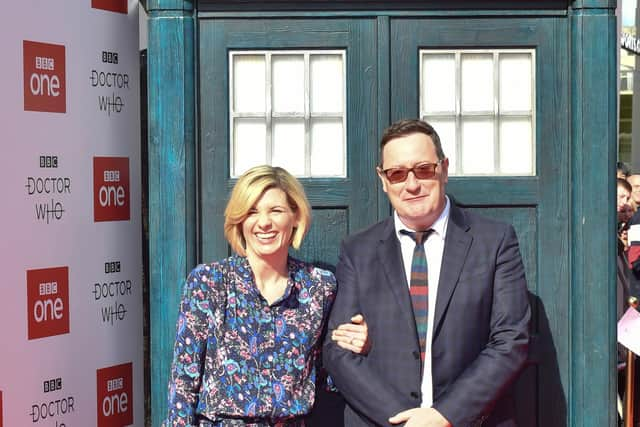
His personal connection to the city almost certainly played a part in his decision to bring Doctor Who to Sheffield at the start of his stint as showrunner and executive producer for the BBC series. When he took over, lifelong fan Chibnall wanted to ground the freshly regenerated Thirteenth Doctor in a northern city and so the first episode was set – and filmed - in Sheffield, where the season premiere was also held. “It was our home city for Doctor Who in the first season that I ran it,” he says. “I wanted to see the tardis in the city.”
He’d worked with Whittaker before when she starred in Broadchurch, the show for which Chibnall is perhaps best known. It featured David Tennant and Olivia Coleman as detectives who investigated crimes in the fictional Dorset town of Broadchurch. "The way it landed and just exploded in this country and then went around the world was an insane few years of my life,” says Chibnall. “None of us expected that. It was incredible to have a story that just hits people.”
Chibnall, whose other television work has included Torchwood and Life on Mars, stuck with what he knew when he later turned his hand to writing novels. His first book, Death at the White Hart, which came out last year, follows detective Nicola Bridge when she moves back to Dorset after years in CID in a big city. His next in the series - The Parkwood Murders – was released earlier this year and centres on the mystery of a body being discovered in the swimming pool of a holiday resort.
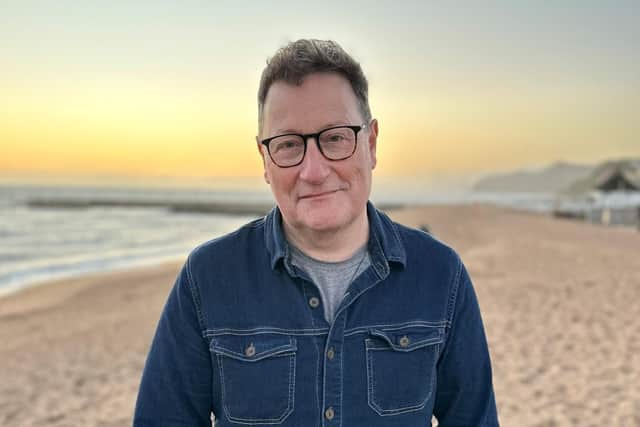
“I've always loved murder mystery since I was growing up,” Chibnall says. “I was of the generation who were reading Enid Blyton like Famous Five and Secret Seven and then moving on in my teens, I read pretty much all of Agatha Christie. I like that sense of a page turning thriller and a mystery that's going to keep you reading. I hope with my books that they keep people up until 2am, like ‘one more chapter’. That’s what I really wanted to write.”
Chibnall will be talking about his during his in-conversation event as part of the University of Sheffield-delivered Off The Shelf festival. “I think the lovely thing with doing novels and events like this is it’s really thrilling to meet people who've read the stories and responded to the characters and the mysteries. It's a more direct relationship with the people experiencing the stories than working in television is.”
The focus, with both forms of writing, is of course on creating compelling characters and an engaging plot. But whilst Chibnall likens TV scriptwriting to making a roadmap for a show – with actors, location scouts and costume and set designers helping to bring the story to life, with a novel “it’s all on the writer”. "Your words need to conjure up images, people, worlds in the reader's mind,” he says. “There's nowhere to hide as a novelist. Either you've managed to put that story into the reader's mind or you haven't.”
Writing, in any form, is not something a young Chibnall could ever have envisaged. It was only after getting involved in a school play at sixth form that a teacher encouraged him to consider drama at university. After his degrees, he began writing plays for a theatre company and was soon picked up by an agent, who then landed him meetings with TV production firms. Some of his best work has been crafted since, from a stand-up desk with a treadmill underneath, music on loud.
“You hear a lot these days about things like drama degrees or English degrees not being worth anything,” Chibnall reflects. “I would categorically point out that the word which that teacher had with me has ended up producing so much economic activity in this country in terms of all the shows that I've created and written for and produced. Those degrees, those training courses, are absolutely vital for the national economy.”
Back in the city that made him, Chibnall wants to get across another message. “Writing is a job, storytelling is a job and it’s a really important part of our lives as human beings,” he says. “The more stories we have the better, because they're vehicles for empathy and for understanding other people's lives and being into other worlds.”
"Anybody can be a storyteller, particularly now (with modern technology),” he continues. “There's never been a more accessible time to be able to write and get your stuff read or seen or made. The gatekeeping, the big iron doors keeping people out of making stuff have been smashed down.”