Iran has warned that the Strait of Hormuz will remain shut until the conditions it laid out in an interim agreement in June are met, according to Nournews.
Traffic has effectively come to a standstill with attacks in the vicinity of the waterway reported over the weekend.
“The Americans, who say something different in the media, have recently put forward proposals through a mediator. But they must understand that the period of dragging out the process and dictating one-sided demands is over,” Iran’s parliamentary speaker Mohammad Bagher Ghalibaf said on Sunday.
“The position of the Islamic Republic of Iran is completely clear and firm, and the Strait of Hormuz will not be opened until our seven conditions, based on the Islamabad Memorandum of Understanding, are met.” The conditions include a lifting of economic sanctions and a complete stop to all hostilities.
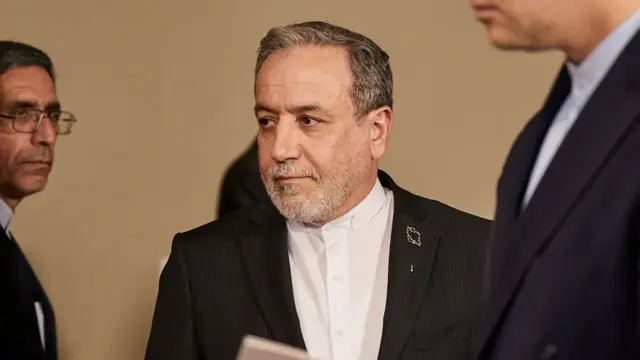
Foreign minister Abbas Araghchi said separately on Sunday that a plan put forward by Tehran could lead to the route reopening within seven days if accepted.
Meanwhile, Yemen's Houthis have claimed responsibility for carrying out a ballistic missile attack on the Aramco oil refinery in Riyadh, Saudi Arabia.
The Houthis said the attack was carried out in retaliation for Saudi attacks on Yemen's Sanaa and other provinces.
Guards says US forces 'fled 1000km from Iran's border'
A top Revolutionary Guards commander has claimed that US forces have had to pull back some 1,000km from Iran’s borders.
Rear Admiral Ali Fadavi said: "The Americans fled and moved more than 1,000km away from our borders. This was not their choice, it was due to the authority of the Islamic Republic and the authority of the IRGC Ground Force."
He added that for the first time there were no US vessels were present in the Gulf, the Strait of Hormuz, the Sea of Oman or even the northern Indian Ocean.
Fadavi claimed that the US warships are “100 percent vulnerable” to Iran's attacks.
Oil slips to $101 as Middle East crude exports rise
Oil prices edged lower today as rising Middle East crude exports and a release of oil stocks by the Group of Seven nations boosted supplies, offsetting concerns about further damage to Gulf oil infrastructure amid the US-Israeli war on Iran.
Brent crude futures fell 66 cents, or 0.65 per cent, to $101.59 a barrel, while US West Texas Intermediate crude was at $90.12 a barrel, down 95 cents, or 1.03 per cent.
"The G7 decision to tap strategic reserves is taking some of the immediate supply anxiety out of the price, while there's a growing view that Saudi export volumes are moving back toward pre-war levels, even if those barrels are still moving at higher cost and via less efficient routes," said Tim Waterer, chief analyst at KCM Trade.
"That combination is enough to subdue prices for now even though the risks of further damage to energy infrastructure around the Gulf region haven't gone away."
Trump adds eyebrow-raising new rationale for US war in Iran
Donald Trump has added Iran “doing drugs” to the list of reasons for starting his unpopular war eight months ago.
The president has long said the ongoing conflict with the Islamic Republic, which began at the end of February, was launched to prevent Tehran from obtaining a nuclear weapon.
He has also previously hinted at the possibility of regime change in Iran, calling for the Iranian people to overthrow the country’s rulers following protests earlier this year.
More here.

Iranian oil minister resigns amid mounting economic pressure and US blockade
Iran's oil minister has submitted his resignation, state media reported on Sunday.
The high-profile departure comes as Iran grapples with a historic economic crisis, a plunging rial, and severe disruptions to oil exports caused by US sanctions and naval interdictions.
State media did not immediately cite an official reason for the resignation or name a successor, though hardline pressure and internal debates over managing the regime's crumbling energy sector have escalated sharply in recent weeks.
The minister's exit marks the highest-level cabinet shakeup in Tehran since the onset of the current conflict, highlighting deep political fractures over Iran's failing efforts to maintain crude shipments and stabilise state revenues.
Who are the Houthis? Inside the movement reigniting Yemen's civil war
The Houthis, officially known as Ansar Allah, are an Iran-aligned political, military movement controlling most of northwestern Yemen and the country's main population centers.
Originating as a northern revivalist movement in the 1990s against government marginalisation, the group grew into a major combat force under the leadership of Abdul Malik al-Houthi.
In 2014, Houthi forces seized the capital, Sanaa, driving out the internationally recognised government and surviving a subsequent years-long military intervention led by Saudi Arabia and the UAE.
Supported by Tehran with military hardware, drones, and ballistic technology, the Houthis form a key component of Iran's regional "Axis of Resistance."
Their recent capture of the strategic Bab el-Mandeb strait and cross-border missile strikes on Saudi oil infrastructure have directly linked Yemen's internal conflict to the broader regional standoff involving Iran, the US, and Gulf nations.
Mecca Defence Pact committee to convene in Riyadh on Monday
Ministers and military chiefs from Turkey, Saudi Arabia, and Pakistan will hold talks in Riyadh on Monday under the framework of the trilateral Mecca Defence Agreement, Turkey's Foreign Ministry confirmed on Sunday.
The high-level meeting coincides with the Yemeni government's launch of a major military campaign to reclaim Houthi-controlled territory and follows recent Houthi missile and drone strikes targeting Saudi economic targets.
Delegates will review regional security developments, discuss alliance institutionalisation, and weigh an Iranian proposal to engage Yemen's Houthi movement politically to stem further regional escalation.
Houthi push toward Taiz threatens critical southern supply route to Aden
Houthi forces have captured strategic hilltops near the encircled city of Taiz, threatening to cut off the final remaining transit corridor linking the city to the southern port of Aden.
Military sources have confirmed that Houthi rebels are advancing onto key positions overlooking the primary supply road.
Severing the highway would place Yemen's third-largest city under a total siege, trapping hundreds of thousands of civilians alongside thousands of entrenched government troops.
The military escalation is compounding an already severe humanitarian crisis in southwestern Yemen. Monitoring by the World Food Programme indicates that nearly 75 percent of households in accessible parts of the region are currently suffering from acute food shortages.
Yemeni government launches major counteroffensive to eradicate Houthi movement
Yemen’s internationally recognised government has announced a comprehensive military campaign aimed at fully recapturing all territory held by the Iran-backed Houthi militia.
In a televised address from Riyadh, Presidential Leadership Council chairman Rashad al-Alimi declared that armed forces will push forward until the country is "liberated from the grip of the terrorist militia."
Military spokespeople have subsequently issued a demand for Houthi fighters to lay down their arms and surrender.
Supported by Saudi air power and Western intelligence, the assault follows a month of major Houthi gains, including their capture of the strategic Bab el-Mandeb strait along the Red Sea. Yemeni leadership stated the decision to launch the offensive was taken after all diplomatic attempts to de-escalate hostilities were exhausted.
Recap: FBI arrests Energy Department employee on charge of trying to support Iran-backed Houthis in Yemen
A Department of Energy electrical engineer has been arrested on charges of providing support to the Iranian-backed Houthi rebels, including by buying materials for homemade explosives and drones and traveling to Yemen, the Justice Department said Thursday.
Ashton Hamed Ellaboudy, 51, of Richland, Washington, was arrested Thursday and is due to make his first court appearance Friday. Court records do not list an attorney available to speak on his behalf.
The FBI says Ellaboudy had a goal of helping the Houthis improve their communications capabilities and traveled last September to Yemen, where the Houthis and Saudi-backed government forces are now engaged in renewed violence that has killed hundreds and displaced tens of thousands. The conflict began in 2014 when the Iran-backed rebels took over the capital, Sanaa, forcing the country’s government to settle into exile in Saudi Arabia.
Home Secretary warns UK is facing ‘serious threats’ from Iran after bomb plot charges
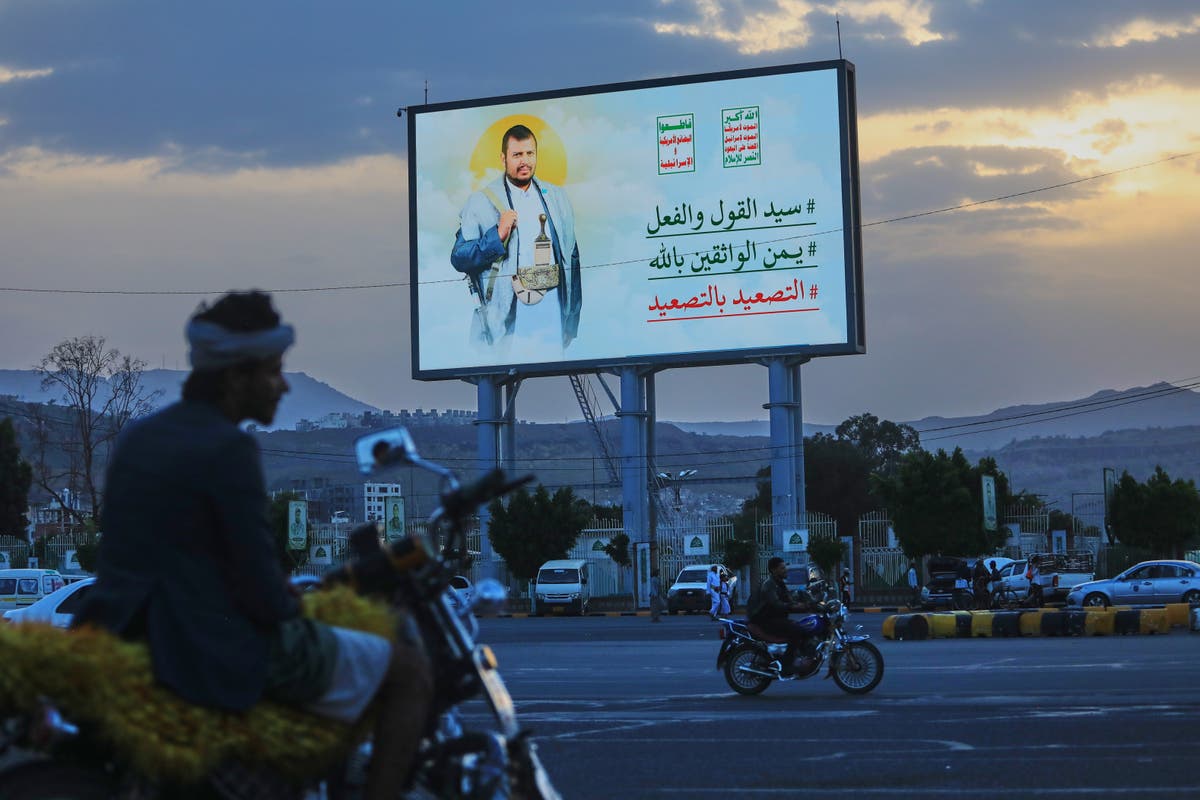
The UK is facing “a range of serious threats” from Iran, Shabana Mahmood has said after two migrants were charged with an alleged bomb plot against the Jewish community.
The Tehran regime “target our Jewish communities and try to silence their critics overseas, often through proxies and criminal networks to hide their involvement”, the Home Secretary said.
Iranians Salam Ahmadyan, 36, of Liverpool, and Rahman Salehi, 34, of Salford, who were arrested in Manchester on Sunday, September 20, have been charged on Friday with engaging in conduct in preparation for terrorist acts, contrary to Section 5 of the Terrorism Act 2006, Counter Terrorism Policing (CTP) said.