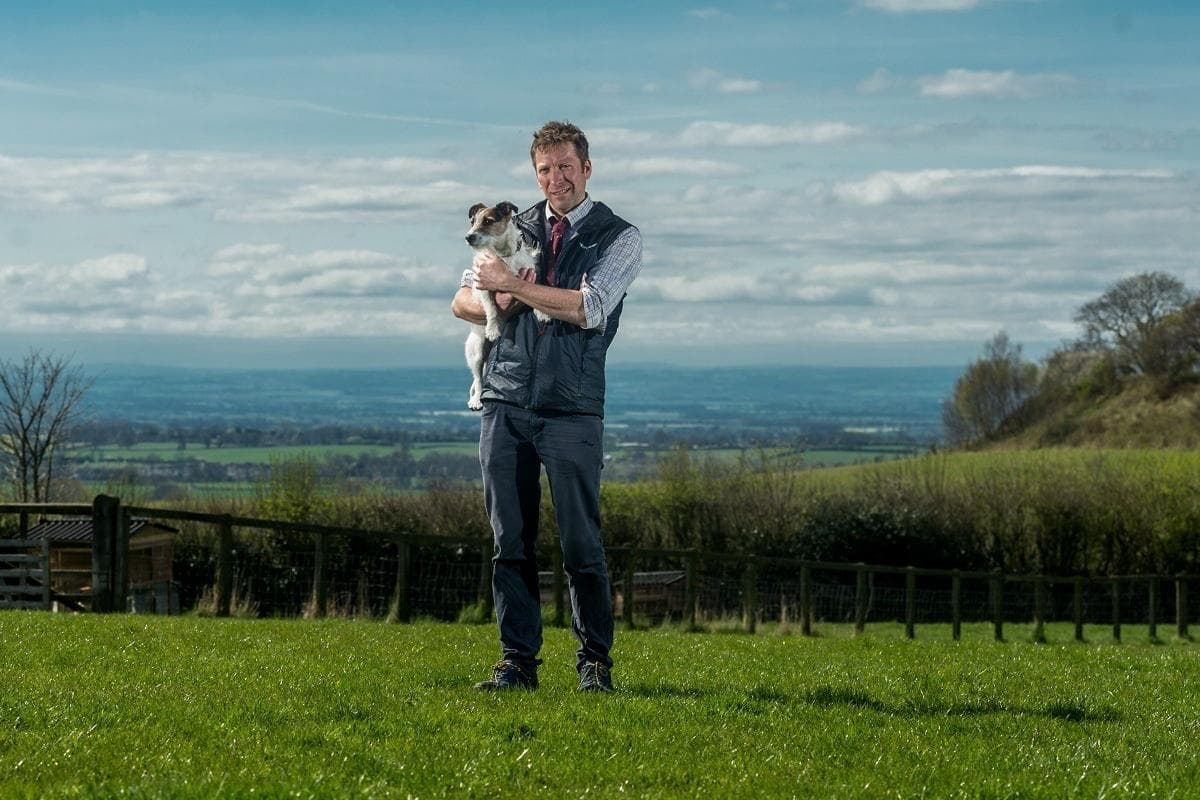
The Yorkshire Vet: Highs and lows in a disappearing world - Julin Norton
At five o’clock last Saturday morning, we set off to climb a mountain in Italy called Gran Paradiso. At just over four thousand metres, it is the highest mountain entirely in Italy and it is very beautiful. A mate called Andy had asked me earlier in the year if I fancied accompanying him on the ascent. I was instantly hooked on the idea, and once I’d done a bit of research and arranged an extra day off work, plans had quickly taken shape.
It would be straight forwards to get to the base of the climb: a short drive down the Aosta valley and then a right turn, up another valley to where we would park the car. Two and a half hours walk would take us to the Chabod hut where we would stay overnight, and planned to summit the next day before returning to the valley. It sounded fantastic. The guide was booked and my excitement was building. This was the first proper mountain I had set my heart on since a fateful ascent of the Matterhorn thirty-three years ago. Would I manage the challenges of altitude, crevassed icefields and the steep, rocky summit ridge?
But before Andy and I headed into Italy, we decided to go over to Chamonix to take the telecabine up the Aiguille de Midi. It’s a wonderful place, an impressive feat of modern engineering and would provide half a day high up, giving our bodies a brief chance to acclimatise to the thin air. After the hot and dry summer, my impressions of the high mountains around Chamonix were depressing, to say the least. The Bossons glacier was a shadow of its former self. I first saw this natural wonder in 1992 when I got off the bus for my first climbing trip to the French Alps. It has the largest altitude drop of any of the European alpine glaciers and, back then, it was possible to walk to its snout on the footpaths amongst the trees and along the side of the valley. The menacing seracs glowed with an almost fluorescent blue hue and it was impressively near to the town.
Now, it was high up the mountain, flat and grey. I estimated it was one kilometre shorter than when I first saw it. Up the Midi things were no better. The ice cave outside the station (where I once spent a freezing night so I could climb another route the following day and save myself a few Francs on a second telecabine trip) has now disappeared. That night, as the sun set and everything turned rose-pink, I watched brightly coloured paragliders jump off the pristine white corniced snow ridge to float down to the valley bottom. Today, there was no cornice, no paragliders could risk it, and everything was grey.

On the Italian side of Mont Blanc- the sunny side- one glacier has disappeared altogether. We could only see the top of the famous Mer de Glace from our vantage point, but this once behemoth ice-river has shrunk by two hundred metres of depth. There is a metal ladder that once skiers and climbers could use to get off the glacier at the end, but this is now defunct. It’s way too short.
On this depressing note, we left Chamonix and Mont Blanc for Italy. Whilst walking up to the hut from where we would ascend Gran Paradiso, I contemplated the atrocity of glacier shrinkage. We can wash our yoghurt pots, use shopping bags for life, drive electric vehicles and fill the green bins as much as we can, but in the face of jet powered drones and ballistic missiles blowing up large parts of Europe and the Middle East on a daily basis, the future looks bleak for the health of these glaciers. Will they still be there at all in another thirty years?