Thursday's top story: First hearing on a potential AfD ban held in Thuringia
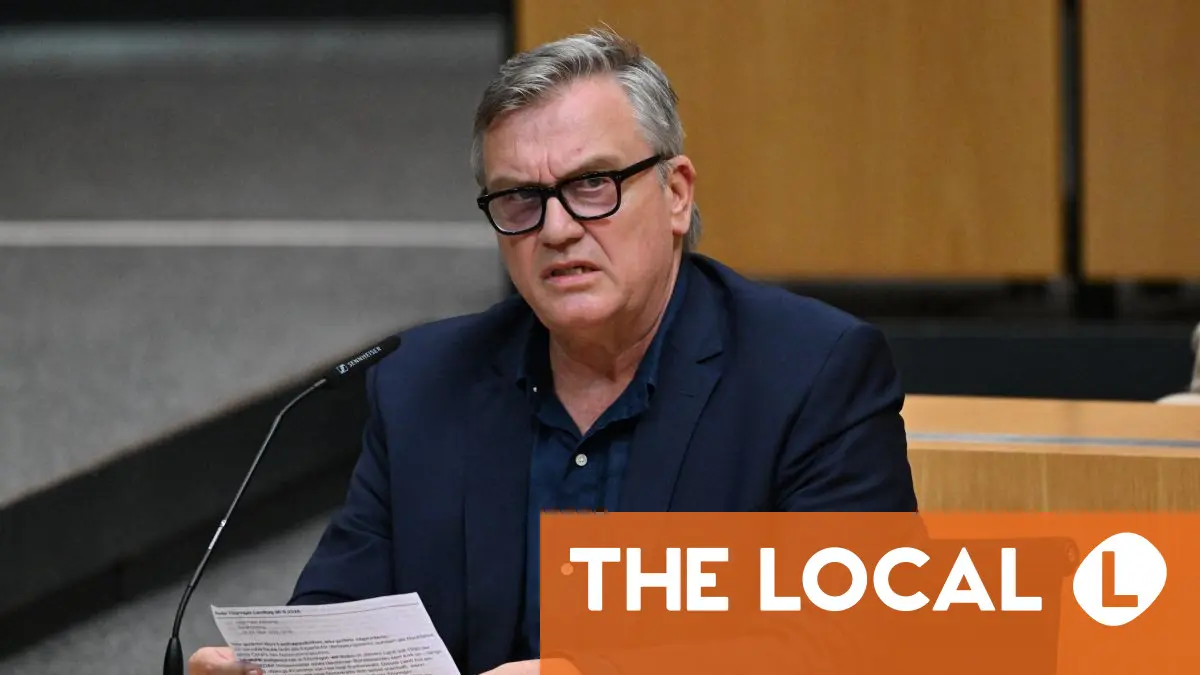
Members of the the state parliament in Thuringia heard from experts about the case for moving forward with a ban proceeding against the far-right Alternative for Germany (AfD) on Wednesday evening.
Among those invited to the hearing in Erfurt were well-known constitutional law experts, the former head of the Federal Office for the Protection of the Constitution, Hans-Georg Maaßen, and the comedian Hape Kerkeling -- who is the grandson of a Nazi prisoner.
Kerkeling said that he made an appearance because he "feels that democracy is in danger". He added that from his view the AfD's "euphemistic attitude towards the Nazi dictatorship alone makes them unconstitutional."
READ ALSO: Why is a German city banning new 'stumbling stone' memorials to Holocaust victims?
The hearing was requested by the Left parliamentary group, which has been campaigning for an AfD ban for years. Speakers were heard from around 8pm until shortly before midnight.
Ahead of the hearing Thuringia's Interior Minister, Georg Maier, suggested the chances of moving forward with an AfD ban procedure have increased.
"In the Bundesrat, majorities are currently sorting themselves in the direction of a possible application for a ban," Maier said.
He added that bringing a ban procedure, if the conditions for one are met, is "not a political test of courage" but an obligation under the Basic Law.

German inflation rises to near 3-year high on Iran war energy shock
German inflation accelerated at its fastest pace for nearly three years in September due to higher energy costs triggered by the Middle East war, official data showed Wednesday.
Consumer prices rose 3.3 percent in the month, compared to a year earlier, according to preliminary data from statistics agency Destatis.
That marks the highest inflation rate seen in Germany since December 2023, and above forecasts of a 3.2 percent rise by analysts surveyed by the financial data firm FactSet.
Several other European countries also reported surging inflation on Wednesday, with stock markets largely flat as traders absorbed the news and waited for further data from the United States.
The Paris and Frankfurt exchanges both sank after France, Germany and Italy revealed that prices in their countries were surging, particularly at the petrol pumps.
German leaders' primary response thus far has been to approve a fuel tax cut, which kicked in on Thursday. Fuel prices were reported to have fallen sharply almost immediately as a result.
IN NUMBERS: How much will Germany's fuel tax cut save drivers?German union threatens to strike as VW terminates collective agreements
German union leaders Wednesday accused Volkswagen of issuing a "declaration of war" against staff and threatened strikes after the struggling car giant said it was ditching several agreements on working conditions.
Europe's biggest carmaker, mired in crisis, has launched a huge job-cutting drive in recent months.
Union IG Metall said bosses of the Volkswagen brand had now given notice that several agreements covering areas ranging from working hours to holidays would be terminated in January.

"This is a nasty foul against the workforce and, once again, a shameless attempt (by VW) to get its hands into employees' pockets," said union negotiator Thorsten Groeger.
Groeger slammed what he termed a "clear declaration of war on the workforce", accused VW of starting a "major confrontation", and threated industrial action against the carmaker in January.
Volkswagen cited the worsening of its business since the agreements were hammered out.
According to IG Metall, a total of ten collective agreements have been terminated, affecting employees of Volkswagen AG in Germany. Volkswagen's company tariff applies to around 130,000 employees in Germany.
READ ALSO: Can Germany save its car industry as job cuts intensify?Childless workers to contribute more under reform plan
According to the government's plan for long-term care reform, which was approved by the cabinet on Wednesday, childless people in Germany would see their contribution rate increased significantly.
According to the reform plans, the rate for the childless is to be raised by 0.3 percentage points, so that they will pay 4.5 percent in 2027.
READ ALSO: German top leadership strikes deal on elder care reforms
The head of the health insurance company DAK-Gesundheit, Andreas Storm, is critical of the planned increase in contribution rates: "3.6 percent general contribution and 4.5 percent for the childless - constitutionally we have already arrived at a worrying dimension here."
Storm told the Rheinische Post that the difference in contributions should not go any further.
The general contribution rate for long-term care insurance is currently 3.6 percent of the income subject to contributions and 4.2 percent for those without children.
The reform plan also increases the contribution ceiling for people in need of care, and introduces a premium surcharge for co-insured spouses or civil partners.
Germany and four EU nations seek migrant deportation centre in Africa
The EU will discuss further ways to boost migrant deportations Thursday, as a group of nations forges ahead with divisive plans to send failed asylum-seekers to return centres outside the bloc.
They are also set to give a final green light to tougher new EU rules that grant authorities much broader detention powers and allow for the creation of so-called return hubs -- something one group of countries is raring to do.
Germany, Denmark, Austria, Greece, and the Netherlands have been exploring options to set such centres up, with Rwanda said to be the frontrunner to host them.
Home affairs ministers from the European Union's 27 nations are set to meet in Luxembourg as anti-immigration sentiment rides high across the bloc, evidenced by shock far-right gains in Germany.
Two European lawmakers from the Greens group who went on an exploratory mission to the African country and neighbouring Uganda, said Wednesday their visit suggested the two nations were open for business.
Proponents say return hubs -- which would serve either as the final destination or as transfer centres for those expelled -- could facilitate repatriations and act as a deterrent for would-be irregular migrants.
But critics question their effectiveness, pointing to the hurdles faced by similar projects, and compare them to "legal black holes" that could see migrants stranded in limbo with little oversight.
READ ALSO: Germany moves to slash independent advice for asylum seekers