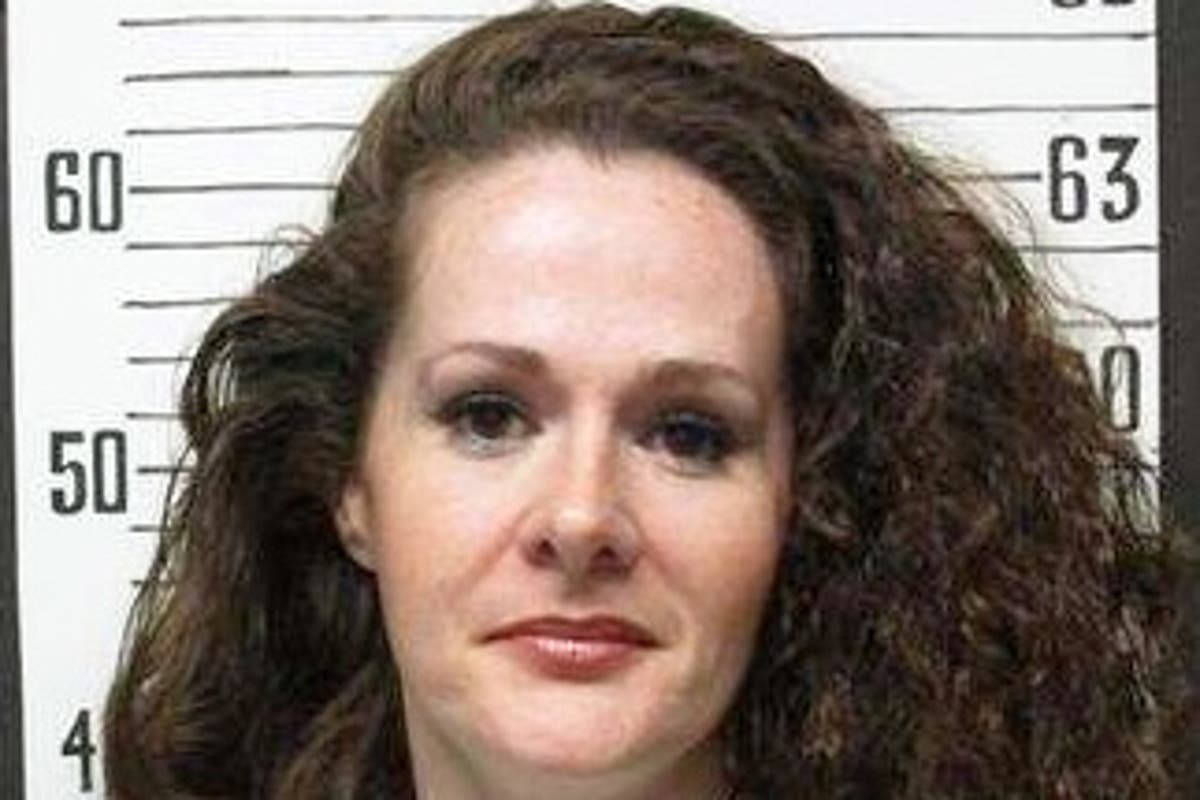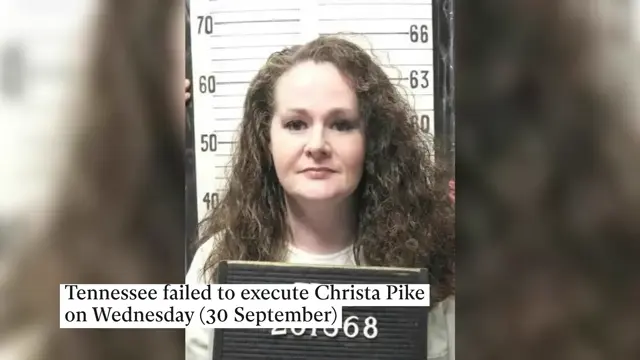
Tennessee has failed in its attempt to execute Christa Pike, who survived and was rushed to hospital late Wednesday, despite being administered two doses of a lethal drug.
Pike, 50, was due to be the first woman put to death in the state in 206 years, after a court overturned a late stay of execution. Experts say her survival is unprecedented.
Officials administered pentobarbital to Pike twice at Riverbend Maximum Security Institution in Nashville at about 8 p.m. local time but she was later heard snoring.
The botched execution has been met with outrage by anti-capital punishment groups, with Abraham Bonowitz, co-founder of Death Penalty Action, asking of the Tennessee Department of Corrections: “How do they sleep at night?”
Pike was being executed for the 1995 murder of Colleen Slemmer, a classmate she tortured and killed when she was 18.
The execution had already been delayed for hours after a panel of the Sixth U.S. Circuit Court of Appeals issued a stay to allow further review of her legal challenges.
The U.S. Supreme Court later lifted that stay at Tennessee's request in a 6-3 decision, allowing the execution to proceed before Pike's death warrant expired at midnight.
Christa Pike isn’t Tennessee’s first failed execution this year
Tennessee set out to execute Tony Carruthers on May 21, 2026, but he lived to tell about it.
Carruthers, who was sentenced to death for a 1994 triple murder, survived his date with death when the execution team members could find only one suitable vein in which to secure an IV, but not, as USA Today reports, the “backup line, which is required under the state’s lethal injection protocol.”
After the failed attempt, Tennessee Gov. Bill Lee gave Carruthers a one-year reprieve, a decision the governor did not explain.
What happened to Carruthers is a reminder that things frequently go wrong in executions, even if in almost all cases the problem is resolved and the execution is completed.

Media witnesses recount witnessing botched execution
Members of the media shared their firsthand accounts after witnessing Christa Pike’s botched execution — including how Pike asked if the pain was normal after the second dose of pentobarbital had been administered.
Pike, 50, was rushed to the hospital late Wednesday after she somehow survived two doses of the lethal drug cocktail.
“They went through two rounds and she was still breathing at the end, it was very ragged. She lifted her head up and was looking around at one point. She said there was a spot that was burning and hurting and asked if that was normal,” Catherine Sweeney of WPLN said during a briefing after the execution was put on hold.
“None of that was normal,” she added.
Reporters were asked to leave after the second round of the deadly drug — just before 9 p.m. — and as Pike was still breathing.
“They did two separate rounds of pentobarbital, which I’ve never seen before. The protocol does say that they should do a second round if the person is still alive,” Sweeney said. “I covered all the executions last year and most of the ones this year, we haven’t seen anything like this.”
Other reporters also detailed Pike complaining about arm pain. WKRN reporter Tori Gessner heard Pike say she felt like her arm was “about to burst.”
Pike’s condition Thursday morning was unknown.
Tennessee authorities attacked over botched execution: 'How do they sleep at night?'
Anti-death penalty groups have come forward to express their anger over how last night’s events in Tennessee played out.
Abraham Bonowitz, co-founder of Death Penalty Action, said in a statement: “The incompetence of the Tennessee Department of Corrections sets the bar at the lowest level tonight.
“There are no other words. This is an outrage. How do they sleep at night?”
Laura Porter, executive director of the U.S. Campaign to End the Death Penalty, pointed out that people from across the political spectrum called for a pause in executions after the botched lethal injection of Tony Carruthers in the same state earlier this year.
“These pleas were ignored,” she told USA Today. “The state of Tennessee has shown the world it cannot be trusted to implement capital punishment in a way that preserves human dignity and the rule of law. This has to stop now.”
Maya Foa, CEO of international legal organisation Reprieve, told the BBC of Pike’s case: “We cannot know exactly what went wrong, because so much happened behind a curtain – lethal injection relies on secrecy at every stage, to hide the violence of the state taking a human life.”
Recap: Tennessee defends botched execution
The Tennessee Department of Correction has defended its handling of yesterday’s failed execution, which had been opposed by lawyers and human rights experts due to Pike’s age at the time of the crime, her history as the victim of childhood sexual abuse and untreated mental illness.
“The Tennessee Department of Correction followed every step of the state’s lawful, established execution protocol approved by the Attorney General’s Office.
“The lethal injection chemical in the protocol has consistently been effective, and the protocol does not allow for additional procedures beyond what was carried out this evening. Christa Pike has been transported to an off-site medical facility.”
Inside the ‘Satanic panic’ teen murder that put Christa Pike on death row for 31 years
If you’re just joining us, here’s an overview of Pike’s case, the shocking crime she was accused of, what her defense attorneys have argued and what her victim’s family has said about their tragic loss.
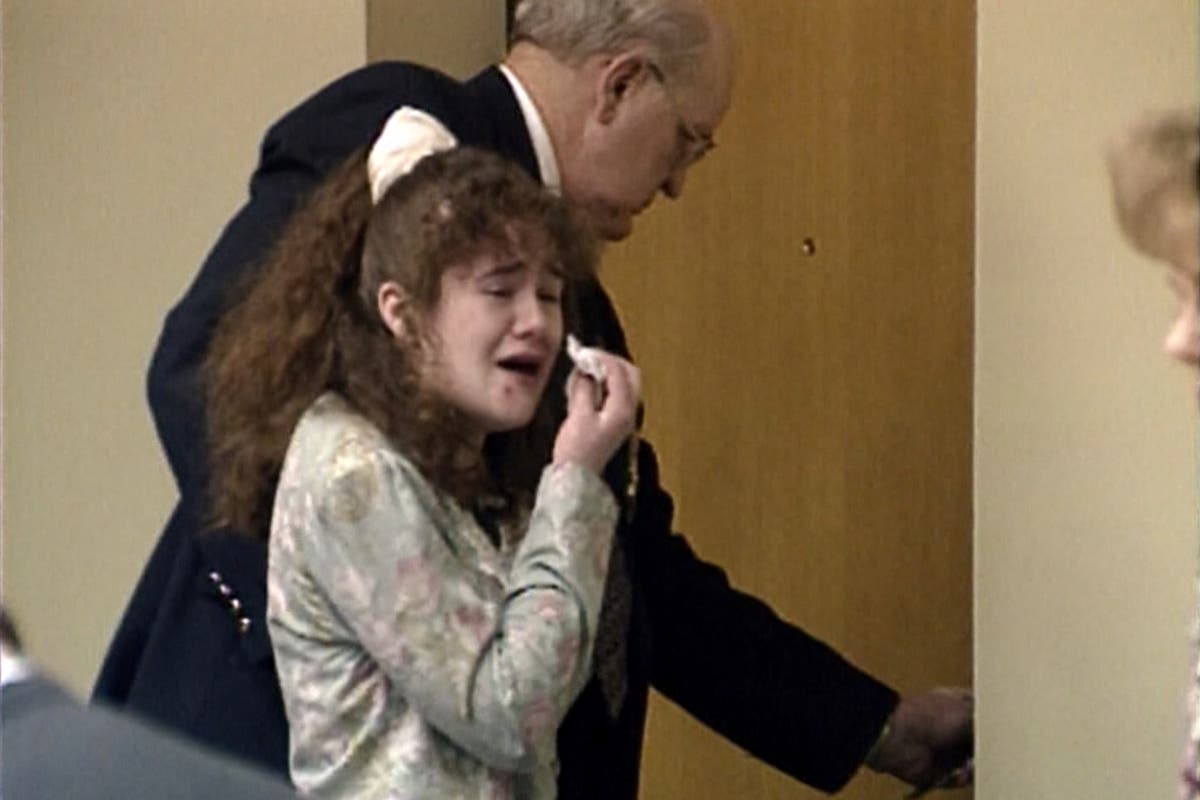
In pictures: Witnesses depart Nashville prison as Pike taken to hospital
This was the scene in Tennesse late last night as media witnesses left Riverbend to describe what they had seen and an ambulance raced Pike to an offsite medical facility to receive emergency care.


How Wednesday’s legal drama played out before the attempted execution
Pike was initially scheduled to be put to death at 10 a.m. yesterday, and witnesses had gathered at the Riverbend Maximum Security Institution in Nashville when the 6th Circuit U.S. Court of Appeals voted 2-1 to issue a stay.
That court said a delay was needed to consider whether Pike’s allegations of childhood sexual abuse were fully considered at her sentencing.
The attorney general’s office appealed to the Tennessee Supreme Court, saying that halting the execution at the last moment traumatized Slemmer’s family and rewarded “abusive delay tactics” by Pike’s attorneys.
Later in the day, the high court cleared the way for the execution to proceed.
The conservative majority did not explain their order, while the three liberal members signed a dissent that said Pike’s claims deserved a closer look.
The execution finally went ahead in the evening, with officials raising the curtains on the chamber at 7:27 p.m., showing Pike strapped to a gurney.
“I’m going to leave this world the way I spent most of my life and that is in love," she said in her “last” words. She described herself as at peace.
But Pike remained awake and at one point raised her head and asked prison officials if her arm was supposed to feel that way. It was not clear what she was referencing.
By 8:26 p.m., execution witnesses reported that the second dose of pentobarbital had been administered.
Pike continued to be heard snoring behind the closed curtain until the microphone was cut off at 8:53 p.m.
At that time there was an announcement to escort media witnesses out of the area. Pike was then taken to hospital for “life-saving measures.”
Pike’s experience ‘singular and unparalleled,’ says expert
Robin M Maher, executive director of the Death Penalty Information Center, said what Pike experienced is “singular and unparalleled.”
Seven other people have survived medical problems due to an execution team’s failure to access a vein to administer lethal injection drugs, but no one has stayed alive after receiving the drugs used in such executions, she explained.
Pike reportedly remained awake after received her first injection and at one point raised her head and asked prison officials if her arm was supposed to feel that way. It was not clear what she was referring to.
After the second was administered, she could be heard snoring behind the closed curtain until the microphone was cut off and the event’s media witnesses were asked to leave.
Pike said she felt ‘kinship’ with Lindsay Clancy in late interview
Speaking to The Times recently, Christa Pike expressed sympathy with Lindsay Clancy, the Massachusetts woman recently tried for fatally strangling her three children.
Clancy, 36, a former labor and delivery nurse, admitted to killing Cora, five, Dawson, three, and Callan, eight months, at their home in Duxbury on January 24, 2023.
Her trial this summer saw her argue that she was not criminally responsible for the deaths because she was suffering from severe postpartum depression at the time and ended in a mistrial after the jury failed to reach a unanimous verdict due to a lone holdout.
“I feel a kinship with Lindsay,” Pike said. “We are both females who got into trouble because of uniquely female issues.
“One thing is different, however, is that times have changed a lot on awareness of women’s issues since I was put on trial.
“I am pleased she received a mistrial and is getting the help she needs. There are so many women who don’t get the help they need: me and others.”
Here’s more.