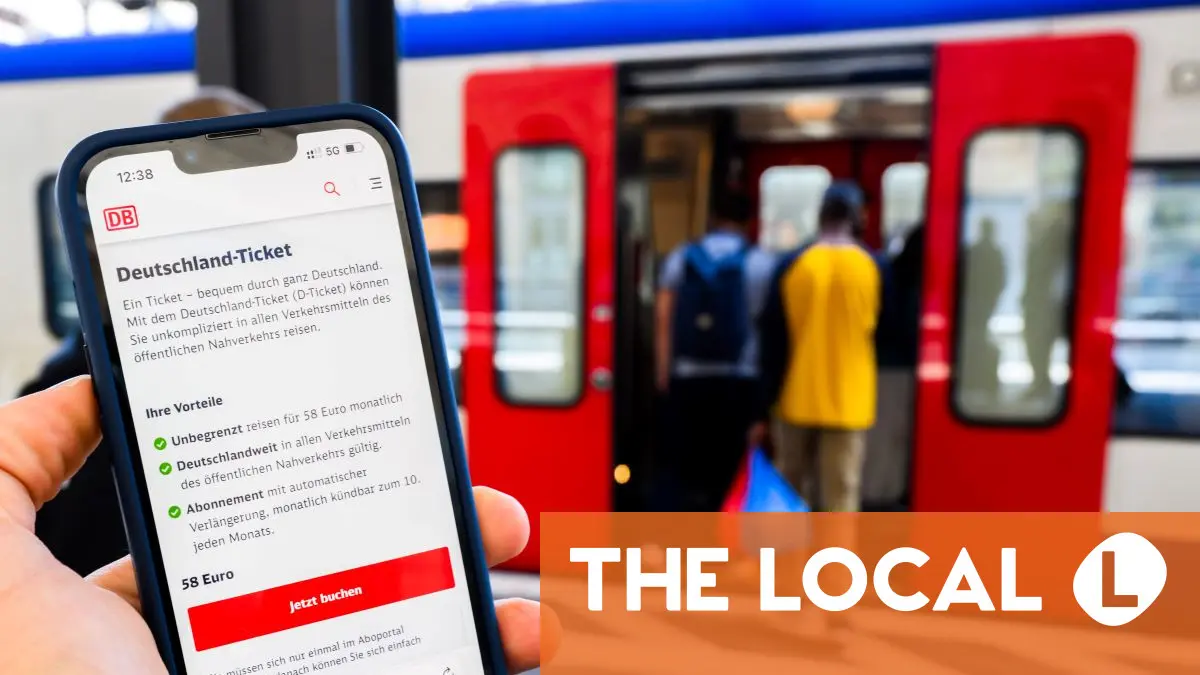
From January 2027, the Deutschlandticket will set holders back €66.80 per month, up from the current €63.
It's the third time the ticket has gone up in price since it launched in May 2023. It started off at €49 per month, rising to €58 in 2025 and then to €63 from the start of 2026.
Currently, around 14.5 million people use the Deutschlandticket, which allows passengers to travel on regional and local public transport throughout Germany.
The federal and state governments each contribute €1.5 billion per year to fund the ticket to limit losses for transport operators.
READ ALSO: Where are public transport fares set to rise in Germany in 2027?
Discounted versions of the ticket will also go up in price.
The Jobticket (for employees) will cost €63.46 per month in future, while the Semesterticket (for students) will rise to €40.08.
Price rise slammed
Criticism of the price hike came from the German Association for the Environment and Nature Conservation (BUND).
They said it's unacceptable for the government to set aside €2.5 billion of taxpayers’ money for another "fuel rebate" while not keeping the Deutschlandticket price stable.
"The constant discussions about the ticket and its price are tiresome and create uncertainty," said Jens Hilgenberg, Head of Transport Policy at BUND.
"People need long-term predictability in order to change their travel habits permanently."
Detlef Neuß from the passenger association Pro Bahn added: "Enough is enough for now."
He said that in light of the fuel tax cut, there should "also be a discount for users of the Deutschlandticket".
READ ALSO: How much will Germany's fuel tax cut save drivers?How is the new price decided?
The new price was calculated using a cost index that takes into account staff, energy and operating costs. D-Tix, the company established for the Deutschlandticket, carried out the calculations.
The matter was then discussed by the "Deutschlandticket Co-ordination Council", which comprises the federal government, the federal states, local authority umbrella organisations and the transport sector.