
Intelligence reports show Russia is planning more acts of sabotage in Europe, EU foreign policy chief Kaja Kallas said on Monday.
"We need to be vigilant because we see in the intelligence that Russia is planning more sabotage acts and attacks against our democracy – to divide our society, to intimidate our societies (into) refraining to help Ukraine," Kallas said before a meeting of EU defence ministers in Brussels.
European countries should be able to act before such attacks take place, Kallas says.
It comes as Volodymyr Zelensky accused Russia of "terrorising" Ukrainians after the latest attacks in which a market was set on fire and schools were targeted.
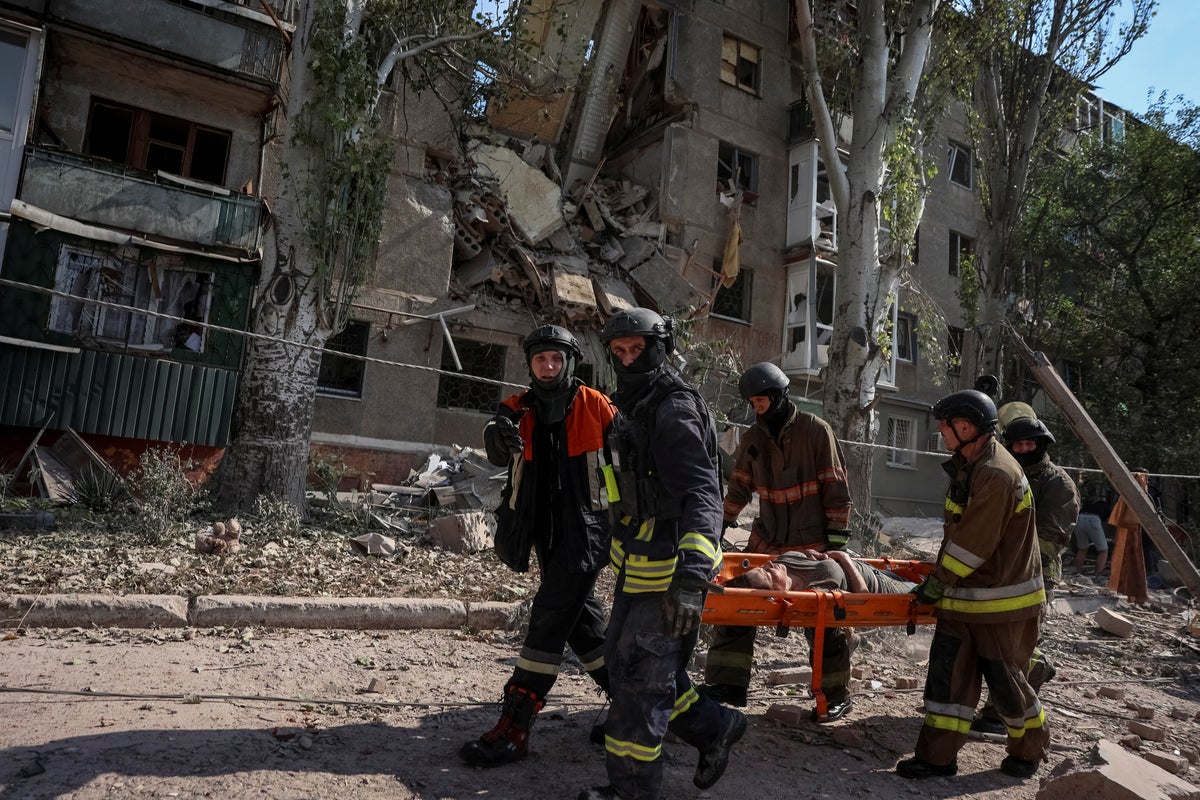
A guided Russian aerial bomb left 15 injured, including children, after it struck an apartment building in Ukraine's second-biggest city, Kharkiv in the northeast, mayor Ihor Terekhov said on Telegram early on Monday.
“Anywhere in the world, this choice of targets would be called by one word – terrorism. Russia has no military objective whatsoever in doing this – it is purely an attempt to break people and inflict as much harm as possible on our society,” the Ukrainian president said.
South Korea demands apology from Ukraine after Zelensky discloses transfer of North Korean POWs
South Korea has demanded an apology from Ukraine for breaching the confidentiality agreement on the transfer of two North Korean prisoners of war from Kyiv to Seoul.
A diplomatic row erupted after Volodymyr Zelensky disclosed at the UN General Assembly last week that Ukraine had sent two North Korean soldiers captured while fighting for Russia to South Korea.
Seoul criticised Mr Zelensky for the disclosure, made while demanding greater support for Ukraine in its war against Russia, accusing him of breaking confidentiality and risking the lives of the prisoners.

EU imposes sanctions over deportation of Ukrainian children to Russia
EU countries on Monday imposed sanctions against 10 individuals and 17 entities for their involvement in the unlawful deportation of Ukrainian children to Russia.
The list includes Moscow's City Tourism Committee, children's camps and sports camps in Russia and the Songdowon International Children's Camp in North Korea, where the European Council said Ukrainian children are brought to promote pro-Russian narratives.
Pope Leo urges concessions for peace as Ukraine war drags on
Pope Leo said on Monday that negotiators seeking to end war in Europe must be willing to sacrifice some positions to achieve peace.
The first US pope, speaking in Metz, hometown of Robert Schuman, a founding father of the European Union, lamented that "war has returned, even to Europe: a new senseless slaughter, claiming countless civilian lives every day".
Offering his clearest political vision yet for Europe, Leo also praised integration and multiculturalism at a time when the far right is gaining strength across the region.
Speaking in French, he urged Europeans to recall the founding values that underpin the EU, including the rule of law and the equality of all people without distinction of race, colour, class or profession.
Leo began his four-day visit on Friday with a warning that the United Nations and other multilateral bodies were in crisis and that international dialogue risked becoming a "charade".
On Monday in Metz, he turned his attention to the war in Ukraine - without mentioning it directly.
"We need ... to show courage in negotiation and to be willing to give up some positions for the greater good of peace," he urged, invoking a similar 1917 appeal from Pope Benedict XV amid the carnage of the First World War.
Leo also reiterated his opposition to rising European military spending, which grew last year by the highest amount since the end of the Cold War amid pressure from US President Donald Trump and Russian assertiveness.
"We must also guard against the illusion that rearmament is the answer," he said.
"Today we must ask whether we are truly making creative efforts to advance world peace, or whether we are simply seeking to 'stem the tide of war' and better prepare ourselves for wars that we assume are still to come."
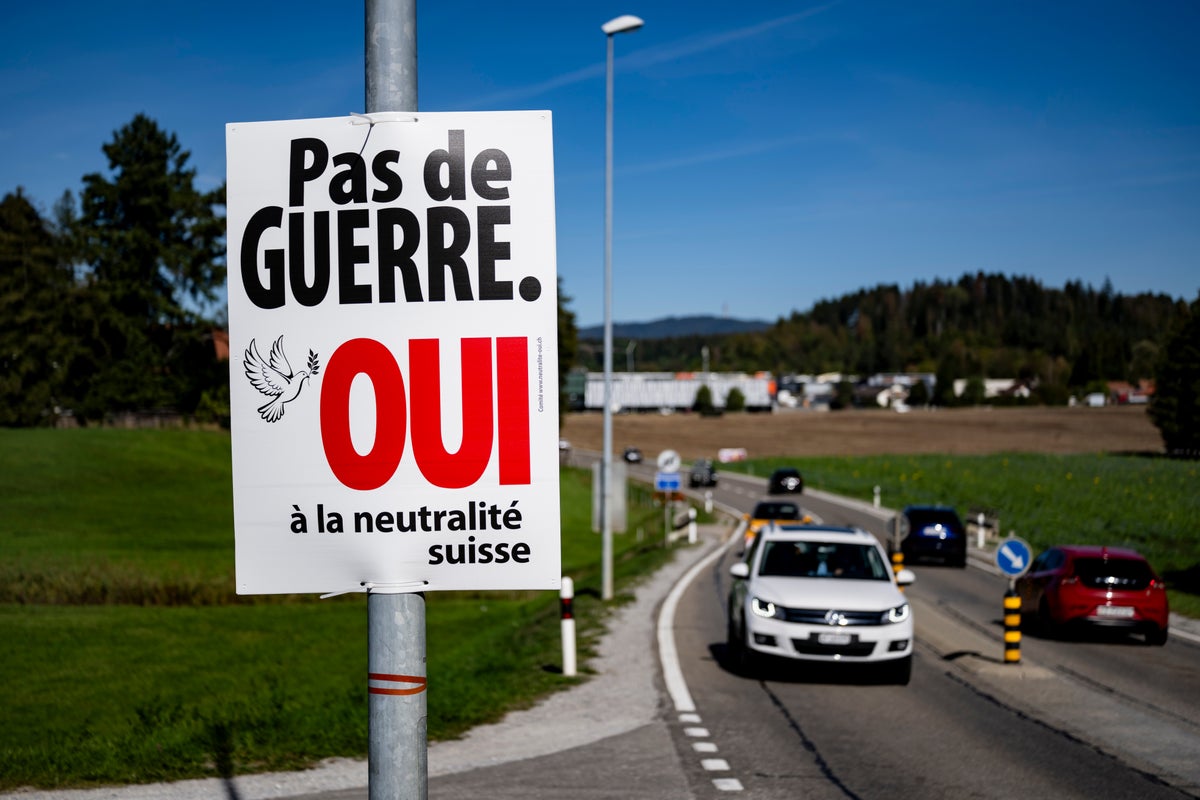
Swiss voters reject proposal to strengthen country’s neutrality
Swiss voters have overwhelmingly rejected a proposal championed by a populist party to strengthen the country’s vaunted neutrality.
Official figures published by the government showed 70 per cent of voters, as well as majorities across all 26 of the country’s regions, turned down the measure.
Supporters of the measure, spearheaded by the Swiss People’s Party, claimed the European country had drawn dangerously close to Nato and the EU, particularly concerning the conflict in Ukraine.
What comes next for North Korea soldiers transferred from Ukraine to South Korea?
Two North Korean soldiers captured while fighting for Russia against Ukraine are now in South Korea, raising questions over how they will be investigated, protected and resettled, and the legal basis for their transfer.
The soldiers are expected to undergo questioning and security screening before the South Korean authorities decide whether to grant them protection and begin the resettlement process.
Seoul's Unification Ministry said on Monday their cases would be reviewed under relevant laws and past practices, suggesting that the North Korean Defectors Protection and Settlement Support Act would apply.
The investigation and temporary protection may last up to 90 days, with a possible extension in unavoidable circumstances.
The soldiers’ military backgrounds and firsthand knowledge of North Korea’s deployment to Russia could result in more extensive debriefing.
Those granted protection usually receive resettlement training before entering South Korean society.
The unification minister normally determines whether a North Korean arrival qualifies for protection, although the NIS director can make the decision on national security grounds.
Yu told Reuters the sensitivity of the case could also keep them out of public view longer than other North Korean arrivals.
Their physical and psychological condition is also likely to be assessed.
Russian attack on business centre in Ukraine's Dnipro kills three, governor says
A Russian drone attack on a business centre in Ukraine's southeastern city of Dnipro killed three people and injured at least 12 more, the regional governor said on Monday.
Russia planning more acts of sabotage in Europe, EU diplomat says
Intelligence reports show Russia is planning more acts of sabotage in Europe, EU foreign policy chief Kaja Kallas said on Monday.
"We need to be vigilant because we see in the intelligence that Russia is planning more sabotage acts and attacks against our democracy – to divide our society, to intimidate our societies (into) refraining to help Ukraine," Kallas said before a meeting of EU defence ministers in Brussels.
Inside Ukraine’s fortress cities – and the ex-convicts keeping them from Putin
Even as Ukraine and Russia intensify mass aerial attacks against each other, the unrelenting slaughter on the battlefields below continues, particularly in Ukraine’s Donetsk region, which Vladimir Putin has been obsessed with seizing since he launched his invasion.
Two large cities, Slovyansk and Kramatorsk, and a number of smaller towns in the region remain in Ukrainian hands and have become known as the “fortress belt”. The area is key to Ukraine’s overall security.
Putin has vowed every year since 2022 to take the Donetsk region in its entirety. And each year that has not happened, Putin has felt more humiliated and again ordered his commanders to capture the region that year. Despite marginal advances with suicidal frontal attacks – at tremendous cost in Russian lives – Moscow has failed in its mission.
Ukrainian drones target railway infrastructure in Russian border region
Ukrainian drones have attacked railway infrastructure in the Russian border region of Bryansk in three separate strikes which damaged a railway bridge and derailed nearly 30 carriages and wagons, Bryansk's acting governor said on Monday.
Egor Kovalchuk, the official, said in a statement on Telegram that nobody had been hurt in the attacks, which he said had caused part of a bridge to collapse and had damaged railway tracks in one area.
Reuters could not immediately verify his assertion and there was no immediate comment from Ukraine.
Ukrainian forces advance in key eastern battlefield, senior commander says
Ukraine's military has recaptured more territory from Russian forces in the north of the Donetsk region, a senior military commander said on Monday, in an operation aimed at complicating
Moscow's assault on Ukraine's key eastern strongholds. Ukraine's Third Army Corps recaptured an area of 51sqkm, said Brigadier-General Andrii Biletskyi, who has commanded operations in the area since last month.
In total, the operation called "Vivaldi" has recaptured 176sqkm in the north of Donetsk, has freed three more villages and has restored Ukrainian control over two more villages, Biletskyi said.