The prize for Yorkshire from fiscal devolution is enormous, we cannot afford to throw it away - Mirte Boot
Leeds tops a leaderboard no city wants to be on: it is the largest city in western Europe without a tram network. The story of how it got there is almost a parody of the way this country is run.
Parliament passed the Leeds Supertram Act back in 1993. The scheme came within touching distance of being built, before the funding was pulled by Whitehall in 2004. More than 30 years on, money has finally been allocated again.
This time, not only will it cost more than what it would have done in 2005, but, following a government review, it’s also not expected to be up and running until the late 2030s.
What we see here is a city of the size of Rotterdam, Ottawa, or Dusseldorf, waiting a generation for the infrastructure it needs, while the decisions are taken, untaken, and taken again 200+ miles away.
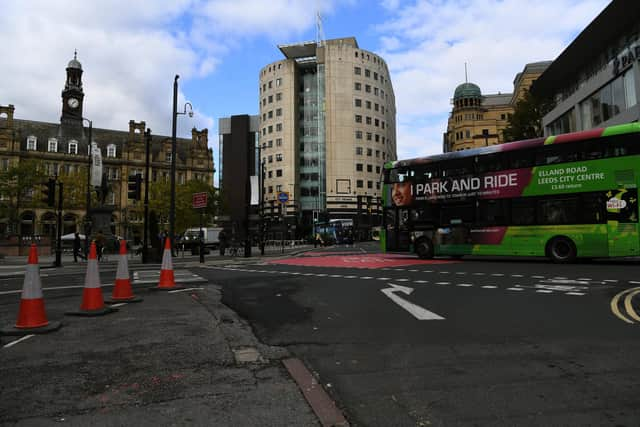
Ask local leaders anywhere in the country and they will have similar stories: projects waiting on approval by Whitehall for years, investments shaped by national frameworks rather than local knowledge, and leaders dependent on short term grants to drive change.
The core of the problem is an overcentralised government. The UK is the most fiscally centralised country in the G7; 95 per cent of tax revenue goes straight to the Treasury, while just 5 per cent stays local.
But this is about to change. We now have a prime minister who himself was a mayor for the last decade and understands the frustrations of the Whitehall machine like no other.
Andy Burnham has put devolution – power handed down from Whitehall to regional and local government - at the heart of his plans for government.
And alongside the Budget this autumn, the government will publish a roadmap towards a fiscally devolved England, where a portion of tax revenue will flow to regional mayors to invest in local projects, rather than straight to the Treasury.
IPPR North has worked on devolution for 20 years, and we know what a big deal this is; it is the biggest chance in a generation to ensure real financial power is handed down from Westminster and Whitehall.
The scale of the possibility is enormous. Our modelling finds that handing mayors just a 5 per cent share of income tax would move around £3.8bn a year from Whitehall into regional control, roughly doubling the money our mayors must invest.
That’s without raising anyone's taxes, but rather reassigning tax that we already pay. That is money mayors could spend on the buses, the trams, the homes and the town-centres – making the difference people feel.
But ambition is not the same as securing the result. Fiscal devolution creates risks as well as opportunities. They say trust arrives on foot and leaves on horseback, so we’ve got one real shot at doing this right.
Fortunately, we are not the first in the world to try this. More than 30 countries have gone ahead of us, and they run more sophisticated systems of devolved tax than we do. Academics have studied closely where it works and where it fails. Their lesson is that fiscal devolution must be designed to prevent failure from the very start. Two things matter most.
The first is fairness. If mayors keep more of the tax raised in their areas, and that revenue rises with growth, there is a real risk that some places surge ahead while others are left out in the cold - a booming Leeds could pull further away from a struggling Hull, or a growth surge in Rotherham and Sheffield could leave the coast and countryside to fall behind.
The answer is a redistributive system built in from the start: a mechanism that shares some of the proceeds of growth from growing economies with those that are struggling, while keeping the growth uplift. That is how we make sure the whole of Yorkshire benefits, not just pockets of it.
The second is guarding against the dangers lurking down the road, through building up capacity and accountability safeguards.
Regional devolution has only existed in the North for a decade; Yorkshire’s mayors have been in post just a few years. They need time and investment to build up strong teams, for example through a national secondment programme.
Moreover, if any authority, anywhere, mishandles public money or is caught in a scandal, the critics will instantly seize on it.
There are people waiting to pounce on this agenda, eager to prove it was always going to go wrong and ready to pull power and money back to Westminster - and Yorkshire would be left unable to build what it will need for decades to come.
To prevent this, we need strong local accountability; officials in England’s regions, scrutinising its budgets to the same standard we expect nationally, and scrutiny from the electorate.
This is not a check on our mayors. It is the opposite. It is exactly what gives the Treasury and Whitehall departments the confidence to hand that power over in the first place. And it will help unlock the growth promise of fiscal devolution.
IPPR North helped design devolution. The question now is whether it delivers - and that depends on getting these next steps right. The prize for Yorkshire is enormous, and we cannot afford to throw it away. If power and money come out of Whitehall, and we build in fairness and accountability from the start, we won't. That is how Yorkshire finally charts its own destiny - and creates growth people can actually feel, led by its own elected leaders.
Mirte Boot is principal research fellow and head of regional growth at IPPR North.