I interviewed Andrew Morton about his infamous Diana book - this is what I think of Earl Spencer's explosive new effort: Christa Ackroyd
It is more than 30 years since I received a phone call from someone who was making headlines. Could he come into the Calendar studio to explain why he had written what has surely gone down in British history as the most controversial yet important book on our Royal Family.
At the time Andrew Morton was persona non grata. His press counterparts in Fleet Street had reacted with horror to publication of his book Diana Her True Story with its key message that the Princess of Wales had been wronged by the husband she had married and the family she had married into. It made for shocking reading.
Amid the furore Morton had retreated temporarily to the county of his birth as he was pursued by those who, let’s be honest, were filled with both awe and jealousy at the information he had gleaned about the most famous woman in the world at the time. It was the scoop of the decade, if not the century. But was it true as it’s title suggested?
There had of course been rumours and speculation surrounding the Princess’s unhappiness. It showed in the once picture perfect photographs that now screamed unhappiness including the infamous shot of her seated alone at the world’s most famous monument to love, the Taj Mahal. But nothing that had been whispered about was as shocking as the detailed accounts in the book which made its author a millionaire and effectively ended the charade of public togetherness for a couple whom it was announced six months later would be separating.
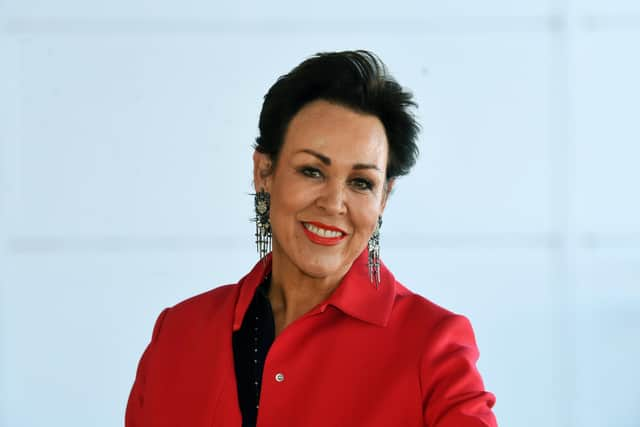
Andrew Morton wanted to come on Calendar and talk about it for the first time. Why? As a son of Leeds he wanted to tell his side of the story. Only he couldn’t. Yet. It was to be six years later when the Princess died in the horrific car crash in Paris that the truth as it was presented was revealed and the book’s title changed to Diana In Her Own Words. This was the secret Andrew Morton could not reveal, that the Princess, along with her closest confidants, had colluded with him, the contents delivered on her taped accounts to Morton to a London coffee house. He would then transcribe all she had said, her tales of eating disorders, suicide attempts and her husband ‘s infidelity, send her back the notes for her to make handwritten adjustments in the margins and gather the information chapter by chapter.
But in 1992 he was sworn to secrecy. Their agreement was that no one should know until Diana had died, which all of us including him were at the time presuming would be a long time hence. I remember sitting in the bar of the Queen’s Hotel with Morton and pressing him as to how he would prove all he said was true. It is, he said, only I can’t tell you how I know. But one day I will be able to.
Thirty four years later another book on Diana has hit the headlines. And I think, as I thought then, how do we really know? And the answer is we don’t. I suspect the truth, as then, lies somewhere in the middle.
That does not mean recollections vary as the Queen famously said after Harry and Meghan’s explosive Oprah interview or were said on behalf of the King this week or words to that effect over claims from Earl Spencer that in one of only two phone calls he received the then Prince of Wales suggested his ex wife would be ‘forgotten soon enough.’
If he did that was wrong not least because he was talking to a grieving brother, a brother whom I believe is still wracked with guilt for persuading his sister to take part in the now discredited Martin Bashir Panorama documentary which falsely cemented her feeling of isolation when concocted documents suggested those she trusted were in fact spying on her. They were not.
But here is the thing. There are times in all of our lives when quite simply things just come out wrong. In moments of confusion, anguish, lack of comprehension and, yes, grief how many of us can find the right words?
We know the claims made in Earl Spencer’s book, are damning. He knows it too. That is why he chose to publish them. But are they, even if uttered, taken in context. We know they were allegedly made when as a brother and uncle he pushed back on the Palace’s decision to have William and Harry walk behind their mother’s coffin. I think that most of us would now agree that was at least unwise and the wrong thing to insist upon, just as the Royal Family were too slow to acknowledge the impact of Diana’s death on a nation who remain besotted with her, not least because she was different, a free spirit and yes a breath of fresh air to a family not known for its ability to show emotion.
Perhaps what the King meant, if he said it, was that the pain of that day, that act of misplaced Royal duty’s would soon be forgotten. Or he hoped it would be. Perhaps it came out wrong. Perhaps in the heat of emotion under extreme pressure both said things they would later regret. I know I have. You too I suspect. Who knows? I am trying to be kind here. But why now? And here in some way without reading the book in it’s entirety find myself empathising with its author and come to the conclusion that there are times in our lives, events of such monumental consequences that as we get older, and the Earl too is someone in his sixties, we just have to look back and ponder. And try to make sense of events that at the time seemed senseless. And too awful to comprehend. Most of us do that in private. I have the benefit of this column and you know how I pour my heart out here. But I try, I try really hard to consider the damage it may do others while still not changing the past, or mending all of the broken pieces.
So while I understand it, I cannot condone it. What will it really achieve? Peace for him, peace for his sister, whom I believe, as I do for all including myself, would have eventually found acceptance with her disappointments, including a failed marriage?
I will buy the book to go alongside my signed copy of Andrew’s on the bookshelf. I am pretty certain that it’s most explosive contents already poured over this last few days will only be one part of the story he tells.
Diana was, as Earl Spencer said in his eulogy, a complex character. Her security and her salvation had she lived would have been in knowing she was loved not by a husband, who loved elsewhere, but by the children they had together. How this book will help them as we approach the 30th anniversary of their mother’s death I fail to see. Earl Spencer says it’s contents will not come as a surprise to them. Possibly not. But how will it heal their fractured relationships? There can be no comfort from knowing how unhappy their parents eventually made each other. It is bad enough seeing the results of that unhappiness behind closed doors, let alone in public and debated the world over, but it is nothing new.
As for telling the truth, sometimes the truth is better for knowing and keeping to oneself. It doesn’t make it easy, but it makes it easier to live with. I am reminded of a phrase my father quoted the gist of which goes like this. Bitterness is like an oil that destroys the vessel it is contained in rather than the head over which it is poured. Or perhaps in the words of another sparkly princess who turned a million little girls heads on the big screen it is time to ‘Let it Go’ and leave the memory of a real life princess to those who loved her untarnished. Shouldn’t that be the SwanSong we would all wish for? Happy memories of happier times or as Elsa sang, the past is in the past… where it belongs.