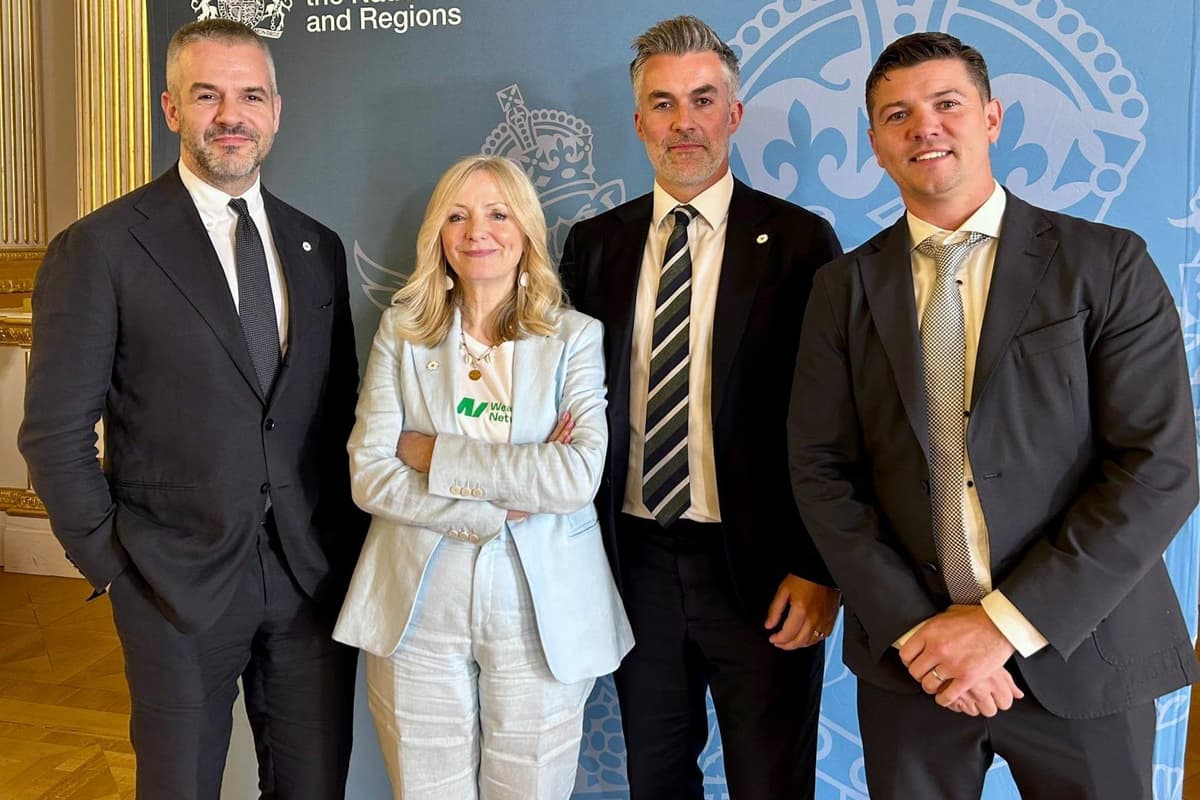
Yorkshire mayors to be handed London-style powers to overrule major planning decisions
The powers will allow mayors to take over key planning applications which will impact on economic growth, and direct councils whether to approve or reject them.
Yorkshire mayors are set to be given London-style powers to call in major planning decisions and overrule local councils to allow developers to build skyscrapers and major housing developments.
The proposals, to be published this week, are part of Andy Burnham’s devolution programme, which he believes will drive growth up and down the country.
The Prime Minister hopes this will help power his goal of building the largest number of council houses since the Second World War, although told The Sunday Times this may upset “nimby” locals.
“In my view, it will prompt a much more joined-up discussion about planning and local authorities,” he said.
The powers will allow mayors to take over key planning applications which will impact on economic growth, and direct councils whether to approve or reject them.
At first, this will only apply to large housing schemes and business projects and they will have to have more than 150 homes, over 15,000 square metres of commercial space or at least 10 storeys high.
Projections indicate this will mean in South Yorkshire Oliver Coppard will oversee 30 schemes a year, compared to the 200 a year assessed in London by Sir Sadiq Khan.
However, in the future this number will rise as it is expected that mayors will be given planning powers over large energy projects, such as solar or wind farms, by 2028.
This could include the controversial Whitestone Solar Farm in South Yorkshire or the huge wind farm on Walshaw Moor, the inspiration for Wuthering Heights, in Calderdale.
Mayors will also be able to grant up front permission for developments, so that building can begin without a developer having to apply.
The Government says that councils will continue to decide the majority of applications, and any decisions made by mayors will have to follow planning rules, their local plans and national policy.
However, it is the latest example of taking powers away from local areas to try and boost the number of houses getting built.
Last week, Housing Secretary Angela Rayner announced that developments around train stations will have the default response of yes in the planning process.
This is expected to boost the value of land around stations like Leeds and York, where major work is already happening, and possible new links such as the West Yorkshire mass transit.
Mayors will also be able to charge a levy on development to fund major infrastructure - such as Northern Powerhouse Rail and the Leeds and Bradford tram network - which was used in London to fund the Elizabeth line.
This, alongside the retention of business rates and a portion of income tax, will allow mayors to borrow against future earnings more easily.
With the Elizabeth line, it was used to service the debt from the project, and gives a major boost to mayors like Tracy Brabin who is hoping to bring trams back to the streets of West Yorkshire.
It will also help mayors fund their portion of the Northern Powerhouse Rail project, the £45bn “turn up and go” network being planned across the Pennines.