.jpeg?trim=0,0,0,0&width=1200&height=800&crop=1200:800)
Iran has accused US president Donald Trump of threatening "economic terrorism" after the US treasury said it would introduce the “toughest sanctions in history" against Tehran.
Trump has promised to wage "Economic Warfare and Isolation on an unprecedented scale”, suggesting the US will extend sanctions to allies that have helped mediate peace talks.
"ANY country that allows its financial institutions, businesses, airports, or government entities to provide any type of lifeline to Iran will itself face TREMENDOUS Economic Consequences," Trump wrote.
US treasury secretary Scott Bessent also made a similar warning, calling on allies to pick a side.
"We are going to collapse this regime. It is time for our allies and the rest of the world to make a decision," Bessent told broadcaster CNBC. "You are either with us or against us," he said.
Foreign minister Abbas Araghchi said that further sanctions would only bring “further defeat” to the US and said Trump was seeking to create a “diversion from America’s own crisis: unprecedented debt and surging interest costs”.
Meanwhile, over 750 members of the US military have been injured since the Iran war began, US officials said. More than 50 soldiers were added to the Pentagon’s casualty database on Wednesday, bringing the total figures to 757 injured and 18 killed.
US treasury secretary vows 'toughest sanctions in history'
US treasury secretary Scott Bessent has vowed the “toughest sanctions in history” against Iran as the war with the country enters its sixth month.
“It is a one-two punch. We have the blockade [on Iran], and we are going to have the toughest sanctions in history,” he told CNBC on Thursday.
“It is going to work in Iran, and we are going to collapse this regime.”
Trump threatens to crush Iran with ‘Economic D Day’ - but he is running out of cards to play
Donald Trump has issued another economic threat against Iran, vowing “TREMENDOUS Economic Consequences” for any country that trades with Tehran.
In a rant on Truth Social, he wrote: “This will be an ECONOMIC D-DAY, and we need all of our Allies to stand with the United States of America to isolate, and defeat, the Iran threat.”
Tehran’s foreign minister Abbas Araghchi said that the threats would only bring Trump “further defeat” as he struggles to find an exit strategy from an unpopular war.
I’m a legal expert. Here’s why Gaza peace deals keep unravelling
Donald Trump’s Board of Peace published a 15-point roadmap for Gaza in late July in which Hamas would hand its weapons to a committee of Palestinian technocrats, certified by an international verification body, and Israel would withdraw from the strip in phases. After Israel officially rejected the plan on August 9, US envoy Jared Kushner flew to the Egyptian coast to meet Hamas representatives.
From there, he travelled to Jerusalem where it was proposed the weapons would instead be handed over under the supervision of an American general. This change to the disarmament process is a clear illustration of what has gone wrong with each agreement reached over Gaza since January 2025: none have established, in advance, who certifies compliance.
The University of Edinburgh’s Peace Agreement Database and Dataset recorded four agreements related to the Gaza ceasefire process in 2025. They include a ceasefire agreement in January, a run of ceasefire and related agreements in October and a UN resolution in November.
Trump threatens to isolate Iran. Who are its trading partners?
A threat by US president Donald Trump to impose unprecedented economic warfare and isolation on Iran could have implications for countries that trade with it. Trump warned of economic consequences for any country that supports Iran.
Here are some of Iran's main trading partners in recent years:
- China: Iran’s biggest oil buyer, taking more than 80 per cent of its shipped oil in 2025. New US sanctions could put pressure on Chinese refiners and banks.
- UAE: A major trade and re-export hub for Iran, accounting for 30 per cent of Iran’s imports in 2024. The UAE has now suspended financial and economic transactions with Iran.
- Turkey: Bilateral trade is worth about $5-6bn annually. Turkey also relies on Iran for 13 per cent of its gas imports.
- Iraq: Trade exceeded $10bn in 2025, including $4-5bn a year in Iranian gas used for electricity generation.
- Oman: A long-standing partner and mediator, with bilateral trade reaching $1.5bn in 2025.
- Pakistan: Informal trade is estimated at about $4bn, with both sides seeking to expand bilateral trade to $10bn.
- India: Trade fell to $1.63bn in 2025-26, with Indian exports dominated by cereals, tea, coffee and spices.
- Armenia: Iran accounted for 3.6 per cent of Armenia’s trade in 2025 and supplies gas under a gas-for-electricity swap.
- Azerbaijan: Two-way trade rose 4.5 per cent in the first half of 2026 to $312.6m.
Israeli minister faces backlash over building of gallows site for hanging Palestinians with ‘viewing booth’
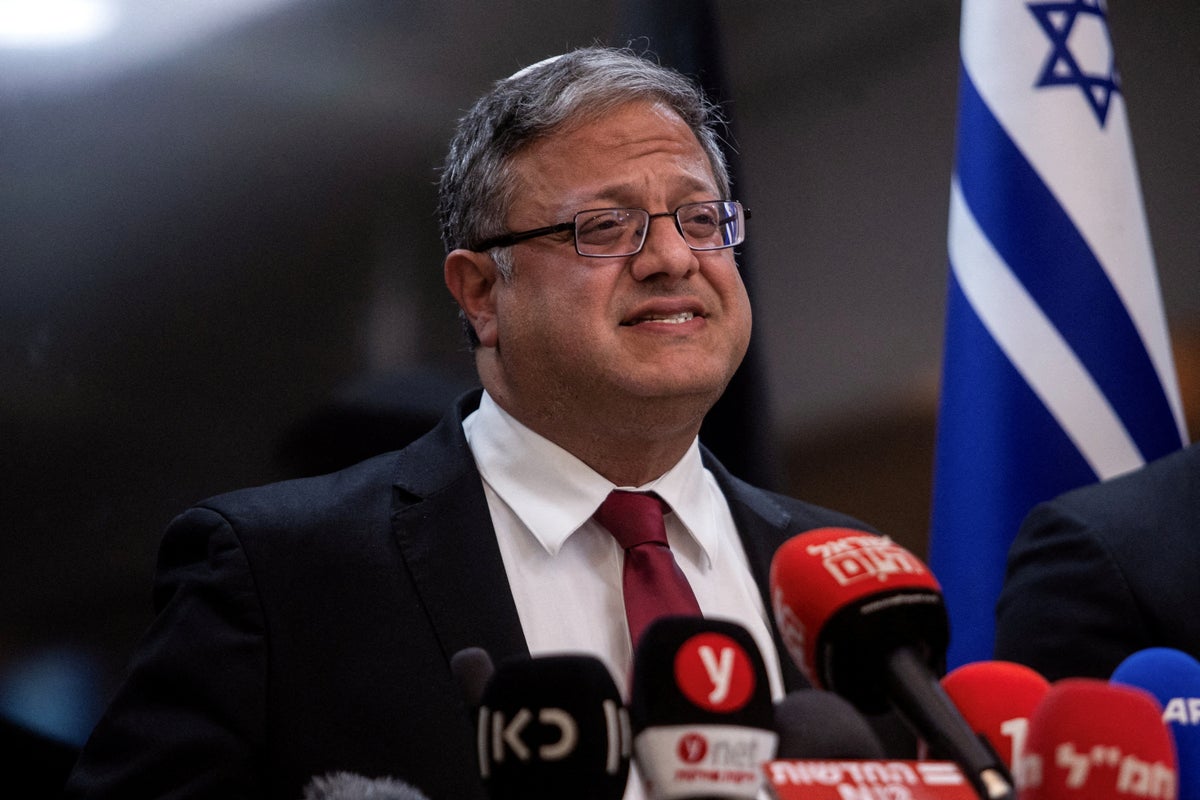
Israel’s far right national security minister is facing a major backlash over the construction of a gallows site to execute Palestinians sentenced to death at a prison in Israel.
Itamar Ben-Gvir posted a video online showing the construction of the facility in an unidentified location, which will include viewing booths for the family members of victims to witness executions.
It follows the passage of a highly controversial “Death Penalty for Terrorists Law” earlier this year that made death by hanging a default sentence for Palestinians convicted in military courts of deadly attacks.
Hormuz shipping traffic falls
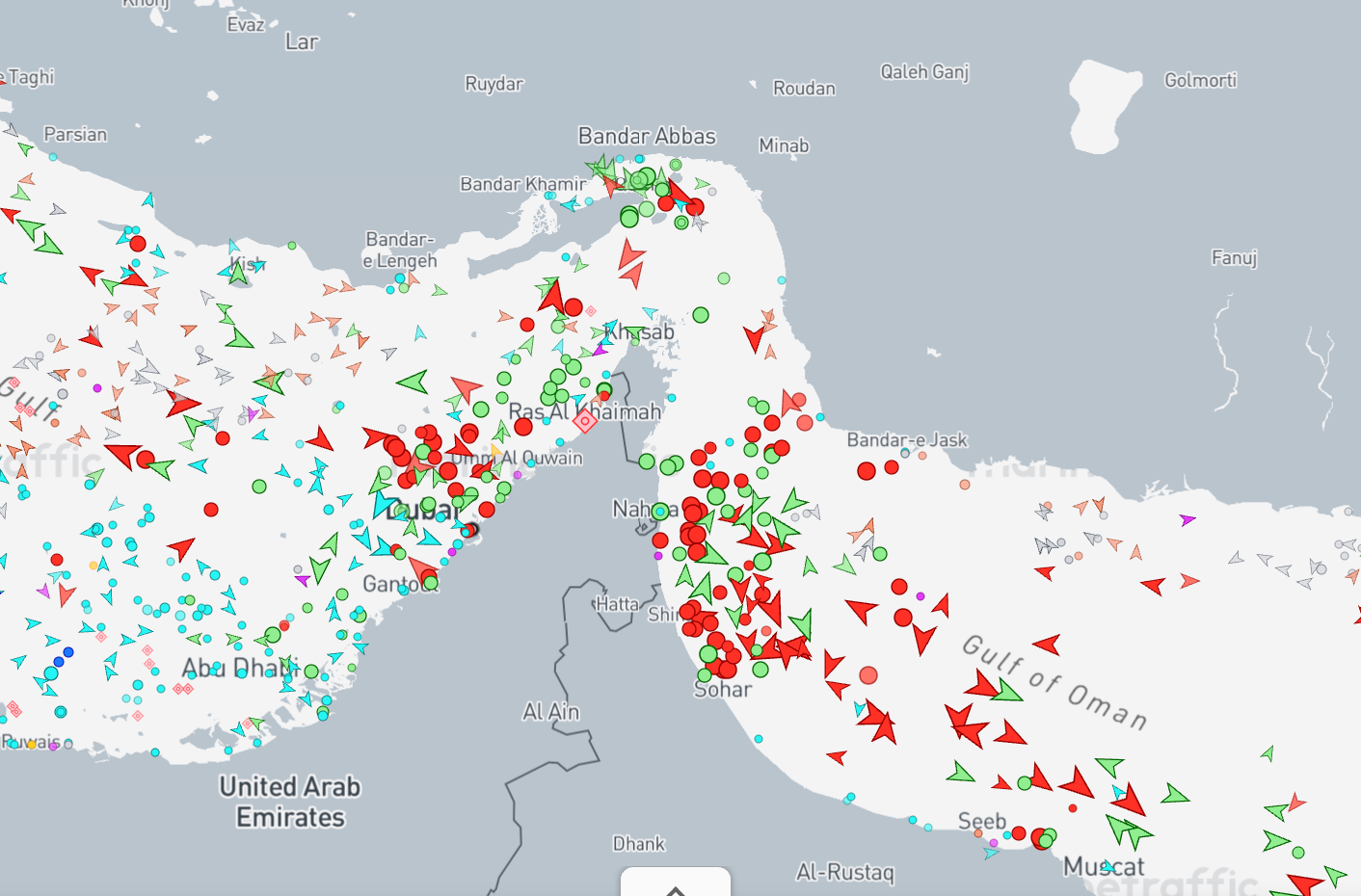
Ship traffic through the Strait of Hormuz fell on Thursday amid growing security concerns in the Middle East, as US-Iran peace talks remained stalled, Reuters reported.
Preliminary data from ship-tracking firm Kpler showed seven commodity vessels transited the waterway on Thursday, down from 14 on Wednesday. Four vessels entered the Gulf, while three exited.
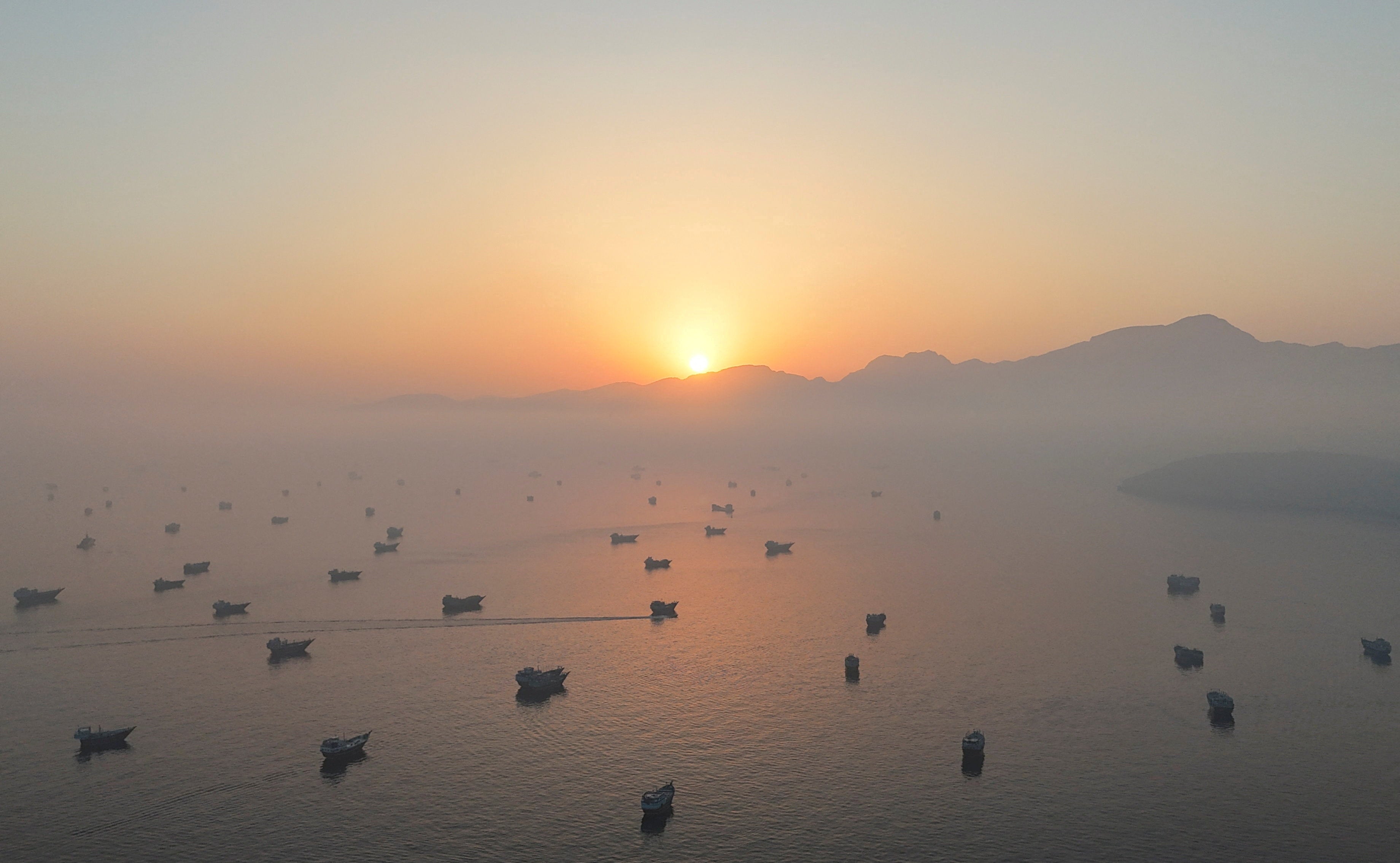
No supertankers or liquefied natural gas carriers were recorded passing through the narrow chokepoint.
However, one very large gas carrier carrying propane and butane exited the waterway via the Iranian route, according to Kpler data cited by Reuters.
Bessent sidesteps question on sanctions on China amid warning to those supporting Iran
US Treasury Secretary Scott Bessent has urged China to “get with the programme” as Washington ramps up economic pressure on Iran, warning Beijing that it relies heavily on Gulf energy.
China buys more than 80 per cent of Iran's shipped oil, according to 2025 data from analytics firm Kpler, but engaging in further economic warfare with China, a major exporter to the US including vital rare-earth minerals, risks retaliation against Washington.
When asked if the United States could target China for doing business with Iran, Bessent said many conversations were best to have in private.
"Keep in mind that the Chinese get 50% (of their) energy... from the Gulf. So it would do them a big service to get with the program," he said.
China's embassy in Washington said "sanctions and pressure do not help resolve the problem."
"China calls on the relevant parties to take responsible actions and resolve the issue through political and diplomatic means," according to an embassy spokesperson.
Oil flows tripled before ceasefire deal expired, according to analysis
Ship tracking data by Kpler reveals that oil flows through the Strait of Hormuz had nearly tripled before a 60-day ceasefire agreement expired.
Around 374 million barrels transited through the Gulf amounting to around 6.1 million barrels per day, according to a briefing published on Wednesday.
Before the MoU was signed this was around 2.3 million barrels. But despite the halting progress through the agreement period, numbers have not reached the heights of 15 million barrels a day prior to the conflict.
US hits Hezbollah with fresh sanctions
The US issued fresh sanctions targeting Lebanon's Hezbollah, including re-designating it over actions on behalf of the Iranian government.
The Treasury Department redesignated the group "for service to the Iranian regime under the command of Iran’s Islamic Revolutionary Guard Corps-Quds Force," according to the statement.
A US official, who spoke on condition of anonymity, said the redesignation was intended to show that Hezbollah is acting on behalf of the Iranian government, specifically Iran's Islamic Revolutionary Guard Corps Quds Force.
The US official said Thursday's move was not part of new actions the US has vowed it will take against Iran.