A defect in a railway track has been discovered where a train derailed last week near Lewes, East Sussex, investigators say.
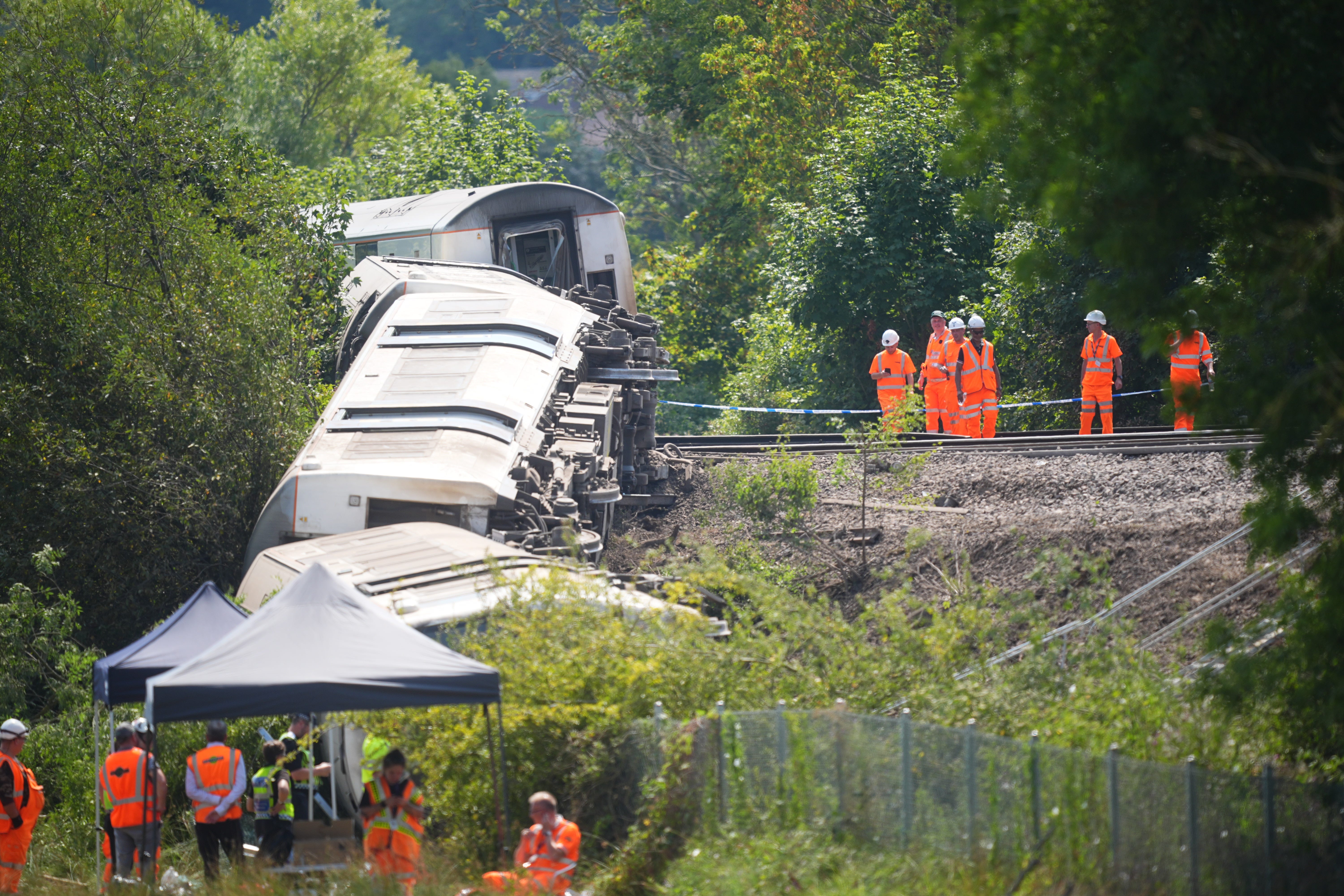
Thirty people were injured, two seriously, when three carriages derailed and tipped over onto the embankment.
Police declared a major incident when some passengers were trapped inside the train in scorching temperatures, while others walked along the sides of the overturned train to escape.
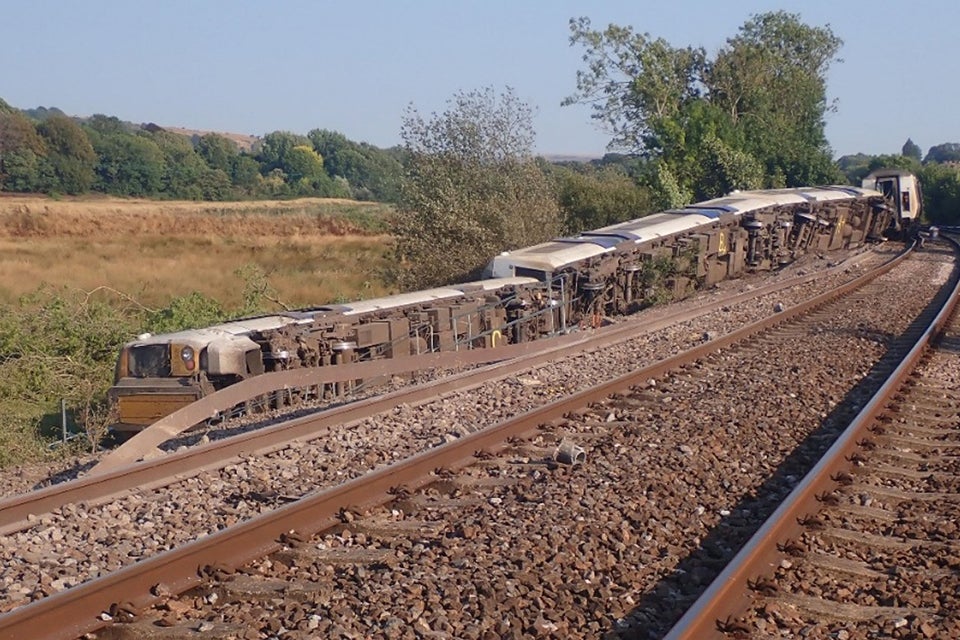
The Rail Accident Investigation Branch (RAIB) now says rear-facing CCTV images from trains on the day showed a “track geometry irregularity” on the “immediate approach to the point of derailment” on the line just outside Lewes railway station.
Investigators also say they have received reports from passengers on other trains of “rough riding” at that spot.
About 150 people had been on the train, which was travelling from Haywards Heath to Lewes on Thursday.
One survivor later described the experience as “completely terrifying”.
“There was a banging. Everything just went topsy-turvy,” said 56-year-old Yana Ludwig, from the United States.
Rob Bradley, who was on board with his young daughter, told how his carriage “jumped upwards” as passengers were thrown forwards.
“The train kind of skidded for quite a while before it stopped.
“Only then, when we turned around, did we see the whole back of the train was open and smoke and dust were pouring into the carriage.”
Thirty people were injured in the incident, according to the RAIB, 20 of whom needed hospital treatment, while “significant damage” was caused to the train and railway infrastructure.
The experts say they are analysing data from the “black box” from the front vehicle of train, and data from the remaining recorders on the train will be obtained.
Preliminary analysis shows the driver applied the train’s brakes as it passed the point of derailment, and that the train, which had been going at around 65mph, had started to slow down. The maximum speed on that stretch of line is 70mph.
CCTV recordings, signalling data and radio communications data have also been obtained, the investigators say. The train, track and embankment have been surveyed using various methods including laser scanning and aerial photography.
The accident happened at the height of last week’s heatwave, when temperatures in the southeast reached the high 30s.
RAIB said its investigation will consider the weather, as well as the status of the track, embankment, condition of the train and the effectiveness of any measures taken to address potential issues caused by hot weather.
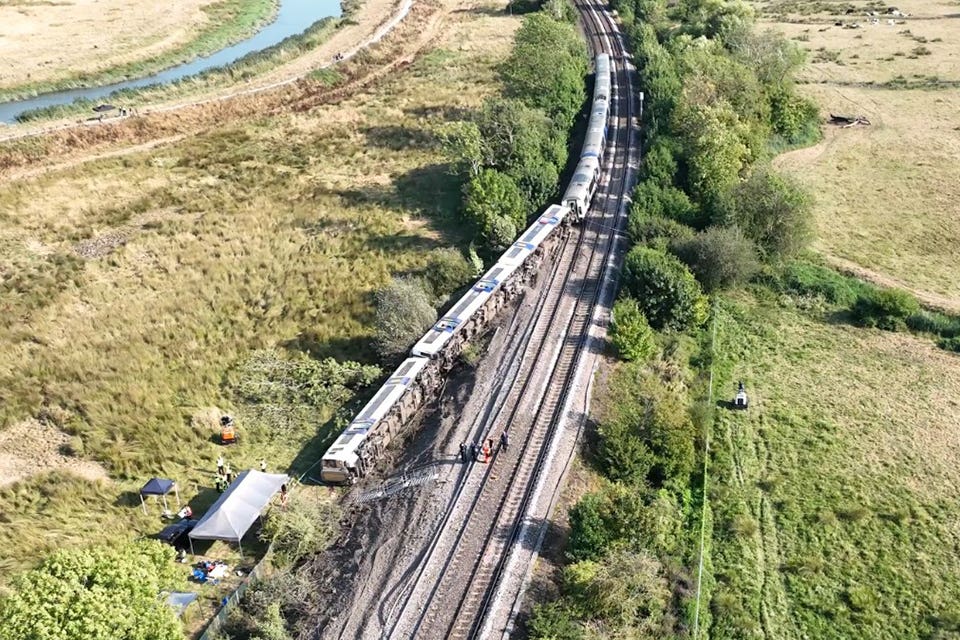
The experts say the land there “is sensitive to variations in water content and may undergo movement as moisture levels change”. They said: “Although, at this stage, there is no evidence to indicate that a significant embankment slip occurred before the accident, there is evidence that some movement had previously taken place.”
The railway line will remain closed for at least another week.
Network Rail and Southern Rail said the carriages that fell would need to be carefully lifted away by crane. The RAIB said its experts were working to ensure that evidence was preserved while doing this.
They said the location made the removal particularly difficult because the railway is close to a river, in a site of special scientific interest, and restricted road access was via a residential area.
Once the train has been removed, engineers will be able to assess the damage to the railway and “understand the scale of the repair work needed before services can resume safely”.
The RAIB has promised to publish its findings, including any recommendations to improve safety, at the end of its investigation.
Subscribe here**to get the latest updates from The Independent.