
Iran was resolute on Tuesday that the United States must end the war before they release their grip on the Strait of Hormuz after Donald Trump said the military was in complete control of the channel.
Mohsen Rezaee, the new secretary of Iran’s Supreme National Security Council, said on social media that the “message is clear” that the strait will remain shut until the US agrees to terms and pulls back.
”The Strait of Hormuz will not reopen until the US ends the war and blockade, releases Iran’s frozen assets, and agrees to a region-wide ceasefire, including in Lebanon and Gaza,” he said.
“Until all conditions are met, the Strait will remain closed.”
It came after president Trump on Monday snubbed Iran’s six conditions for reopening the strait, which included “payment in full” for damage inflicted on Iran throughout the war.
“It is an interesting idea because now I am likewise demanding compensation from Iran,” Trump said, adding: “I have instructed my representatives to put this firmly into any, and all, future negotiations.”
Meanwhile, Trump reportedly hid in a catering truck to fend off an assassination threat from Iran while departing Turkey after the Nato summit last month.
Trump says he just does what Secret Service says after reports of switching planes
Donald Trump has said he just does what the Secret Service says to do, following reports that he went on a catering truck to a military jet instead of Air Force One while departing from the Nato summit last month amid a threat from Iran.
“I go by Secret Service and the military. They wanted me to go on a different flight, a different plane...I do what they say”, Trump told reporters.
“I guess there was a threat out there. I didn't really ask too much about it. I get a lot of threats”, he added.
Recap: Tehran hits back at Trump’s claim of ‘complete control’ over Hormuz
Iran was resolute on Tuesday that the United States must end the war before they release their grip on the Strait of Hormuz after Donald Trump said the military was in complete control of the channel.
Mohsen Rezaee, the new secretary of Iran’s Supreme National Security Council, said on social media that the “message is clear” that the strait will remain shut until the US agrees to terms and pulls back.
”The Strait of Hormuz will not reopen until the US ends the war and blockade, releases Iran’s frozen assets, and agrees to a region-wide ceasefire, including in Lebanon and Gaza,” he said.
“Until all conditions are met, the Strait will remain closed.”
It came after president Trump on Monday snubbed Iran’s six conditions for reopening the strait, which included “payment in full” for damage inflicted on Iran throughout the war.
“It is an interesting idea because now I am likewise demanding compensation from Iran,” Trump said, adding: “I have instructed my representatives to put this firmly into any, and all, future negotiations.”
Catch up: Trump claims control of Hormuz as assassination threat revealed
Donald Trump says the US Navy has cleared mines from the Strait of Hormuz and now has “100 per cent” control of the key waterway, which Iran says will remain closed until Washington meets its demands.
Trump told reporters: “It’s open now”. He also claimed the US was “the only one that has control of the Strait of Hormuz right now”.
It comes amid reports that the president hid in a catering truck to escape an Iranian assassination threat when he attended the Nato summit in Ankara last month.
Trump, meanwhile, has demanded war compensation from Iran in a shocking reversal of the six-point ultimatum presented to Washington as Tehran’s conditions for reopening the Strait of Hormuz.
Iran’s top security official said earlier this week that they would allow traffic to pass through the channel only once the US meets six terms, including “payment in full” for damage inflicted during the war.
But Trump snubbed the proposal in a Truth Social post, saying: “It is an interesting idea because now I am likewise demanding compensation from Iran,” Trump said, adding: “I have instructed my representatives to put this firmly into any, and all, future negotiations.”
Gold prices rise again as Iran conflict and interest rate fears ease
The price of gold has been on the rise once more, reversing a months-long downward trend which saw the precious metal’s value fall by more than a quarter.
Investors have had a tough time predicting what markets will do this year, with uncertainty from the Iran war hitting inflation, currency markets remaining volatile and and growing concerns over the amounts the largest firms are spending on artificial intelligence.
In such times, previously investors might have turned to gold, seen as a safe haven in troubled times - but instead, the precious metal appeared to mirror some of those other markets with a steep decline in the first half of 2026.
Has Trump achieved his goals in the war with Iran?
Shortly after the US and Israel attacked Iran, Donald Trump laid out a host of objectives, from destroying Iran's ballistic missile capabilities to ensuring Tehran can never have a nuclear weapon.
Missiles and drones
Roughly one month into the war, U.S. sources told Reuters that one-third of Iran’s arsenal was destroyed, with another third likely damaged, destroyed or buried.
It is unclear how many missiles Iran has left, but the country still has the ability to reach US allies - as evidenced in attacks last month across the Gulf.
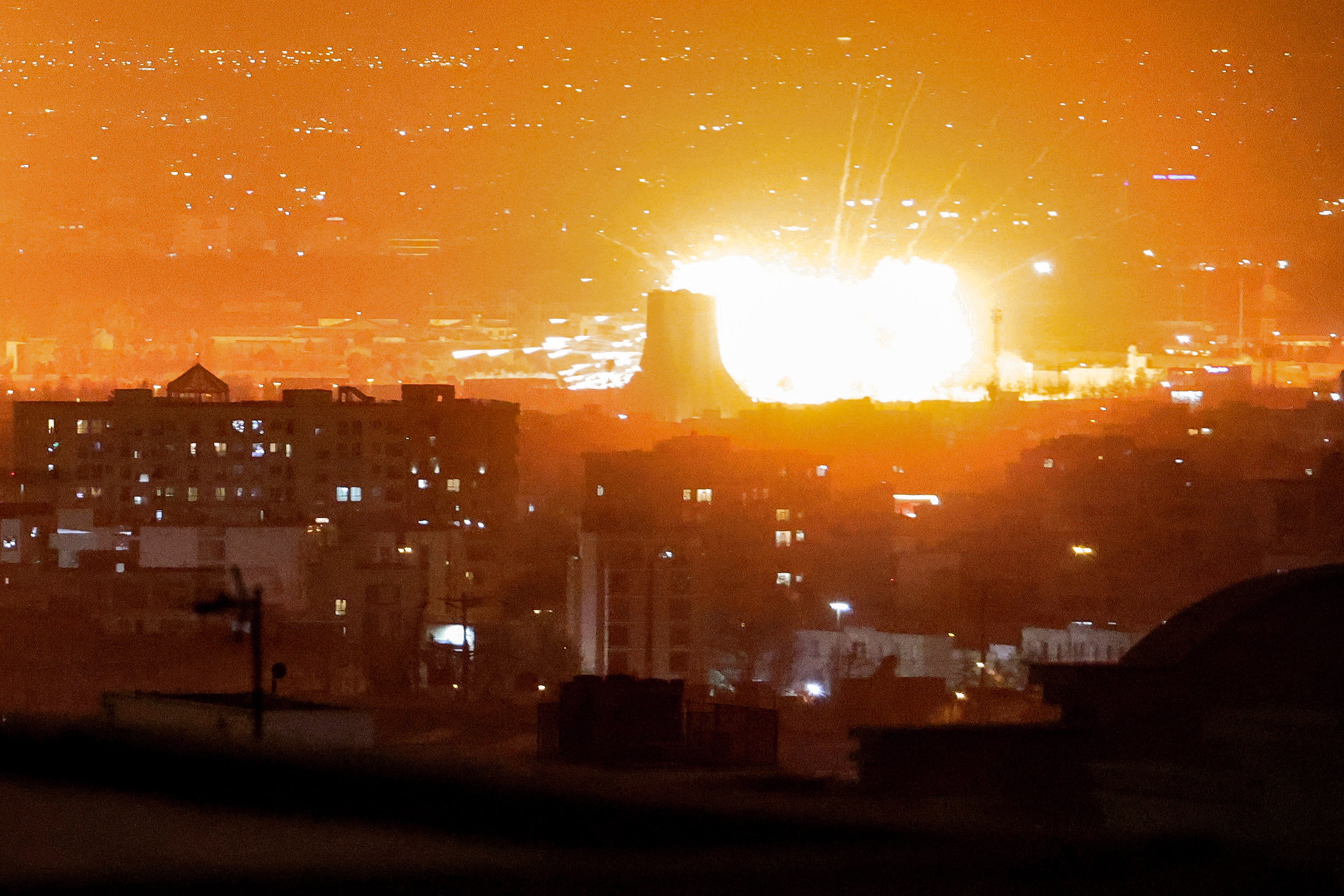
Military capabilities
The US says it has degraded Iran's conventional military ability to project power in the region or threaten US operations.
But Iran still claims to have closed the Strait of Hormuz until the US agrees to terms including compensation for the war, forcing up oil prices.
Nuclear programme
Trump has repeatedly said that his main goal is to prevent Iran from developing a nuclear weapon. Tehran has consistently said it has no intention of building a bomb.
But the war has not significantly changed Iran's nuclear capability. US intelligence since the war estimated that Iran would need less than a year to produce a nuclear weapon - the same timeline it laid out following the June 2025 strikes on Iranian facilities.
Iranian proxies
Trump said on March 2 at the White House that Tehran cannot be allowed to continue to arm and fund the armed proxy groups in Iraq, Lebanon, Gaza and Yemen that Iran has relied on for decades to project power and harass enemies.
US Admiral Brad Cooper said in May that Iran no longer has the ability to reliably supply those groups with advanced weapons, though he did not specify what that meant. Iran is now demanding the US end its wars in countries inhabited by proxy groups.
Regime change
Trump encouraged Iranian protesters to overthrow their rulers before the war began and said Supreme Leader Ayatollah Ali Khamenei's death on February 28 was their "single greatest chance" to seize the government. The war has failed to dislodge Iran’s government, but supreme leader Ayatollah Ali Khamenei was killed and replaced by his son at the start of the conflict.
Trump in recent months has refrained from repeating his calls for the toppling of Iranian leaders.
Watch: President Trump suggests he may declare a national emergency around 'election security'
Khamenei appoints new commander of the IRGC
Iran’s Supreme Leader Mojtaba Khamenei has made six new appointments to the Revolutionary Guards and armed forces, according to a message on his social channels.
That includes appointing Brigadier General Ahmad Vahidi as commander-in-chief of the IRGC.
Who are Iran's Islamic Revolutionary Guards Corps?
Iran’s elite Islamic Revolutionary Guard Corps (IRGC) were set up shortly after the 1979 revolution to protect the clerical ruling system.
The IRGC’s mandate is to protect revolutionary values and it answers to the supreme leader of Iran, which means it has at times spoken out against the government.
With a huge military force of some 125,000 personnel (prewar), the IRGC provides a counterweight to Iran’s professional army and operates independently of the armed forces.
It controls the country’s ballistic missile arsenal - a target in Washington’s sights as it tries to negotiate demilitarisation with the state.
Since the Iran-Iraq conflict of the 1980s, the IRGC has funded nonstate armed groups in the region. The IRGC also commands the Basij religious militia within Iran, a volunteer paramilitary force loyal to the clerical establishment often used to crack down on anti-government protests.
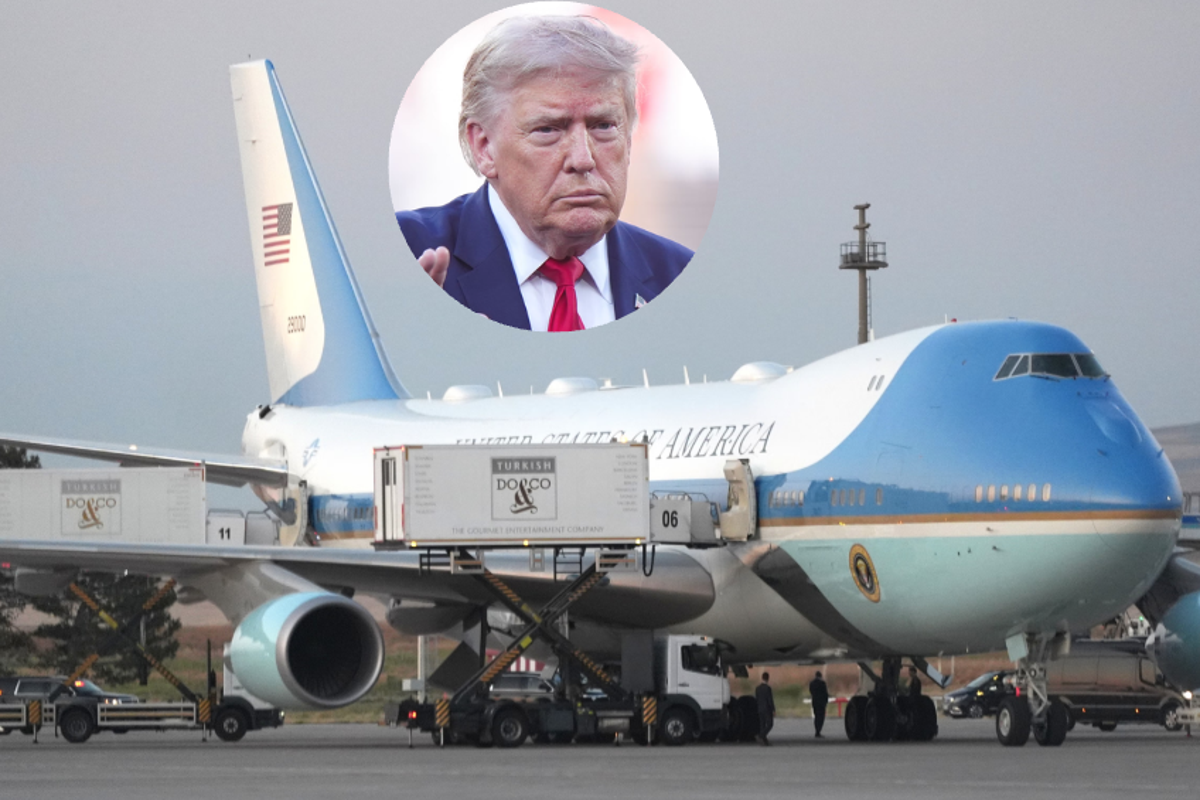
Catch up: Trump secretly switched planes to leave Turkey due to Iran threat
President Donald Trump was secretly transported away from Turkey in an extraordinary plan triggered by an assassination threat from Iran, according to a report.
Air Force One, a catering truck and a secondary military plane were all part of an elaborate “deception operation” to safeguard the commander-in-chief when he departed last month’s Nato summit in Ankara, The Washington Post has revealed.
Several White House staffers and journalists remained on Air Force One as unwitting decoys to the threat while Trump was quietly smuggled off the plane and boarded onto a different flight, according to the Post.
How the Iran war is affected Ukraine's ability to resist Putin
Ukraine is urgently seeking more Patriot interceptors to defend against a nightly barrage of Russian ballistic missile strikes.
But the Iran war has drained arsenals in the US and the Gulf, and some European countries are holding onto missiles they may need for their own defense.
So what are the Patriot interceptor missiles?
Patriot, short for Phased Array Tracking Radar for Intercept on Target, is a mobile surface-to-air missile defense system built by US weapons maker Raytheon Technologies that can be used in all kinds of weather and at long range.
A typical battery includes radar and control systems, a power unit, launchers, and support vehicles. The system can intercept aircraft, tactical ballistic missiles and cruise missiles, depending on the interceptor used.
Why do they matter?
Kyiv has repeatedly asked Western allies for more air defences to protect critical infrastructure and civilian areas from frequent Russian missile and drone attacks.
While effective at intercepting missiles and aircraft, Patriots are a costly way to shoot down low-budget drones. Patriot interceptors are estimated at around $4 million per missile, CSIS says, while Russia can send hundreds of cheap drones a day.
Although not originally designed to intercept hypersonic weapons, in May 2023 the US confirmed Ukraine had used the Patriot system to shoot down a Russian Kinzhal missile, which Moscow claims is hypersonic.
What are the obstacles?
Russia has long said that giving Ukraine interceptors would amount to a direct escalation. They said it would delay the chance of peace.
But Donald Trump’s main line of argument is that the US needs its weapons and cannot afford to give them away to Ukraine. Indeed, the Patriots have been in short supply since the US went to war with Iran in February.
Trump in July offered Ukraine the right to make its own Patriot interceptors, but later reneged, saying the US has “not agreed” to such an arrangement.