Southern Water is pushing for a rare drought order which would ban the filling of non-domestic swimming pools as temperatures rise to a sweltering 33C on Wednesday.
In its application, the firm said an “exceptional” shortage of rain in the South East “demonstrates a clear threat to supplies” in Hampshire and the Isle of Wight.
It added that 165,000 people in the Southampton West supply area could “soon be significantly affected by a restricted water supply”.
The application will now be considered by environment secretary Angela Eagle, with a decision expected as soon as possible.
A non-essential use ban has not been imposed for 20 years, with the last one granted to Sutton and East Surrey Water in May 2006.
It comes as Thames Water said that thousands of homes and businesses have now been left without water or with low pressure after pipes burst in London and Essex.
The Met Office says this summer is set to be the UK’s hottest since records began.
How to keep your house cool without air conditioning during a heatwave
With heatwaves becoming hotter and more frequent, demand for air conditioning is expected to rise significantly. However, if the UK and similar countries respond to hotter summers simply by installing more AC, they risk creating a costly, energy-hungry and more unequal future. But there’s a cooler, smarter way forward.
Colleagues and I have surveyed more than 1,600 households across the UK and found that two-thirds used fans in the summer of 2022, and one in five used air conditioning. The vast majority of those AC units were bought during or after that year’s 40°C heatwave – showing how quickly habits can shift.
Read the full article here:
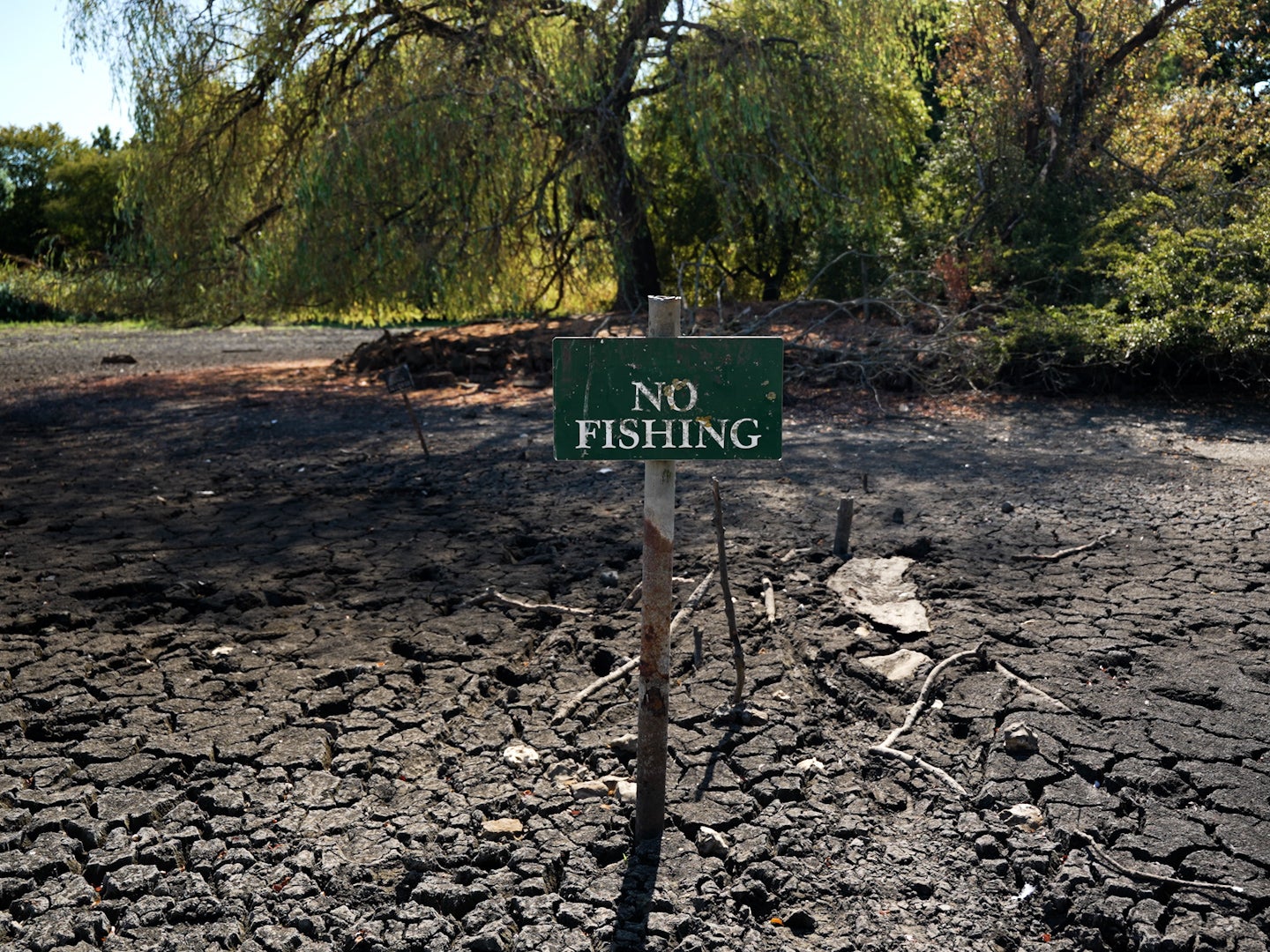
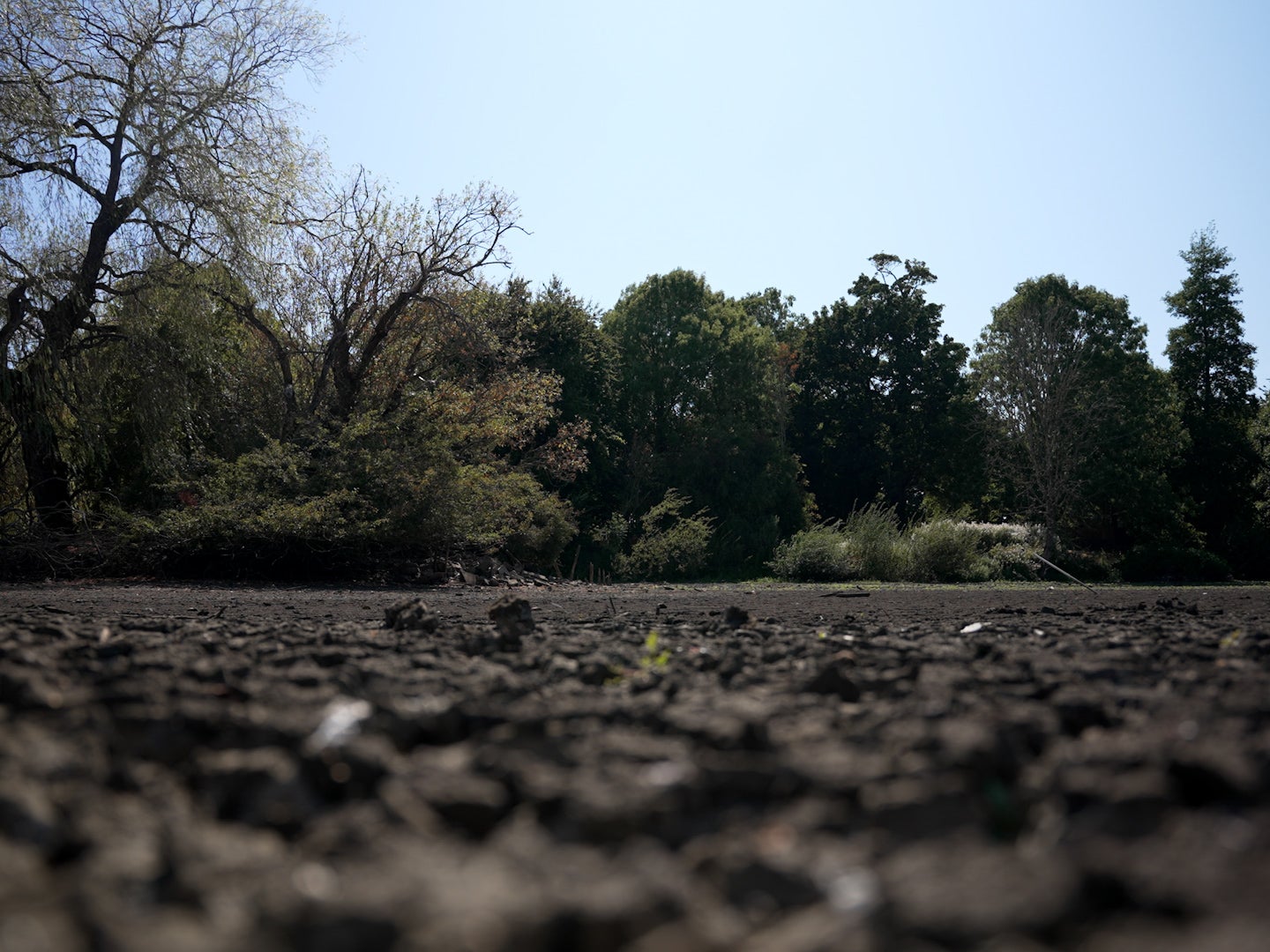
In pictures: Cracked earth replaces pond
Hosepipe ban: When will restrictions end?
Half of England and parts of Wales are now subject to a hosepipe ban with almost three-quarters of the country plunged into drought.
Officials from the National Drought Group assessed on Monday that 71.3 per cent of the country is now in drought, with the addition of the East Midlands, Lincolnshire, Northamptonshire, Kent, East Sussex, Solent and the South Downs.
That brings the total number of people affected up to 45 million as a fifth heatwave of the summer sweeps through England and Wales.
You can read where the hosepipe bans are in effect below.
Everything you can’t do in a heatwave as drought hits most of the UK
More than half of England and Wales has been plunged into drought as the UK braces for its fifth heatwave of the year.
As the drought continues to pile pressure onto farming, freight shipping and energy production after the country saw its driest July in 190 years, here The Independent looks at everything this heatwave could stop you from doing.
Read the full article here:

Southern Water seeks tighter crackdown on water use, warning of household curbs
Southern Water has applied for a rare non-essential-use ban drought order, which, if imposed, would mean businesses must stop using water for activities such as cleaning cars and filling non-domestic swimming pools.
In its application, the firm said an exceptional shortage of rain in the South East demonstrated “a clear threat” to supplies within the Hampshire Southampton West water resource zone, as well as the Isle of Wight (IOW).
It added that 165,000 people in the Southampton West supply area could soon be significantly affected by a restricted water supply.
The application will be considered by Environment Secretary Angela Eagle, and a decision is expected soon.
A non-essential use ban has not been imposed for 20 years. The last one was granted to Sutton and East Surrey Water in May 2006.
Firefighters' leader says equipping crews should be national priority
Firefighters are under extra pressure due to an “unprecedented summer of dangerous and volatile wildfires”, the Fire Brigades Union says.
The union said it was a “national priority” to have enough properly equipped firefighters.
July was the busiest month on record for wildfires, statistics show, after firefighters attended 458 cases last month.
More than 120 firefighters are tackling a blaze in the New Forest in Hampshire that began on Sunday, and Nottinghamshire fire and rescue service declared a major incident on Sunday as two large fires in woodland near Mansfield put a significant strain on resources there.
Emergency calls to the London fire brigade have increased by almost a third this summer, according to a briefing seen by The Guardian.
The union says there are 12,000 fewer firefighters now than in 2010.
Steve Wright, the FBU general secretary, said: “Our country is facing unpredictable environmental challenges, and it must be a national priority to ensure we have enough properly equipped firefighters ready to face these threats.”
Analysis: Next pandemic won’t come from a lab but from the weather
Two summers ago, heat sent record numbers of people into English A&E departments. Hospitals ran emergency protocols normally reserved for winter flu season. Nobody declared a health emergency; we just called it a hot week.
I trained in infectious disease epidemiology before I moved into climate and health policy, and what most unsettles me now isn’t a single dramatic moment but a pattern I keep seeing in the paperwork.
At the Cop26 summit in 2021, the headline outcome was near-universal agreement on net zero, most countries committing to reach it by 2050, some, like India, pushing that out to 2070.
Yet according to Oxford’s Net Zero Tracker, only a fraction of those pledges were strong, meaningful commitments with clear plans attached, just 18 per cent of global emissions and 27 per cent of global GDP covered by anything robust. The rest was a promise about a decade three governments from now.
Read the full analysis from policy adviser Aliza Ayaz here:
Climate crisis demands fundamental rethink of farming, says farming group
The UK needs a fundamental rethink of how farmland is managed if it is to cope with increasingly severe floods, droughts and heatwaves driven by continued fossil fuel use, the Nature Friendly Farming Network (NFFN) says.
After another year of record-breaking heatwaves and droughts, the farmer-led organisation warns that short-term responses to individual weather events are no longer enough. Instead, farming policy and corporate investment must focus on long-term resilience.
The NFFN says farmers need to recognise water as their most valuable resource, prioritising healthy soils that can absorb and retain rainfall, alongside creating more on-farm ponds and reservoirs to store water for prolonged dry periods.
The organisation is calling on the Government and the private sector to provide greater financial support for water infrastructure and simplify the planning process for work with clear environmental outcomes.
Water mains bursts leaves taps dry in homes
Water stations opened in Ilford, east London, and Chigwell, Essex, after burst water mains left thousands of homes and businesses with no water or low water pressure.
The affected areas are: E10, E11, E17, E18, E4, IG10, IG2, IG4, IG5, IG6, IG7, IG8, IG9 and RM4.
Thames Water said: “Our teams continue to work in the extreme heat to fix the multiple broken pipes in the area. We’re sorry to those who are still affected.
“Whilst progress is being made, it’s taking longer than normal to fix the broken pipes as often excavations are needing to be extended.”
Large fire breaks out in Exeter park, sending smoke across city