Russian air defences engaged and shot down 285 Ukrainian drones in the space of just 12 hours, according to Russia’s defence ministry as Kyiv steps up its cross border assaults.
The ministry said that the drones were downed between 8am and 8pm Moscow time, with incidents mostly occurring in the central and western regions of Russia.
They also included the region of Bashkortostan, between the Volga River and the Ural mountains, they added.
The mayor of Moscow, Sergei Sobyanin, wrote on Telegram that air defence units had destroyed five drones headed for the capital, a regular occurrence in recent months.
Both sides accused each other of lethal attacks on Sunday, as Ukrainian president Volodymyr Zelenskiy said Moscow was targeting global food security by striking Odesa's seaport.
Three people were killed and 37 wounded in Ukraine’s Kharkiv, where an apartment block was hit, while authorities in Russia's Belgorod said five were killed and 25 wounded by a Ukrainian drone attack.
What are Patriot missiles and why do they matter?
Ukraine is urgently seeking more Patriot interceptors to defend against a nightly barrage of Russian ballistic missile strikes.
But the Iran war has drained arsenals in the US and the Gulf, and some European countries are holding onto missiles they may need for their own defense.
So what are the Patriot interceptor missiles?
Patriot, short for Phased Array Tracking Radar for Intercept on Target, is a mobile surface-to-air missile defense system built by US weapons maker Raytheon Technologies that can be used in all kinds of weather and at long range.
Developed in the 1980s, the Patriot system has been modernized over the past decades, expanding its capabilities and reach. It is slated to remain in service through 2048.
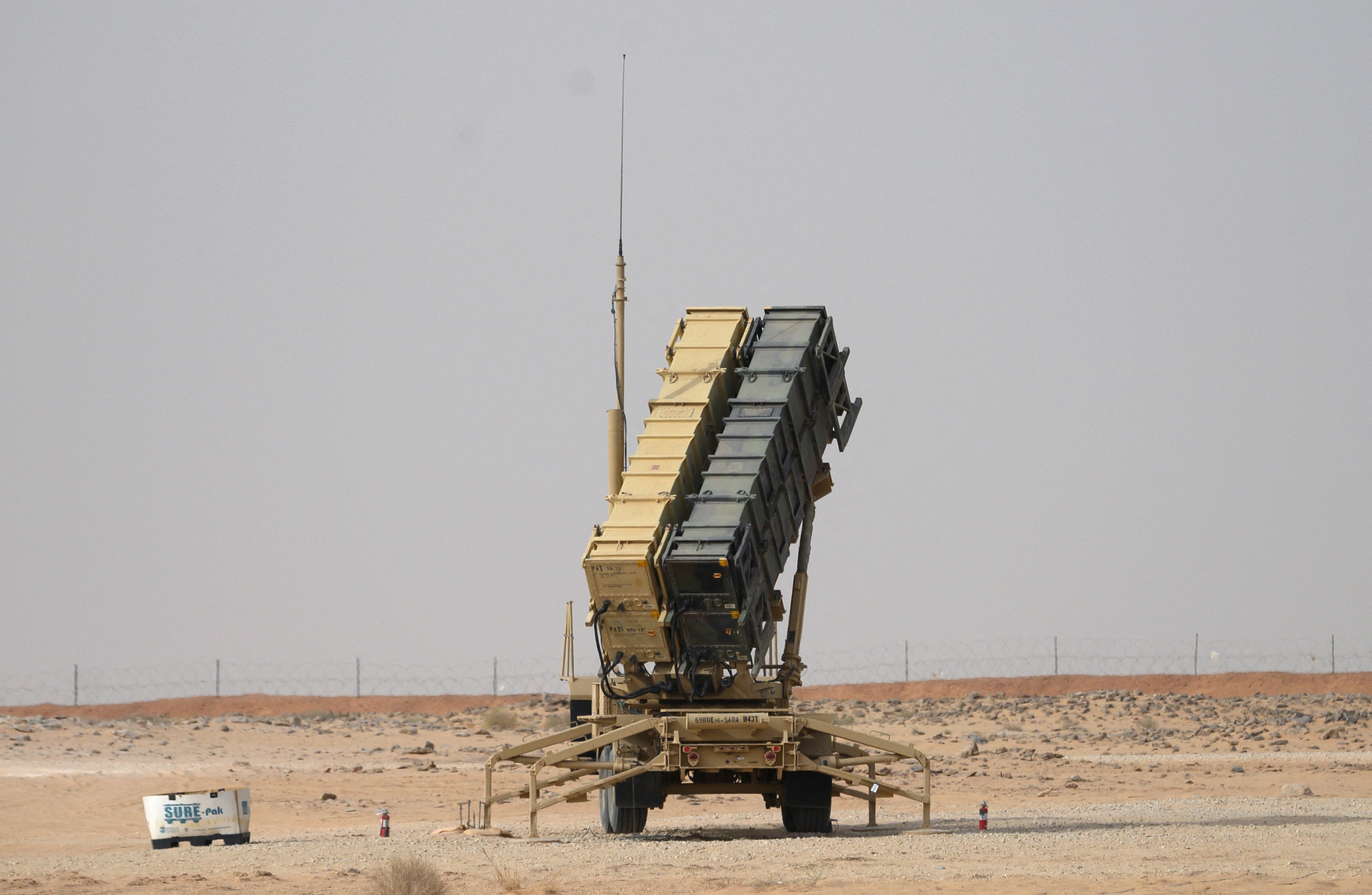
A typical battery includes radar and control systems, a power unit, launchers, and support vehicles. The system can intercept aircraft, tactical ballistic missiles and cruise missiles, depending on the interceptor used.
The earlier PAC-2 interceptor uses a blast-fragmentation warhead that detonates in the vicinity of a target, while the PAC-3 family of missiles uses more accurate "hit-to-kill" technology to physically collide with the target.
Why do they matter?
Kyiv has repeatedly asked Western allies for more air defences to protect critical infrastructure and civilian areas from frequent Russian missile and drone attacks.
While effective at intercepting missiles and aircraft, Patriots are a costly way to shoot down low-budget drones. Patriot interceptors are estimated at around $4 million per missile, CSIS says, while Russia can send hundreds of cheap drones a day.
Although not originally designed to intercept hypersonic weapons, in May 2023 the US confirmed Ukraine had used the Patriot system to shoot down a Russian Kinzhal missile, which Moscow claims is hypersonic.
What are the obstacles?
Russia has long said that giving Ukraine interceptors would amount to a direct escalation. They said it would delay the chance of peace.
But Donald Trump’s main line of argument is that the US needs its weapons and cannot afford to give them away to Ukraine. Indeed, the Patriots have been in short supply since the US went to war with Iran in February.
Trump in July offered Ukraine the right to make its own Patriot interceptors, but later reneged, saying the US has “not agreed” to such an arrangement.
Catch up: Bulgaria's PM says drone explodes near gas pipeline close to Romanian border
A drone entered Bulgarian airspace on Saturday and exploded close to an international gas pipeline shortly after crossing the border from Romania.
Bulgaria’s prime minister Rumen Radev said the drone exploded just after 5 a.m. about 100 meters (330 feet) inside Bulgarian territory.
It was not detected or identified while flying through either Romanian or Bulgarian airspace.
“There are no casualties or damage to buildings. The area has been cordoned off. We continue to monitor the situation,” Radev said following a government emergency meeting.
Radev said the unmanned aerial vehicle exploded around 200 meters from a Romanian compressor station, and about 1 kilometer (0.6 miles) from Bulgaria’s compressor station on the Trans-Balkan gas pipeline.
“We will continue to monitor the situation and strengthen surveillance. Following this incident, we will also redeploy border police anti-drone detection and countermeasure capabilities from the border with Turkey to the border with Romania,” Radev said.
It was unclear where the drone had originated or whether it was linked to Russia or Ukraine.
Passage of ships to Black Sea continues smoothly, Turkish officials say
Ships are passing smoothly through the Turkish straits to the Black Sea despite heightened concerns about safety, two Turkish government officials told Reuters on Sunday.
On Saturday, Bloomberg News reported that Ankara had restricted commercial ship traffic entering the Black Sea following attacks on vessels there, including Turkish-owned ships.
Turkey has issued repeated warnings to Moscow and Kyiv over the attacks in the Black Sea, urging the warring sides to take measures to ensure navigational safety in the area.
On Saturday, Turkish Foreign Minister Hakan Fidan said Ankara had conveyed to Moscow and Kyiv they should declare a moratorium on their attacks in the Black Sea.
The officials, who spoke on condition of anonymity, said Turkey had implemented some temporary measures because it had been highly uncomfortable about security for some time, but that passage was clear under the conditions of the Montreux Convention. They did not give further detail.
Japan issues ominous warning as China, Russia and North Korea deepen ties
The security environment around Japan has become as severe and complex as it has ever been since the end of theSecond World War, the country’s latest defence report said, as it warned against growing defence coordination between Russia, North Korea and China.
The assessment, outlined in Japan's 2026 Defence White Paper, warned that "the possibility of serious situations" capable of shaking the post-war international order in East Asia "cannot be ruled out".
It added that a crisis similar to Russia's invasion of Ukraine could emerge in the Indo-Pacific, particularly in East Asia.

The real worry for Ukraine’s allies as beach strike on Russian civilians marks a shift in the war
Kyiv has not yet acknowledged killing Russian civilians on a Black Sea beach, but as it strikes deeper at Moscow, these tragedies will multiply – and that’s not the only worry, explains world affairs editor**Sam Kiley:
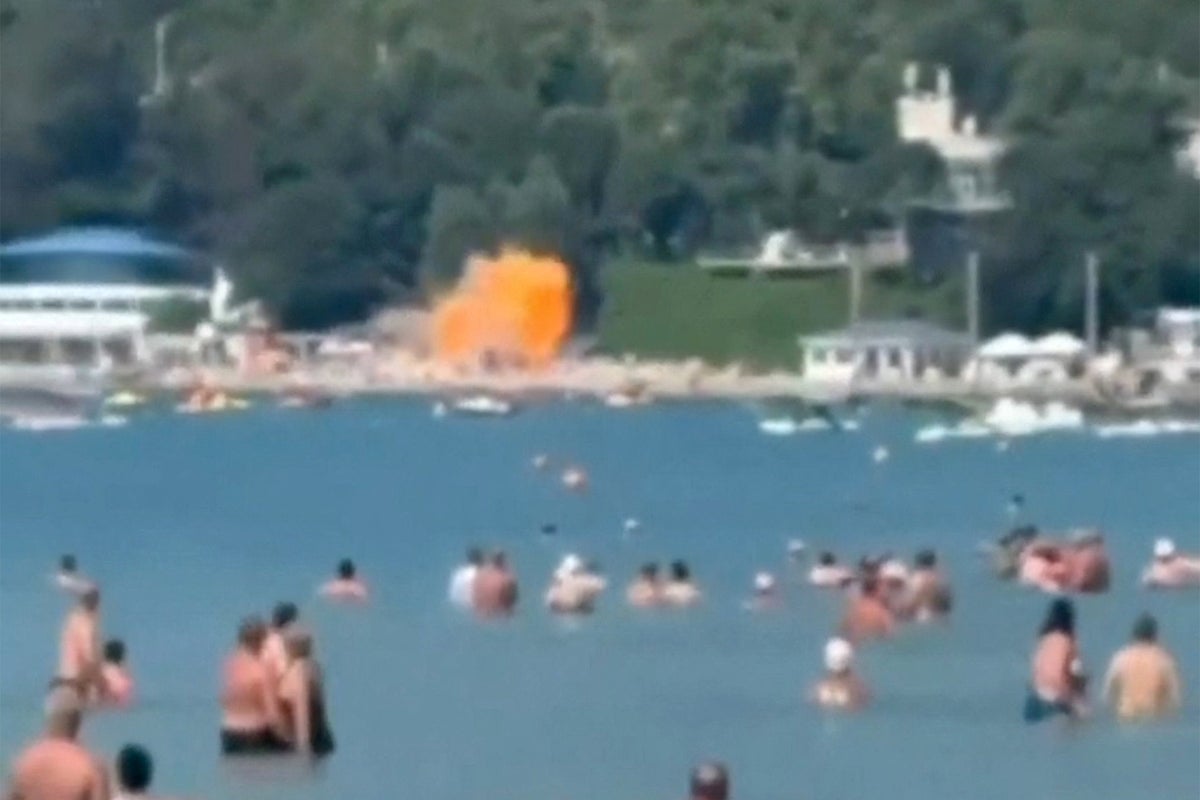
The gentle splash of breaking waves on a resort beach and the laughter of children having innocent fun gives way to the screech and crack of an explosion. Seven people dead – three of them are children.
This was the scene on Monday in the Russian Black Sea town of Gelendzhik where, even if every adult killed and all 40 of those injured were wide-eyed fans of Vladimir Putin and part of his war machine, the children were innocent.
It was the sort of attack that, if carried out by Russia against Ukraine, would have sparked international outrage and allegations of war crimes by targeting civilian areas.
Syria to reorganise Russian military bases into joint training camps
After 18 months of deliberation, the Syrian government that displaced Russian ally Bashar Al Assad in December 2024 has decided that it will reorganise Moscow’s key bases in its territory into joint training centres.
Syria’s state news agency SANA reports that a memorandum of understanding was reached between the two nations following months of high-stakes negotiations.
The sites, including the leased naval base in Tartus, on the Mediterranean, are Russia's only military bases outside the former USSR.
Under the new deal, Syria will take over the civilian facilities at the bases, including the commercial docks at Tartus and the Khmeimim airport.
Military facilities, meanwhile, will be converted into joint training sites and qualification centers "aimed at safeguarding the interests of both countries," SANA said, quoting the Syrian foreign ministry.
The ministry said the deal “opens the way for a new phase in Syrian-Russian relations”. Moscow is still believed to be hosting ousted leader Bashar Al Assad after he fled Syria in 2024.
Kyiv launches wave of nearly 300 drones in 12 hours, Moscow says
Russia claimed on Sunday that its air defence units intercepted and destroyed 285 Ukrainian drones over a 12 hour period.
The defence ministry said the drones were downed between 8am and 8pm Moscow time, with incidents mostly occurring in the central and western regions of Russia.
They also included the region of Bashkortostan, between the Volga River and the Ural mountains, the ministry said.
The mayor of Moscow, Sergei Sobyanin, wrote on Telegram that air defence units had destroyed five drones headed for the capital, a regular occurrence in the more than four and half year-war pitting Russia against Ukraine.
Ukraine strikes Russian oil refinery over 1,300km behind frontline, says Zelensky
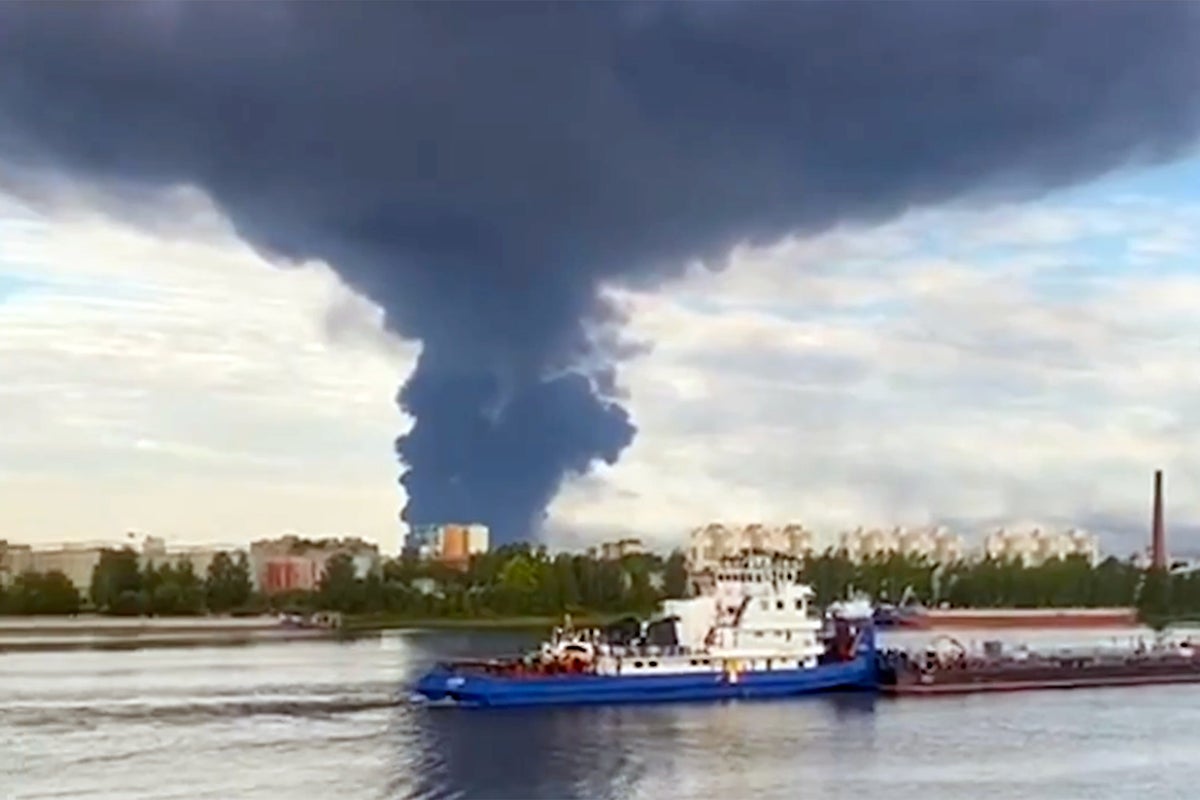
Ukrainian President Volodymyr Zelensky announced on Thursday that Kyiv had struck further oil facilities deep inside Russia during nighttime attacks, intensifying its strategy to cripple Moscow's wartime economy and embarrass the Kremlin.
These persistent strikes have caused fuel shortages and rattled Russians, while heartening Ukrainians who face regular Russian barrages that Kyiv's weakened air defences struggle to counter.
Zelenskyy, speaking on social media, specified two targets: a refinery in Bashkortostan, over 1,300 kilometres (800 miles) behind the eastern front line, and another in the Yaroslavl region, nearly 700 kilometres (400 miles) from the Ukrainian border.
Ukraine’s latest strike on Russian Wildberries warehouse shown in satellite images
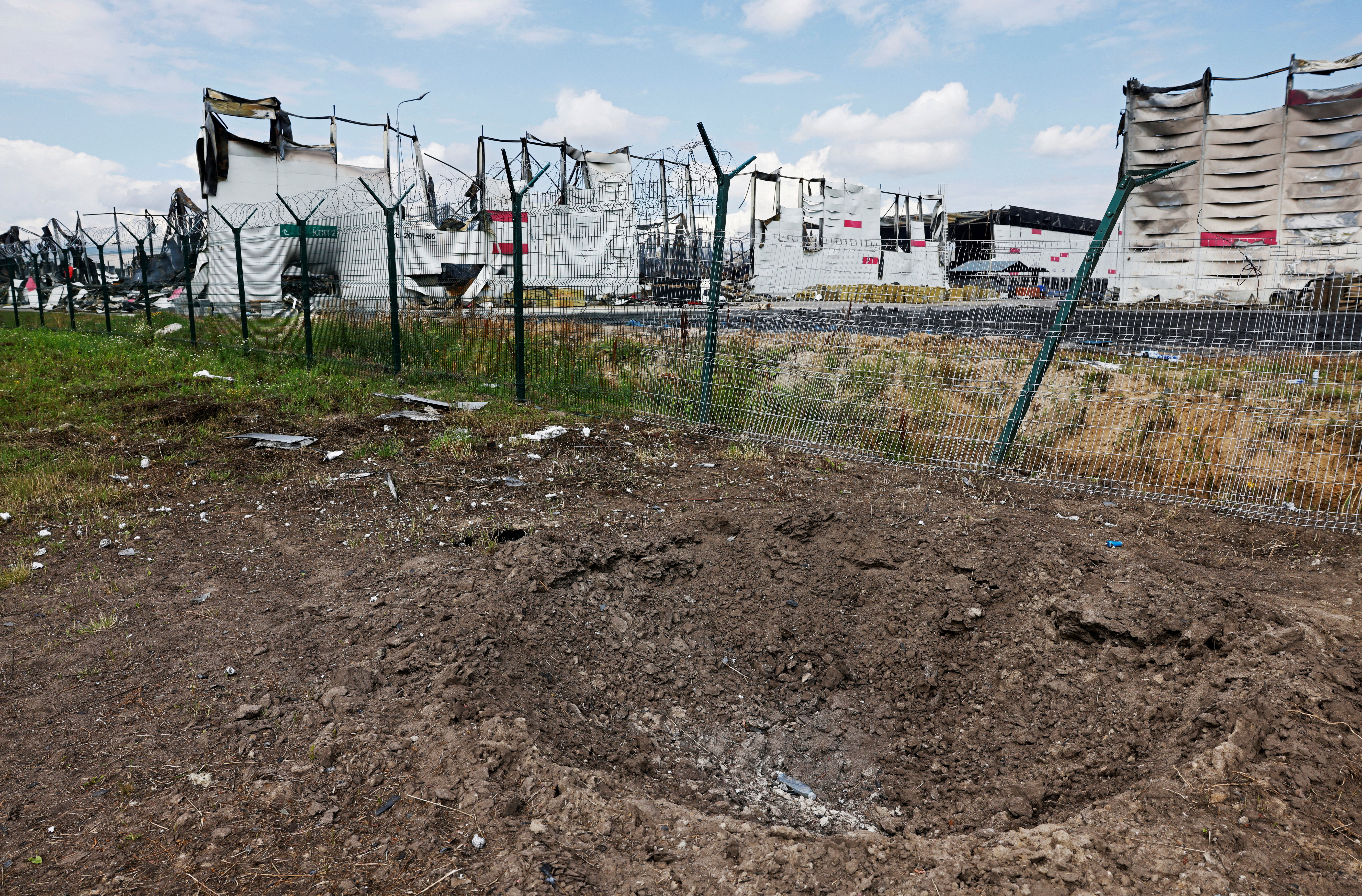
Kyiv has launched another drone strike on a Wildberries warehouse in Yekaterinburg, Russia, marking the 20th such attack since 18 July as part of a three-week campaign to 'bring the war home' to ordinary Russians.
The latest incident involved three drones hitting the roof of the logistics centre, though the company reported the resulting blaze was contained and most goods remained undamaged.
Satellite imagery from Reuters indicates that these Ukrainian attacks have collectively destroyed one-fifth of the Russian online retailer Wildberries' total storage capacity.