
Almost three-quarters of England has now been declared in drought as historically dry and hot weather persists across the country.
Officials at the National Drought Group met on Monday and determined that 71.3 per cent of England is now experiencing a flash drought, after half of England and all of Wales reached the criteria in July.
They warned all regions of England are experiencing pressure on their water resources, with increasing impacts across agriculture, public supplies, navigation, and the environment.
The East Midlands, Lincolnshire and Northamptonshire, Kent and East Sussex, and Solent and the South Downs today became the latest to move into drought status.
The North East and Yorkshire have moved to prolonged dry weather – the stage before drought – with nowhere now deemed in normal status.
Drought was already declared across East Anglia, Hertfordshire and London, Thames Valley, Hampshire and the Isle of Wight, Devon and Cornwall, the West Midlands, and Wessex on 29 July.
England and Wales recorded their driest July in records dating back to 1836, with 19 counties of England seeing no rain for the entire month, provisional statistics have shown.
What is a flash drought?
Most of the country (71.3 per cent) is now experiencing a flash drought – which develops very quickly brought about by a combination of very low rainfall and higher temperatures.
Flash drought is a drought that has a rapid onset or is brought about very quickly.
It is brought about by low levels of rain and abnormally high temperatures.
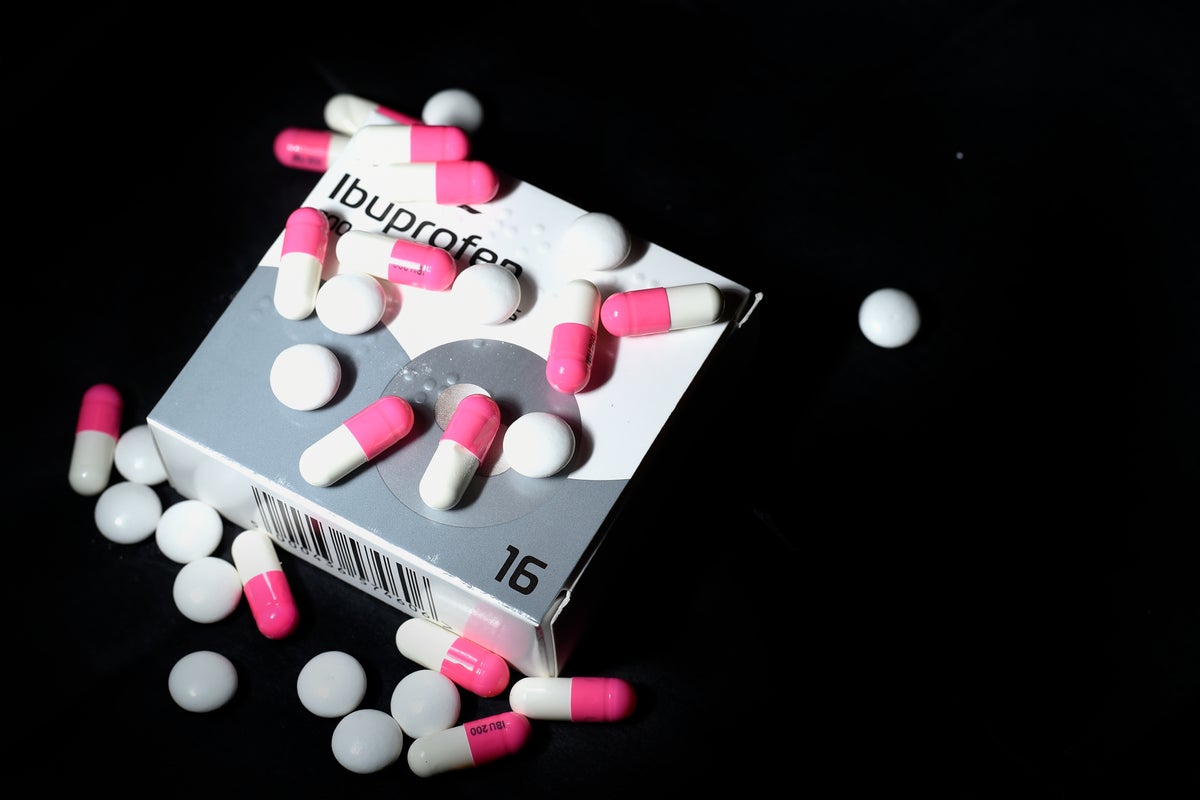
Painkillers could increase chance of getting sunburn, watchdog says
Common painkillers including ibuprofen could increase the chance of getting sunburn, Britain’s health watchdog has warned as the country braces for its fifth blistering heatwave of the summer.
The public is urged to take extra precautions if taking the medicine in warmer weather, with temperatures set to soar to 36C next week.
The Medicines and Healthcare products Regulatory Agency (MHRA) said on Friday that drugs like ibuprofen and naproxen could increase sensitivity to the sun, making burns more likely.
Rivers, reservoirs and groundwater continue to decline
The Environment Agency (EA) said rivers, reservoirs and groundwater continue to decline, water temperatures are rising, leading to more fish rescues, 245 wildfires have been reported on protected sites this year, and important wetland and peatland habitats are drying out.
Only 14 per cent of rivers are at normal levels and more than a fifth (22 per cent) are exceptionally low, including the Avon, Wye, Ely, Ouse and Exe, while reservoir levels have fallen to 69 per cent – well below normal for the time of year.
The agency said the latest drought is the third in the past five years, after 2022 and 2025, and mainland Europe is also struggling with heatwaves, dry weather and low river flows.
The latest heatwave, which is expected to be widespread throughout England and Wales, is set to subside over the weekend and bring fresher air and rain, but this is not expected to make up for the shortfall in recent months, forecasters warn.
Sarah Davies, head of environment and energy at the Met Office, said: “Forecasts for the remainder of August and into September suggest a good deal of dry weather is expected, mixed with some unsettled spells.
“While some areas may see useful rainfall at times, there is currently no strong signal for a sustained period of widespread rainfall, with below-average rainfall more likely than above-average for the period as a whole.”
In pictures: Drought takes its toll on England
Where has moved into drought status today?
Almost three quarters of England is now suffering from drought as weather conditions continue to worsen into August, piling pressure onto vital industries.
The East Midlands, Lincolnshire & Northamptonshire, Kent & East Sussex, and Solent & the South Downs moved into drought status on Monday, bringing the total number of people affected up to 45 million as a fifth heatwave of the summer sweeps through England and Wales.
More than 71 per cent of England is now experiencing a flash drought, with 27 million people currently living under restrictions on water use.
Tony Grayling, strategic drought lead at the Environment Agency and chair of the National Drought Group, said: “Drought conditions are worsening and will continue to do so until we see significant and sustained rainfall. We know the hot and dry weather is taking a real toll on farming and there will be long-lasting impacts on our environment.”
Drought conditions continue to pile pressure onto farming, freight shipping and energy production after the country saw its driest July in 190 years. August has so far seen just five per cent of the expected rainfall for the month, with warnings of more dry weather and highs of 36C to follow this week.
Water minister expects ‘water companies to take every available step to minimise leakage’
Water minister Emma Hardy, who attended the National Drought Group today, said: “We know how challenging this summer has been, especially for our hard-working farmers who are at the sharp end of climate change and an increasing number of floods and droughts.
“We are stepping up our support including working to make it easier for farmers to build more on-site irrigation reservoirs. We are also delivering long-term change in the water industry to reduce leaks and deliver nine new reservoirs and water transfer schemes to secure supplies.
“As we move through this period of drought, I expect water companies to take every available step to minimise leakage and support customers in using water wisely.
‘Situation facing farmers and growers is increasingly concerning’
NFU deputy president Paul Tompkins said: “With no meaningful rain forecast in the coming weeks, the situation facing farmers and growers is increasingly concerning.
“Many farmers have completed the earliest harvest on record, with poor yields in key crops reported in some areas of the country. Livestock and dairy farmers are already using winter feed because grass has stopped growing, while growers are working hard to keep fruit and vegetables watered, but many are struggling to access the water they need.
“To help farmers and growers now, we need to see a risk register for vulnerable businesses and a more responsive abstraction licensing system. Longer term, a consistent and positive planning approach to reservoirs, further rounds of the Water Management Grant and targeted investment in climate adaptation will be vital to build farming's resilience to extreme weather.
“Water plays a crucial role in food security and the resilience of our nation. By treating water for food as a strategic priority, government can work with farmers to protect crops, livestock businesses, and the UK’s long-term food security.”
‘Drought conditions are worsening and will continue to do so’
Tony Grayling, strategic drought lead at the Environment Agency and chair of the National Drought Group, said: “Drought conditions are worsening and will continue to do so until we see significant and sustained rainfall.
“We know the hot and dry weather is taking a real toll on farming and there will be long-lasting impacts on our environment.
“We want everyone to stay safe and hydrated over the summer, but we need everyone’s help in using a little less water to make sure our current water reserves last. Every drop we can save is a drop more for your local farmers, local wildlife and local rivers.”
Almost three-quarters of England is now in drought
The National Drought Group has warned all regions of the country are experiencing pressure on their water resources - with increasing impacts across agriculture, public supplies, navigation, and the environment - and conditions are worsening following a dry start to August.
The East Midlands, Lincolnshire & Northamptonshire, Kent & East Sussex, and Solent & the South Downs became the latest to move into drought status today.
Along with the areas announced last week, most of the country (71.3 per cent) is now experiencing a flash drought – which develops very quickly brought about by a combination of very low rainfall and higher temperatures.
This takes the total to 45 million people in a drought area. Over 27 million people are now living under restrictions on water use.