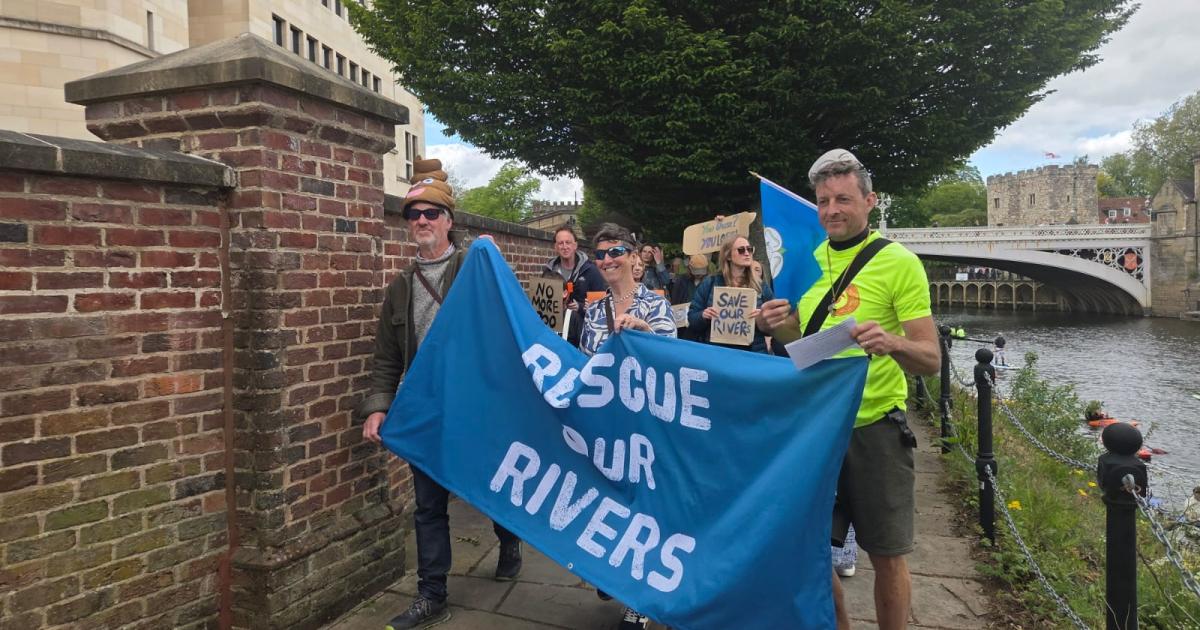
CAMPAIGNERS have spoken out about their growing concern around pollution in the River Ouse in York – with one likening the river to an ‘open sewer’.
In a City of York Council Place Scrutiny Committee meeting on July 21, councillors, environment campaigners, and Yorkshire Water representatives met to discuss the condition of the city’s water infrastructure, including pollution in the river.
- 'Everyone is a winner here' - thousands take on popular race through York
- York art market 'surpasses expectations' on first weekend of three in city centre
Robin Norton, a rower who uses the Ouse, told the committee that he wanted to see the Ouse and the River Foss cleaned up after seeing unsanitary conditions and watching his fellow rowers become ill after taking their boats out on the water.
He said: “Those of us in and on the water are in the front line on water quality alongside nature. We have brown tidemarks on our boats; we get splashed with stinking water and sometimes get ill.”
Another speaker - Andrew Mortimer from Friends of Hull Road Park - added that people in his area were also concerned about a Combined Sewer Overflow that sometimes discharges raw sewage into Osbaldwick Beck, which itself enters the Foss.
In York, 14 CSOs (Combined Sewer Overflows) have already exceeded the target of 18 discharges per year, which is set to come into force in 2030.
One discharge point in Fulford released sewage 346 times over a period equivalent to 26.4 days, and two others – The Esplanade near St Peters School and Lendal Hill – saw more than 100 discharges, the meeting heard.
Protesters demonstrating over pollution in the River Ouse in York
(Image: Alice Kavanagh)
Yorkshire Water said there were 10.1 per cent fewer sewage spills in 2025 than in 2020, but councillors and campaigners said that they remain concerned – stating that they felt the infrastructure for recording discharges was not accurate.
Helen Paulson from Ouse It or Lose it - a wild swimming group - said that they had seen images on Facebook of people swimming in the city’s rivers in the 1960s, with commentors likening the river to an ‘open sewer’ now and adding that they wouldn’t now be able to do that.
She said: “We’ve lost confidence, connection, we’ve abandoned our imagination in relation to the river. What relationship do we want people to have with their river? Safety is enormously important, but the rivers are also places of fun, recreation, enjoyment, health, well-being for the people of York and people who come and visit us.”
She also compared the potential for a cleaned up river to be used in different ways, such as by commuters, like in Basel in Switzerland, or for recreation.
Later in the meeting, Labour Cllr Danny Myers brought up the lack of public trust in the water industry and called on Yorkshire Water to explain what it would do to improve this.
In response, a Yorkshire Water spokesperson said: “It’s really a challenge for the whole sector. In order to rebuild confidence and trust, that does mean stopping pollution and reducing discharges. We believe that’ll happen through the investment going on.”
They added that they were keen to work with local authorities and local drainage boards to develop a common approach to improve biodiversity in the rivers and that they had invested in a five-year plan to do so.
They added that they had over 1,500 active projects and had increased their investment over the next five year term from £5.6 billion to £8.3 billion.
Steven Jackson, river health strategy manager at Yorkshirte Water, added: “We’ve recognised that we have a significant part to play, but it’s highlighted that there’s other significant pressures associated with water quality in the York area.
“We continue to work closely with the environment agency, local councils, environmental organisations and the agriculture sector across a broad range of pressures to try and improve river water quality.”