
AMD’s Q2 2026 financial results show record revenue across the business, but gaming is contributing less and less to that overall pie. Overall, AMD’s Q2 revenue was $11.5 billion, up 50% year-over-year and up 13% quarter-over-quarter. In AMD’s gaming segment, however, it saw $779 million in revenue, down 31% YoY due to “lower semi-custom revenue,” according to AMD’s press release.
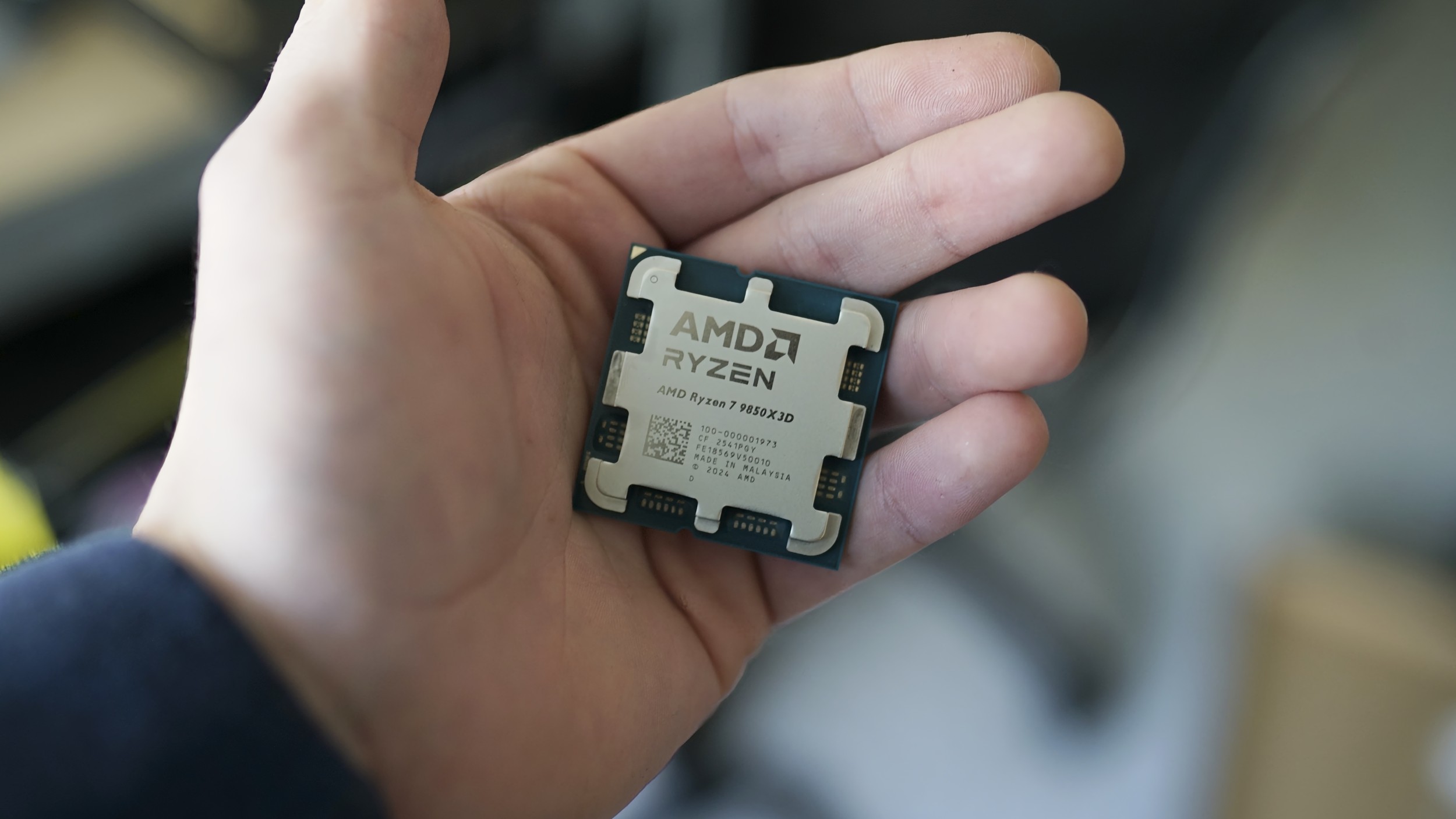
That’s not a new story, as AMD has continually pointed to the late stage of the console lifecycle as the driving force behind declining gaming revenue. CEO Lisa Su, however, also says revenue is declining due to rising component costs. “Gaming graphics revenue also declined year-over-year as higher industry-wide component costs contributed to higher graphics card prices and weighed on overall demand,” Su said.
Earlier this year, AMD said that it expected a 20% decline in gaming revenue in the second half of the year, which is reaffirmed in its Q2 2026 earnings call. “[We expect] a modest decline in our client gaming segment, with slight growth in client offset by strong double-digit decline in gaming,” said AMD's Jean Hu, executive vice president and Chief Financial Officer.
Despite these declines, Su says she's 'optimistic' about the future of AMD's client CPU business, particularly when it comes to AI PCs. "I think AI PCs will become more important as it relates to our client business in 2026. I think our first half performance has been very strong, and although we are expecting that the market will decline in the second half, the market's actually held up, you know, better than you know most people would have thought," said Su.
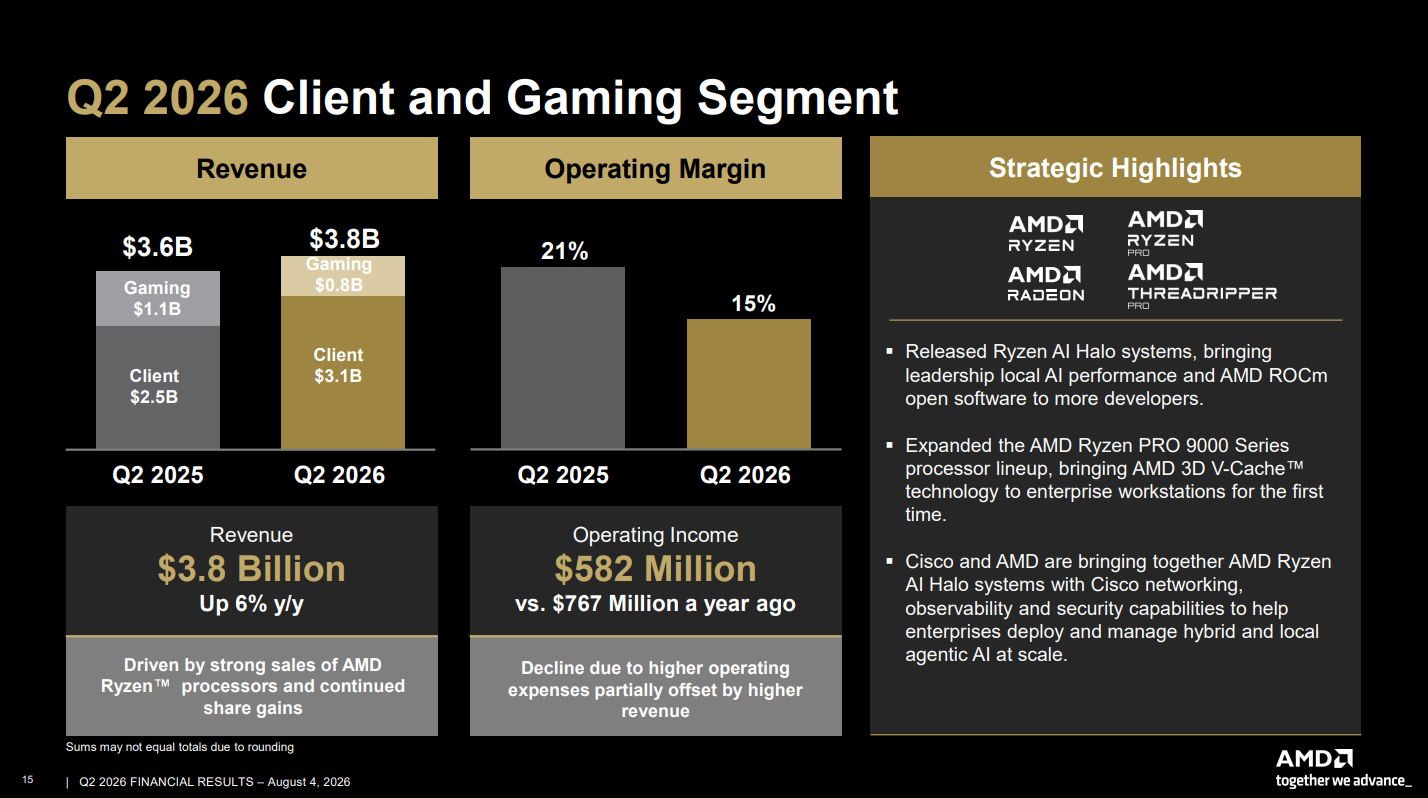
Despite a large decline in gaming revenue, AMD’s overall client business (including gaming) brought in $3.8 billion, up 6% year-over-year. Su says this is due to strong demand for Ryzen CPUs, but also increased market share for Ryzen PRO chips. “Commercial adoption continued to expand in the quarter, with Ryzen PRO sales growing more than 50% year over year as we closed new wins with large healthcare, technology, automotive, and financial services companies,” Su said.
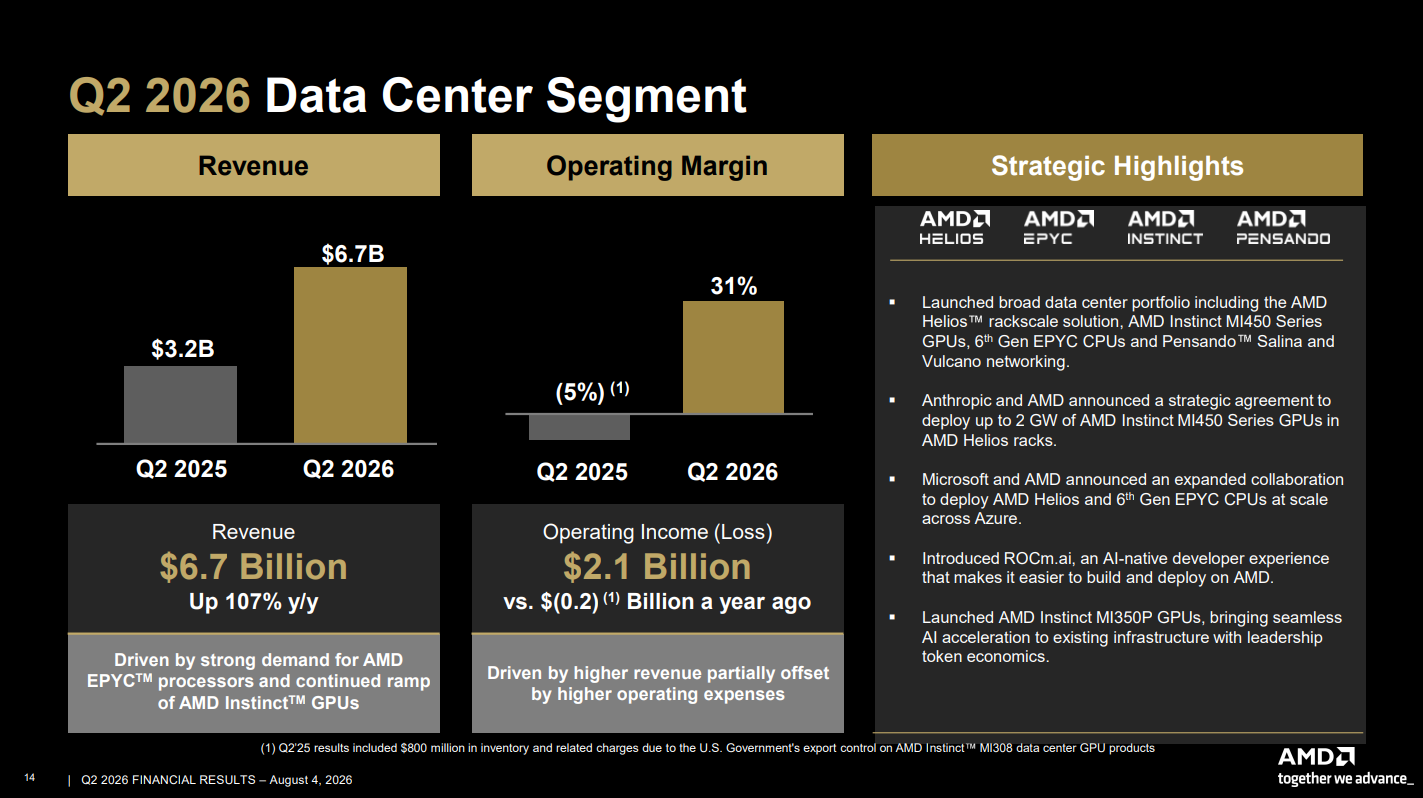
Declining gaming revenue has been massively offset by increasing data center revenue, unsurprisingly. AMD’s data center revenue is up 107% year-over-year, representing $6.7 billion of revenue. AMD expects that the data center will continue growing the business in the next quarter, as well.
“We expect [Q3] revenue to be approximately $13 billion plus or minus $300 million, at the middle point of our guidance, revenue is expected to be up 41% year over year, driven by very strong double-digit growth in our data center segment,” said Hu.
Get Tom's Hardware's best news and in-depth reviews, straight to your inbox.
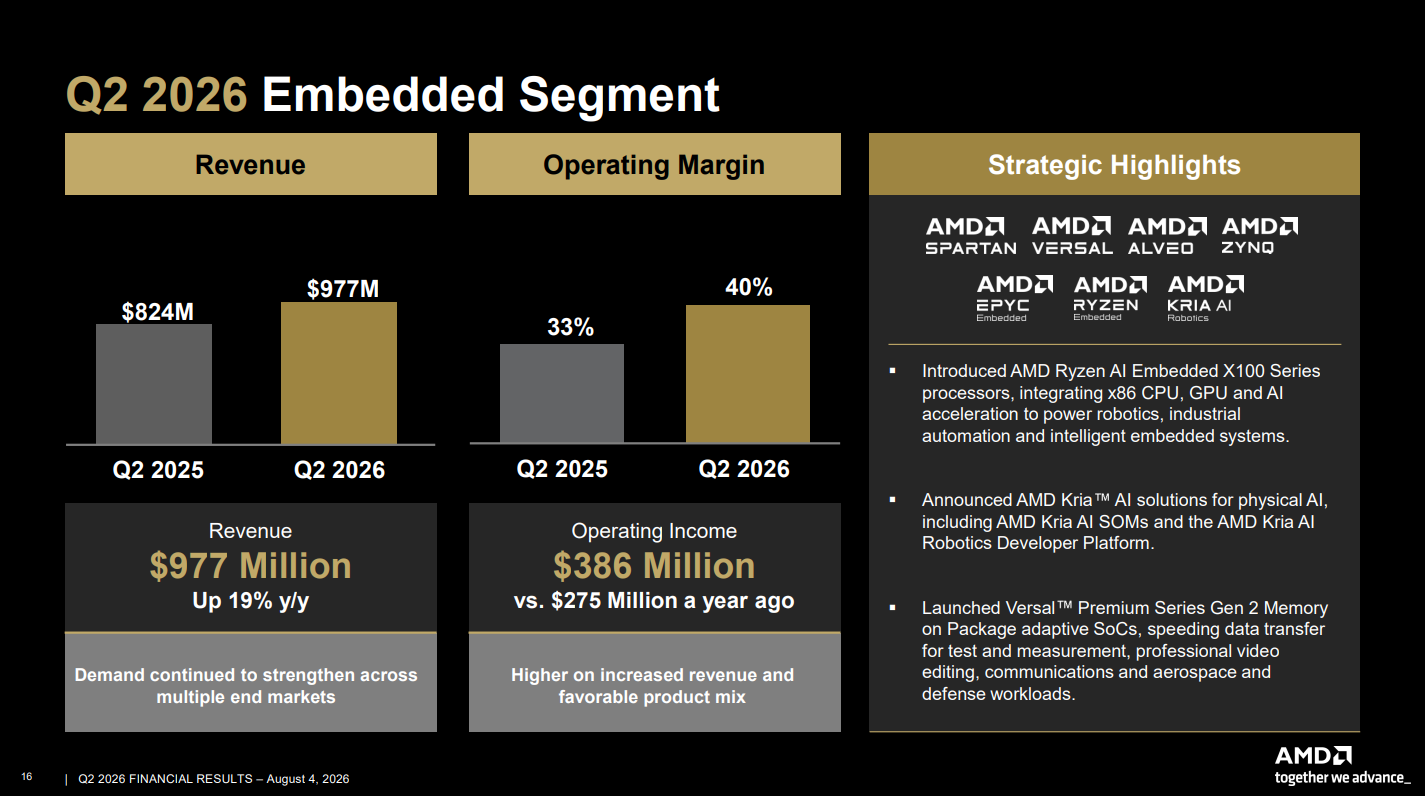
Surprisingly, AMD also says it expected “strong” double-digit growth in its embedded business, which has traditionally represented the smallest slice of AMD’s revenue pie. In Q2, embedded revenue was $977 million, which is up 19% year-over-year, which AMD attributes to increased demand (perhaps in the realm of physical AI). That means gaming is the smallest part of AMD's revenue pie for the moment, and that position seems likely to continue until we see some kind of new discrete GPU or console hardware from the division that might spur upgrades.
FollowTom's Hardware on Google News, or* add us as a preferred source**, to get our latest news, analysis, & reviews in your feeds.*

Jake Roach is the Senior CPU Analyst at Tom’s Hardware, writing reviews, news, and features about the latest consumer and workstation processors.
AMD surpassed every projected metric that Wall Street uses and their stock dropped 7%. If you can't figure this out is market manipulation for HUGE profit. Between day traders and automated computer trading by large entities they have been able to manipulate the market for years if not decades.Reply
Reply I know it's hard to understand and believe, but stocks do not trade on their raw earnings, they trade on expectations. When those expectations are not met (by earnings or something else), the stocks fall. When those expectation are exceeded stocks go up (by earnings or something else). When those expectations are just met, other factors come into play (more on that towards the end)TechieTwo said:AMD surpassed every projected metric that Wall Street uses and their stock dropped 7%. If you can't figure this out is market manipulation for HUGE profit.
The other important thing to understand, is the minute the current quarter earnings come out, even if they meet or fail to meet expectations, the stock still might have a different reaction. This is because most companies when they release earnings give what is called "forward guidance". Just like expectations for earnings, expectations for forward guidance is also in play.
Now as to why AMD is down and the other factors. AMD is trading at an insane premium to the market, 124x earnings vs 30x earning for the S&P 500, even Nvidia's price to earnings is not that high (44x). When that happens for the company to grow into its premium it must beat expectations by a mile and tell you next quarter is going to beat by a mile. Neither of those things happened today, thus expectations were not met and the stock is down, not "market manipulation"