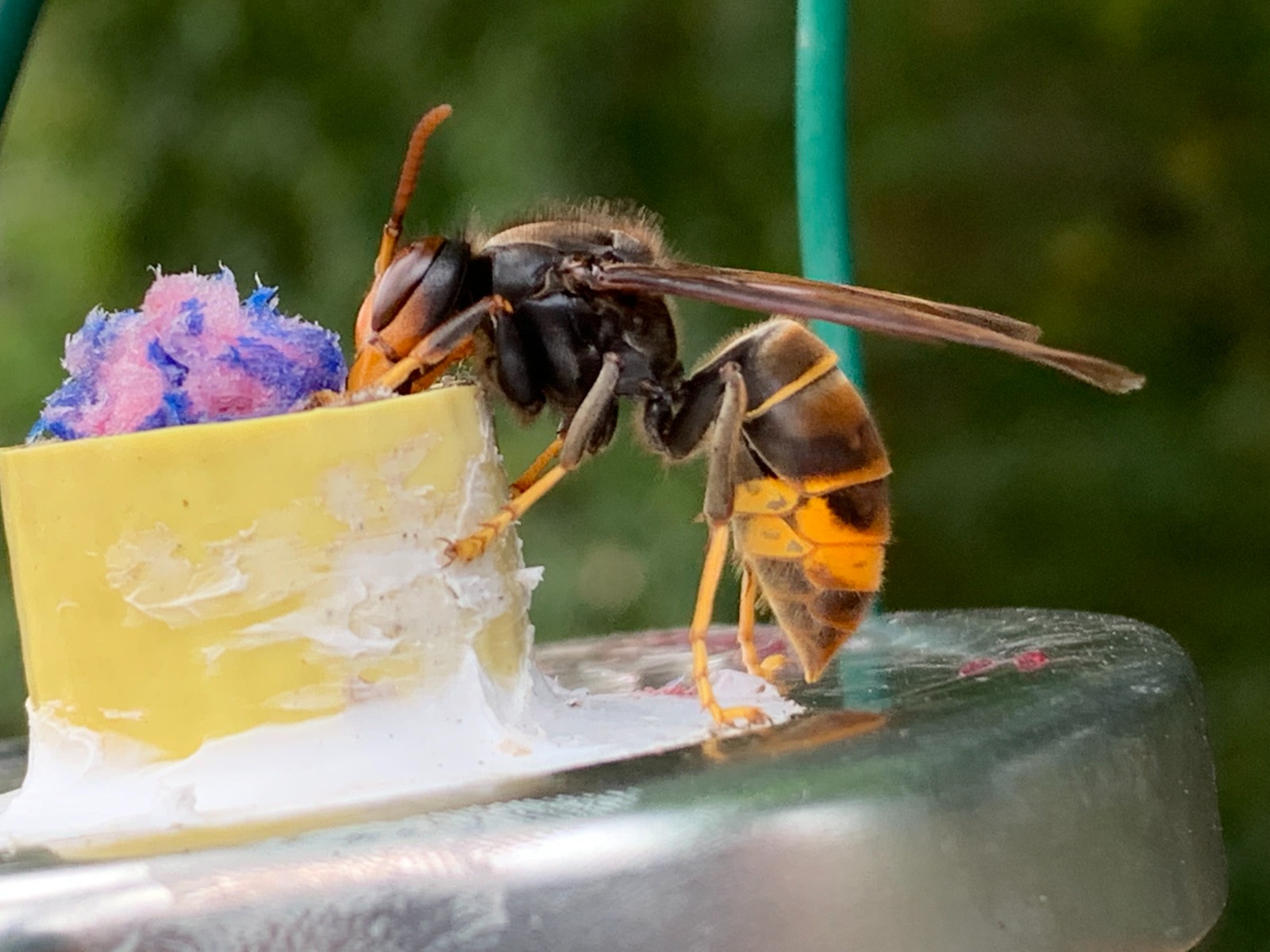
There’s been a confirmed sighting, backed up with a photo, of a yellow-legged Asian Hornet in Ripon.
The National Bee Unit is asking us to look out for them over the next few weeks. They are rare in the UK but if they ever got established here then they would create chaos with insects.
Yellow-legged hornets are smaller than our native European Hornet, with a dark body, one yellow band, and yellow legs that give them their name. You’ll often spot them hovering near hive entrances, picking off bees as they come home.
If you see one, don’t approach it. They can sting through clothing.
Report it through the Asian Hornet Watch app.
If you can safely get a photo that makes a real difference to reports, but if you find a nest, usually in trees, but sometime in the bushes, keep pets and yourself as far away as possible.
Richard Senior is the yellow-legged Asian Hornet county coordinator for the Yorkshire Bee Keepers Association.
He’s been speaking to the Sunday Late Show on YorkMix Radio in an interview you can hear in full this coming Sunday (9th August 10pm):
“It is quite unusual to see yellow-legged Asian hornets this far up north. We did have a nest in North Yorkshire last year and that was destroyed, but the main bulk of the hornets that we’re seeing at the moment are down in the south, in places like Kent, which is close to the the channel, the hornets are coming from France.
“When you go near their nests, they are highly aggressive. Out feeding, they don’t seem to be too bad.
“Nests can not only be up high in trees, they can be down in brambles as well. So if somebody were to inadvertently knock into one or try to clear some brambles and bump into a nest, they are going to get stung and they can sting through a bee suit too!
“They are significantly more aggressive than honeybees. It’s believed that one yellow-legged Asian hornet colony can wipe out 12 kilograms of insects in a season.
“So that’s pollinators, that’s butterflies, that’s hoverflies, and they’re looking for the meat parcel to be able to feed to their own larvae.
“It’s a very dark insect. It’s slightly smaller than our European hornet, which is a native species of hornet, but it’s a dark insect. It’s usually got a yellow band around its abdomen, and it’s got yellow socks, so yellow legs, and that’s why it’s called the yellow legged Asian hornet.
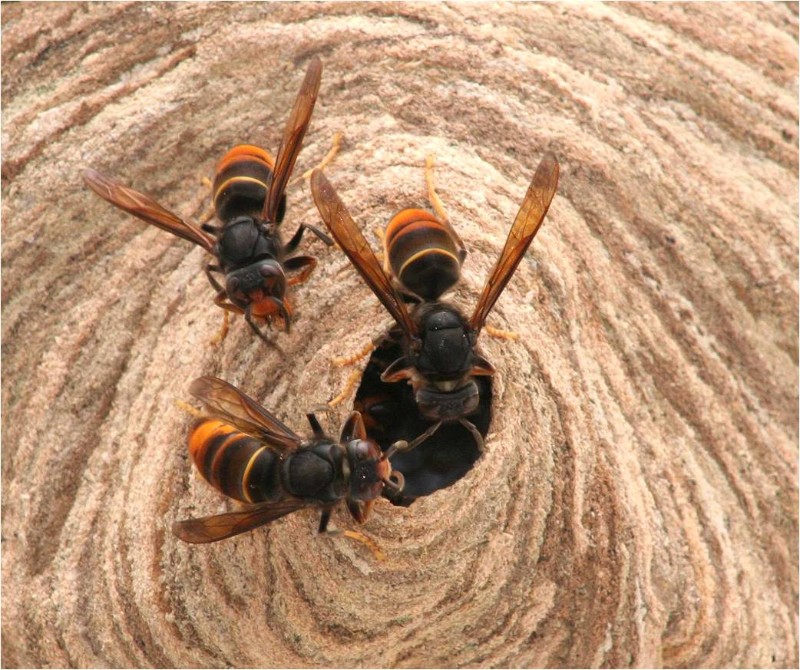
“So when members of the public or beekeepers think they’ve seen a yellow-legged Asian hornet we ask them to report it via the Asian Hornet Watch App, and it is the National Bee Unit (NBU) that responds to sightings, but they will only go to a credible sighting, which is backed up by a photograph, because there are other species of insects that look similar to yellow-legged Asian hornets.
“So they do need that photograph to be able to confirm it.
“Otherwise, it falls down to the local beekeeping associations to try and get boots on the ground to try and get a live specimen, so that the NBU can do track and trace to be able to locate those nests.
“They have destroyed 21 nests in the UK, mostly down in the south, and most of them are high up in trees, but we are seeing some lower down too”.