
US president Donald Trump says he will hold off on a threatened fresh round of strikes against Iran after “the perimeters of a deal [have] been agreed to” by Tehran and America’s Middle East allies.
Trump said he had cancelled the strikes “subject to being able to rapidly make a DEAL”, and that Israel had agreed to support the move.
Earlier, Trump told a cabinet meeting that new strikes would take place as soon as this weekend, telling a cabinet meeting on Friday: “We will be hitting them very hard. At some point, they’re going to say, ‘We just can’t take it anymore.’”
In a call with the White House, the Saudi crown prince, widely known as MBS, stressed the "necessity of prioritising dialogue to de-escalate tensions" in the Middle East.
Tehran had warned him against any further “aggression”, with Iran’s foreign minister Abbas Araghchi saying on Saturday that any such “adventurous action” by the US or Israel would be met with a “decisive and proportional response”.
Both countries have resumed direct strikes after a brief truce collapsed last month, with negotiations to secure a ceasefire failing to make significant progress.
Inside Iran’s Pickaxe Mountain, the secret nuclear site Trump has threatened to bomb
Donald Trump has issued threats to bomb a secretive under-construction Iranian nuclear site buried deep under a mountain.
The site, known as Kuh-e Kolang Gaz La, or “Pickaxe Mountain,” lies on the south side of Iran's Natanz nuclear enrichment site, which was bombed by the United States during Operation Midnight Hammer in 2025's 12-day war between Iran and Israel. But Pickaxe Mountain has remained untouched as Iran continues to dig at the site.
It remains unclear just what has been placed at Pickaxe Mountain, as the United Nations' nuclear watchdog has never gained access to the site.
Read the full article here:
State department issues warnings for US citizens
The State Department issued new security alerts on Saturday urging US citizens in the region to prepare for the possibility of flight cancellations, temporary airspace closures and other travel disruptions.
The warnings covered Bahrain, Israel, Iraq, Jordan, Kuwait, Lebanon, Oman, Qatar, Saudi Arabia and United Arab Emirates.
Iran sees every threat from adversaries as "real and credible", acting defence minister says
Tehran views every threat from its adversaries as "real and credible" even if made as part of psychological warfare, Iran's acting defence minister, Majid Ibn al-Reza, said on Sunday according to state media.
"We will neither be caught off guard nor remain passive," he said, adding that Iran would use threats as a basis to increase its military readiness, strengthen deterrence and enhance its military capabilities.
Saudi crown prince tells Trump dialogue needed to de-escalate Middle East tensions
Saudi Crown Prince Mohammed bin Salman stressed in a phone call with Donald Trump the "necessity of prioritizing dialogue to de-escalate tensions" in the Middle East, according to Saudi Arabia's state news agency.
Trump makes U-turn on Iran as fears of wider war and political pressure mount
US president Donald Trump appeared to make a U-turn on Iran after signalling he was ready to launch fresh military strikes, instead announcing a renewed push for a deal to end the conflict.
The shift came despite Trump's earlier warnings that the US was prepared to unleash unprecedented force following Iran's attack on a US base in Jordan.
The apparent U-turn comes as the war remains unpopular with many Americans, rattles global markets and threatens to become a major political issue ahead of November's US midterm elections.
The latest polls show Trump is now one of the most unpopular second-term US presidents at this stage of his presidency since polling began in the 1940s. The only president with a lower approval rating was Richard Nixon, who was just days away from resigning over the Watergate scandal.
He has the support of just 34 per cent of Americans in CNN’s latest poll.
Iran warned of 'decisive' response in calls with Middle East partners
Before Donald Trump announced a last-minute pause in strikes on Iran, Tehran warned of a “decisive and proportionate response” to Washington.
Iran's foreign minister Abbas Araghchi said in a phone call with his Saudi counterpart that any "aggression" by the US and Israel or participation of regional countries in these actions will be met with a strong response, according to Araghchi’s Telegram account.
He held separate calls with Turkish foreign minister Hakan Fidan as well as Pakistani Field Marshal Asim Munir, according to posts on the Iranian foreign minister’s Telegram channel.
He warned that Iran would respond in kind to any “adventurous action” by the United States.
Three Palestinians killed in Gaza, report says
Three Palestinians have been killed in an Israeli attack on Gaza, Al Jazeera Arabic reported.
The latest casualties were reported after an Israeli strike on the town of al-Qarara, north of Khan Younis, citing sources at the Nasser Medical Complex.
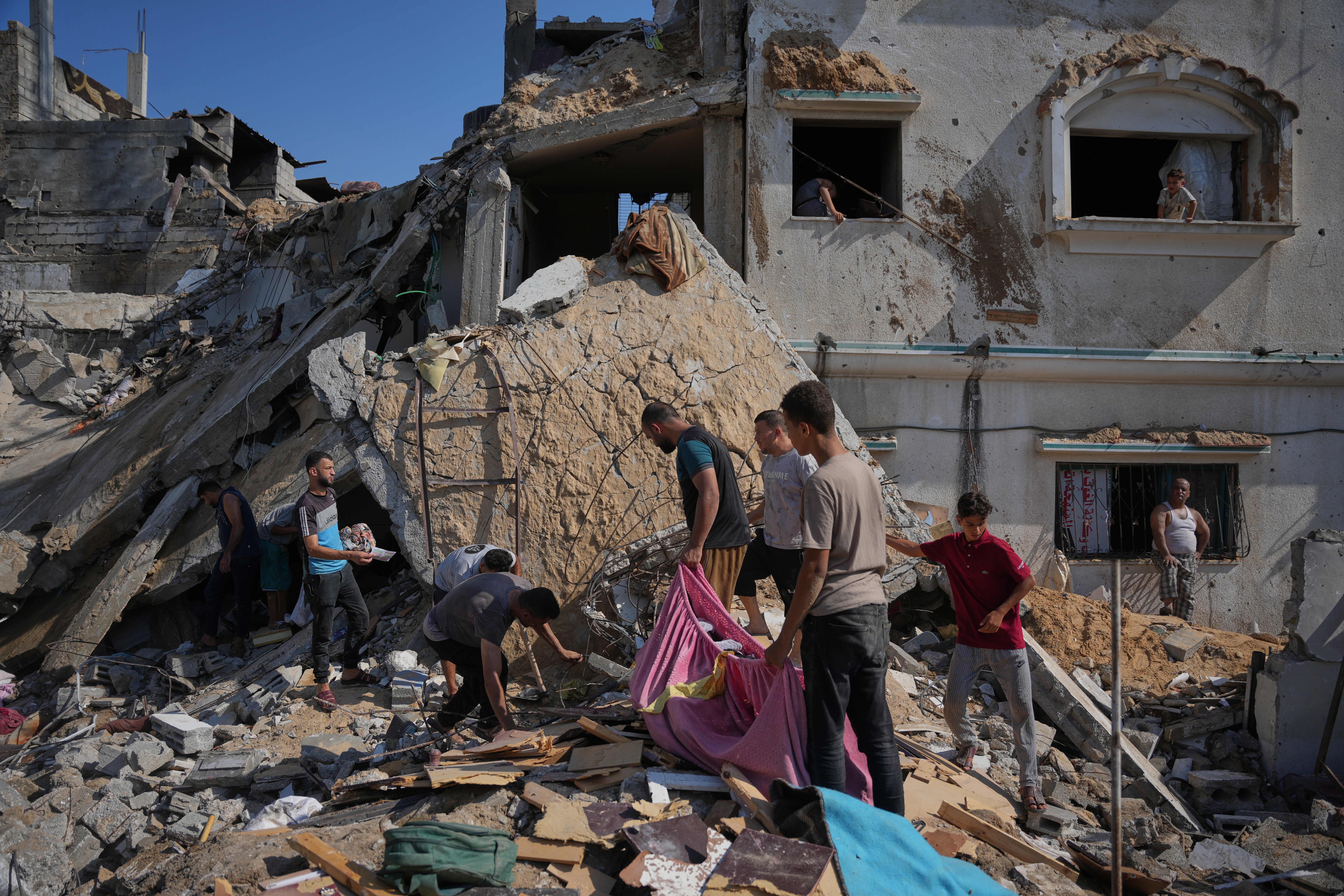
The latest deaths bring the total number of people killed in Israeli strikes across Gaza this morning to eight.
Earlier, two people were killed in central Deir al-Balah, while three others were killed and several more wounded in a strike on an apartment in northern Gaza City.
Saudi diplomacy may have influenced Trump's decision to hold off on Iran strikes, ex-US colonel says
Retired US Air Force Colonel Cedric Leighton told CNN that Saudi Arabia and Iran both have strong reasons to avoid further escalation in the region, with the closure of the Strait of Hormuz impacting much of their energy flows and exports.
“They’re economically at risk here,” he said.
“This is an area where the United States really is dependent, to a large degree on Saudi diplomacy, and that, I think, had a big impact on President Trump’s decision to forgo attacking Iran, at least for the near term,” he added.
He added that while Iran is also under growing economic and military pressure after months of conflict, any push for de-escalation could give Tehran time to regroup and ease the strain.
Trump’s decision to call off strikes on Iran came after it was that report that Saudi Crown Prince Mohammed bin Salman, the kingdom’s de facto leader, spoke with Trump by phone and raised concerns about the US potentially escalating the conflict with Iran.
Iran implementing Supreme Leader's orders on Strait of Hormuz, lawmaker says
Iran's armed forces are carrying out Supreme Leader Mojtaba Khamenei's directives on managing the Strait of Hormuz and surrounding waters, the spokesperson for parliament's national security committee said on Sunday.
Hassan Ghashghavi said Tehran opposes a proposed southern Omani shipping corridor through the strait, arguing it could be used to transport fuel for US and Israeli military aircraft as well as military equipment and weapons to US bases in the region.
He said Iran would have no ability to monitor or control vessels using the route, making the proposal incompatible with the country's national security.
Israel agrees to join US push for Iran deal to end war, Trump says
Israel has agreed to join the US in efforts to finalise an agreement with Iran that would bring an end to the war, Donald Trump said. Iran did not immediately comment on the announcement.
“The Country of Israel joins me in this commitment. Get to work, everybody, and get it DONE. Thank you for your attention to this matter!” he said.
Trump has ordered American forces to hold off on new strikes against Iran. His remarks marked a sharp shift from a day earlier, when he suggested the US was close to resuming heavy military strikes to force Tehran back to the negotiating table.
In a post on X Friday, Israeli far-right lawmaker Itamar Ben-Gvir called the deal "unacceptable" and said the killings in Gaza must continue. "Israel must win," he said.
The US and Israel launched attacks on Iran on 28 February, with Trump saying the campaign aimed to destroy Tehran's missile capabilities, prevent it from obtaining a nuclear weapon and curb its support for allied armed groups.